Poplar trees are a familiar sight across the UK countryside, lining roadsides, rivers, and farmlands with their tall, elegant silhouettes. Known for their fast growth and adaptability, poplars belong to the Populus genus — a diverse group that includes several well-known species. In this article, we’ll explore the different types of poplar trees commonly found in the UK, their distinctive traits, and where they thrive best.
Whether you’re a homeowner managing garden trees or a landowner maintaining a larger property, understanding poplar species can help you make informed decisions about care, pruning, or removal. For professional assistance, Chigwell Tree Services provides expert and affordable tree care in Essex and surrounding areas — offering safe and reliable services for all types of trees, including poplars.
Message us on WhatsApp to get your free estimate instantly :
Understanding Poplar Trees
Poplars are deciduous trees that grow rapidly, making them popular for timber production, windbreaks, and ornamental use. They are easily recognisable by their straight trunks, triangular or heart-shaped leaves, and shimmering foliage that moves beautifully in the wind.
The species of poplar trees vary widely in size, leaf shape, and preferred environment. Some thrive in wetter soils near rivers, while others adapt well to drier, open landscapes. Most poplars are native to the Northern Hemisphere, with several species either native or naturalised in the UK.
1. Black Poplar (Populus nigra)
The black poplar is one of the most iconic and historically significant trees in Britain. Once widespread across lowland areas, it’s now considered one of the UK’s rarest native trees.
Characteristics:
- Bark: Dark, deeply fissured with age.
- Leaves: Triangular with a glossy green upper side and lighter underside.
- Height: Up to 30 metres.
- Habitat: Prefers damp lowlands, floodplains, and riverbanks.
Black poplars are dioecious — meaning there are separate male and female trees. Female trees produce fluffy seeds that disperse widely, while male trees are more commonly planted in landscapes. Due to habitat loss, disease, and hybridisation, true native black poplars have become scarce in the wild.
2. White Poplar (Populus alba)
The white poplar is another striking species, easily recognised by its contrasting leaf colour — dark green above and white and felted beneath, giving the tree a shimmering appearance when wind passes through.
Characteristics:
- Bark: Smooth and pale when young, becoming darker and rougher with age.
- Leaves: Deeply lobed, with a silvery underside.
- Height: Up to 25 metres.
- Habitat: Tolerates poor soils and thrives in both rural and urban settings.
White poplars are often found in parks, along roads, and in open countryside. They’re known for their resilience to pollution and wind, making them ideal shelterbelt trees in agricultural regions of the UK.
3. Grey Poplar (Populus × canescens)
The grey poplar is a natural hybrid between the white poplar and the aspen. It inherits traits from both parents and is common across much of England and Wales.
Characteristics:
- Bark: Grey and smoother than black poplar.
- Leaves: Oval with a subtle white underside and softly toothed edges.
- Height: Typically 20–30 metres.
- Habitat: Common in woodlands, parks, and hedgerows.
Grey poplars are vigorous growers and can regenerate from suckers, which sometimes leads to clusters of trees forming from a single root system. Their timber is used for pulp, boxes, and plywood.
4. Aspen (Populus tremula)
The aspen, or “quaking poplar,” is one of the most charming species due to its constantly fluttering leaves. It’s native to the UK and found in both lowland and upland regions.
Characteristics:
- Bark: Smooth and greyish-green, often with black marks.
- Leaves: Round with flattened leaf stalks that cause constant movement in the breeze.
- Height: Up to 20 metres.
- Habitat: Grows well in light, sandy soils and open woodlands.
Aspens play an important ecological role, providing food for caterpillars of several moth species, including the poplar hawk-moth. They also form suckering colonies, allowing them to regenerate naturally after disturbance.
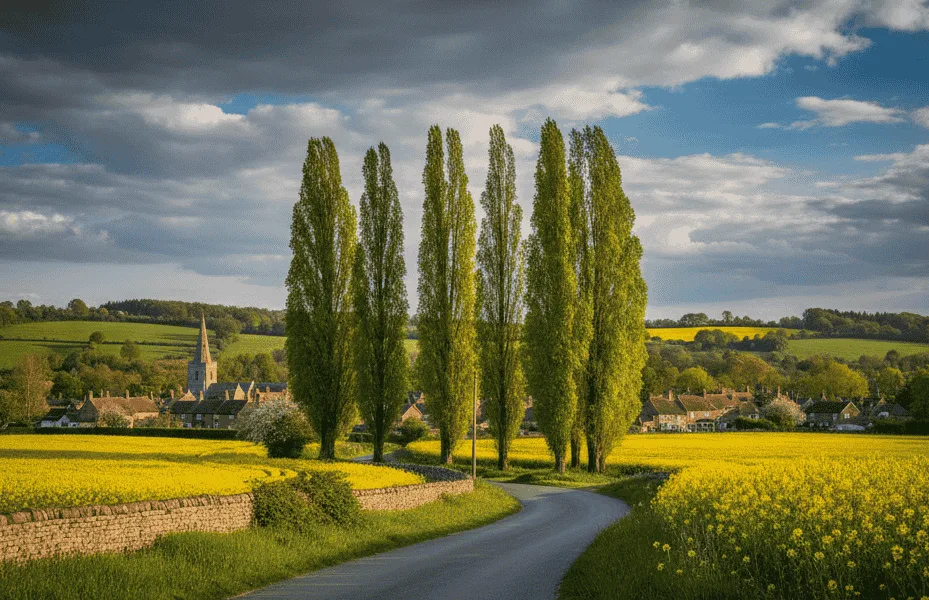
5. Lombardy Poplar (Populus nigra ‘Italica’)
The Lombardy poplar is probably the most recognisable poplar type seen in the UK landscape. With its tall, narrow columnar shape, it’s a favourite choice for lining avenues and marking property boundaries.
Characteristics:
- Bark: Grey and ridged with age.
- Leaves: Triangular and pointed, turning golden in autumn.
- Height: 20–30 metres.
- Habitat: Prefers open, sunny sites with well-drained soil.
Introduced from Italy in the 18th century, the Lombardy poplar became a popular ornamental and practical tree due to its fast growth and striking shape. However, its roots can be invasive, so it’s best planted away from buildings and underground utilities.
6. Hybrid Poplars
Hybrid poplars are crosses between different species — commonly between black, balsam, and aspen types — bred for rapid growth and adaptability. These are often used in commercial forestry, windbreaks, and environmental projects.
Characteristics:
- Bark: Varies between grey, brown, or greenish hues.
- Leaves: Can be oval or triangular, depending on parent species.
- Height: 20–40 metres depending on variety.
- Habitat: Thrive in moist but well-drained soils.
Popular hybrids include Populus × canadensis (a black poplar hybrid) and Populus × euramericana, both valued for their timber and rapid establishment.
Poplar Trees and the UK Landscape
Poplars have played a major part in shaping the British countryside for centuries. Their quick growth makes them useful for screening, stabilising riverbanks, and supporting biodiversity. Their wood, being lightweight and soft, is often used in the manufacture of matchsticks, plywood, and paper pulp.
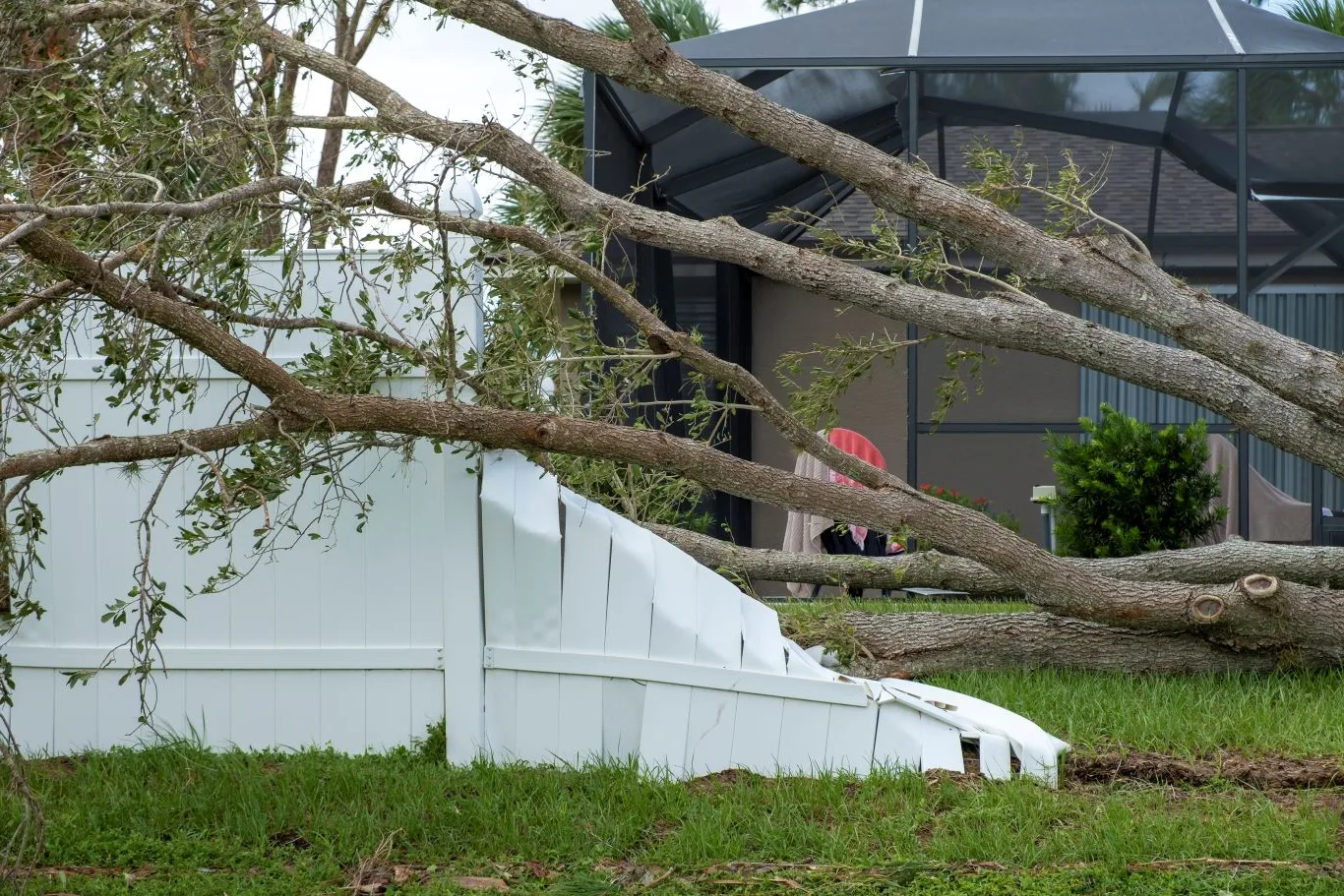
However, poplars also require regular care. Their rapid growth can lead to weak branching structures, making them prone to storm damage or breakage. Periodic inspections and pruning are recommended to maintain their health and safety.
That’s where expert services like Chigwell Tree Services come in. With years of experience and a reputation for reliability, they provide affordable tree maintenance and removal services across Essex — ensuring your poplars remain healthy and well-managed all year round.
How to Identify Poplar Trees
Identifying different varieties of poplar trees can be done by observing the following features:
- Leaf shape and colour — White poplars have silvery undersides, while aspens have rounder, trembling leaves.
- Growth habit — Lombardy poplars grow upright, while black and grey poplars have broader crowns.
- Bark texture — Young poplars have smooth bark that becomes rougher with age.
- Habitat — Some species prefer damp riverbanks; others thrive in drier soils.
Caring for Poplar Trees
Poplars are hardy, but they benefit from occasional pruning, especially to remove dead or crossing branches. It’s important to avoid over-pruning, as this can stress the tree and encourage unwanted sucker growth.
Tips for Poplar Tree Care:
- Water young trees regularly during dry spells.
- Apply mulch to retain soil moisture.
- Prune during the dormant season (late autumn to winter).
- Monitor for pests like aphids or fungal leaf spots.
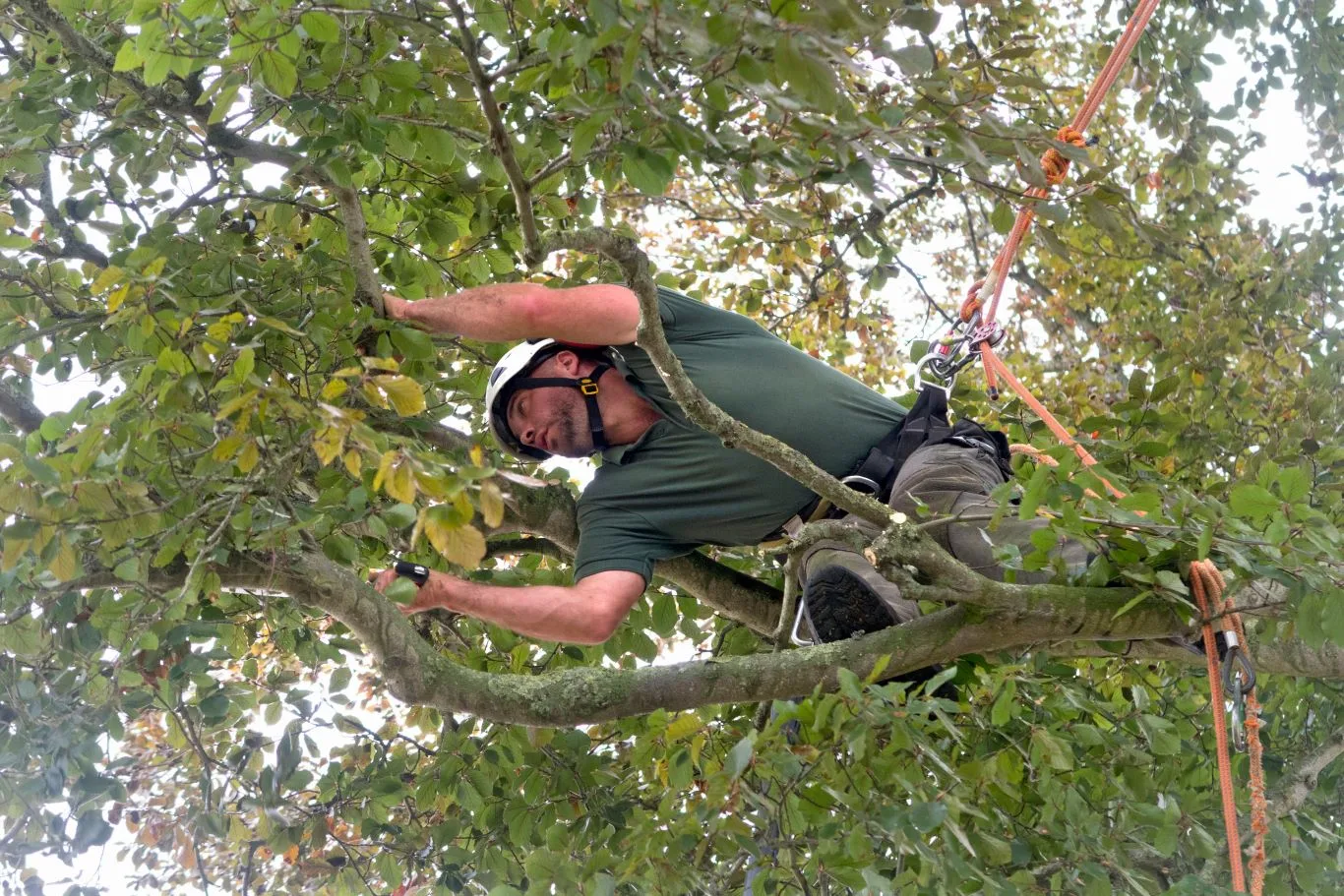
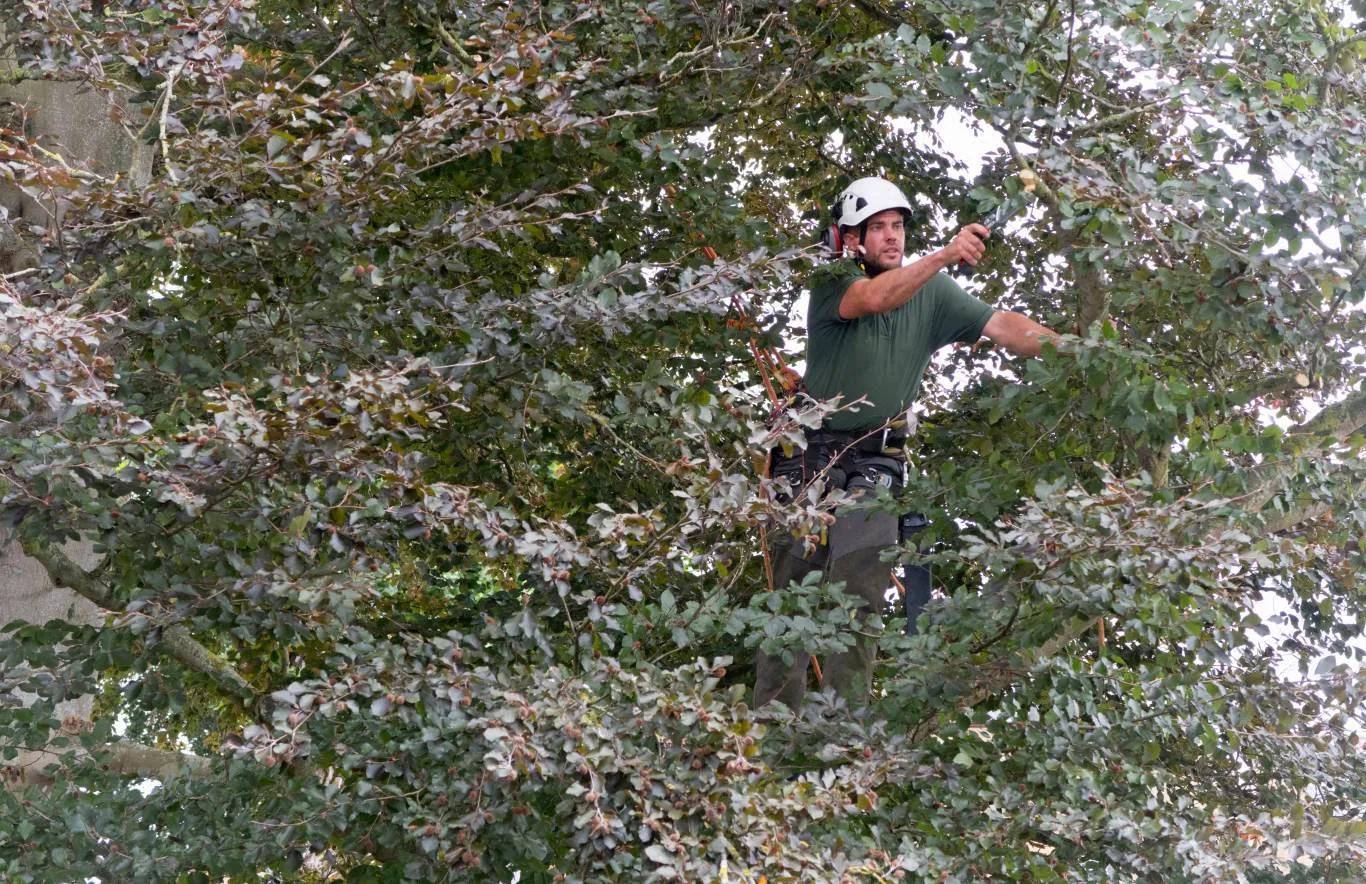
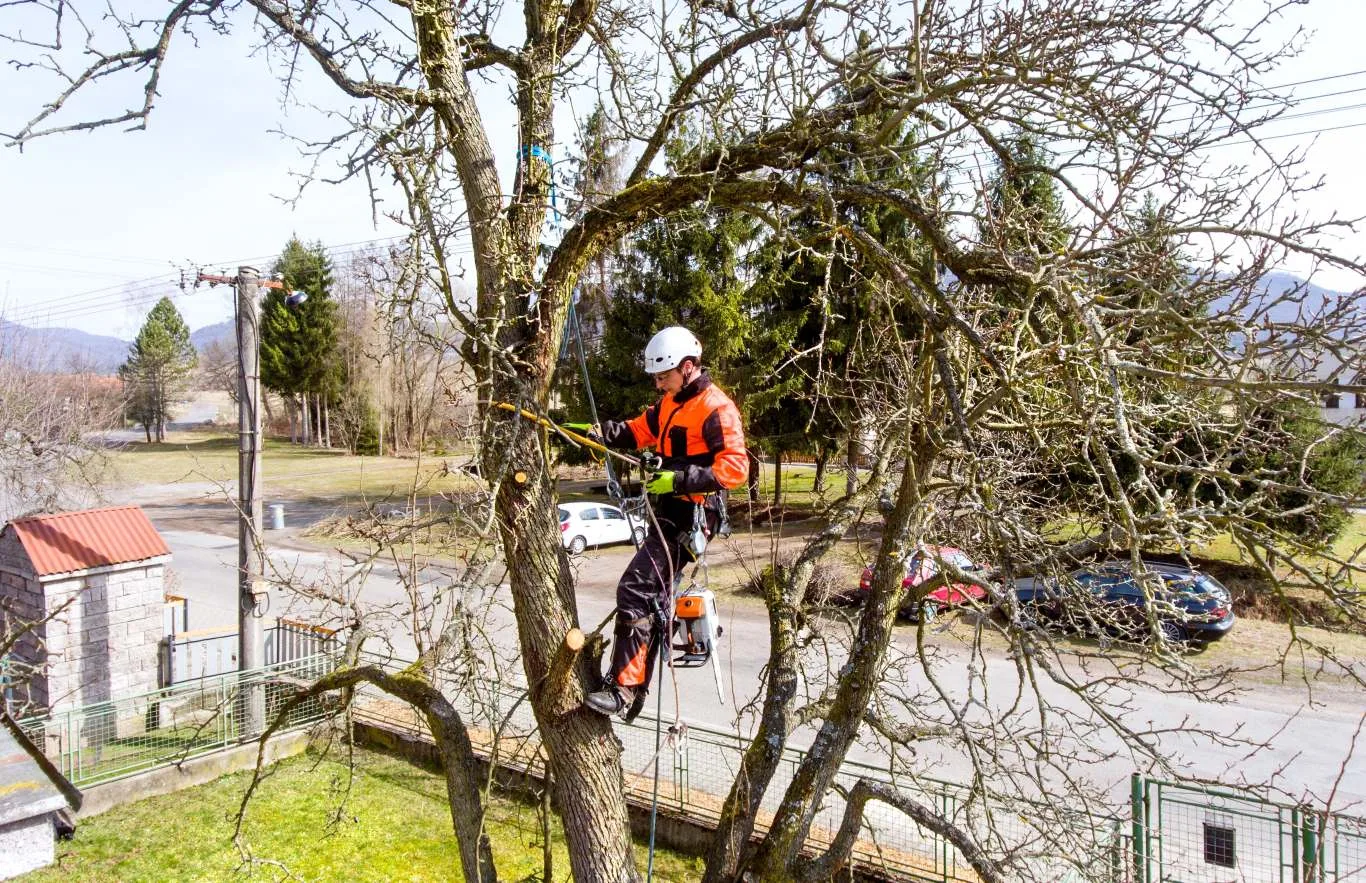
For large or mature trees, always hire a qualified arborist — like the team at Chigwell Tree Services — to handle pruning or felling safely.
Environmental Value of Poplars
Beyond their aesthetic and commercial value, poplars contribute to the environment in several ways:
- Provide shelter and nesting sites for birds.
- Support various insect species.
- Stabilise soil and prevent erosion along riverbanks.
- Absorb carbon dioxide and improve air quality.
Maintaining healthy poplars contributes to biodiversity and sustainability — key values in modern land management across the UK.
Final Thoughts
The types of poplar trees in the UK offer both beauty and utility, from the elegant Lombardy to the native black and aspen varieties. Each has unique qualities that make it valuable for different landscapes, but all require proper management to stay healthy and safe.
If you have poplars on your property and want to ensure they’re properly cared for, Chigwell Tree Services provides expert advice, maintenance, and removal — all at competitive, affordable rates.
Whether you need pruning, inspections, or full tree management, their skilled team ensures your poplars continue to thrive safely and beautifully for years to come.