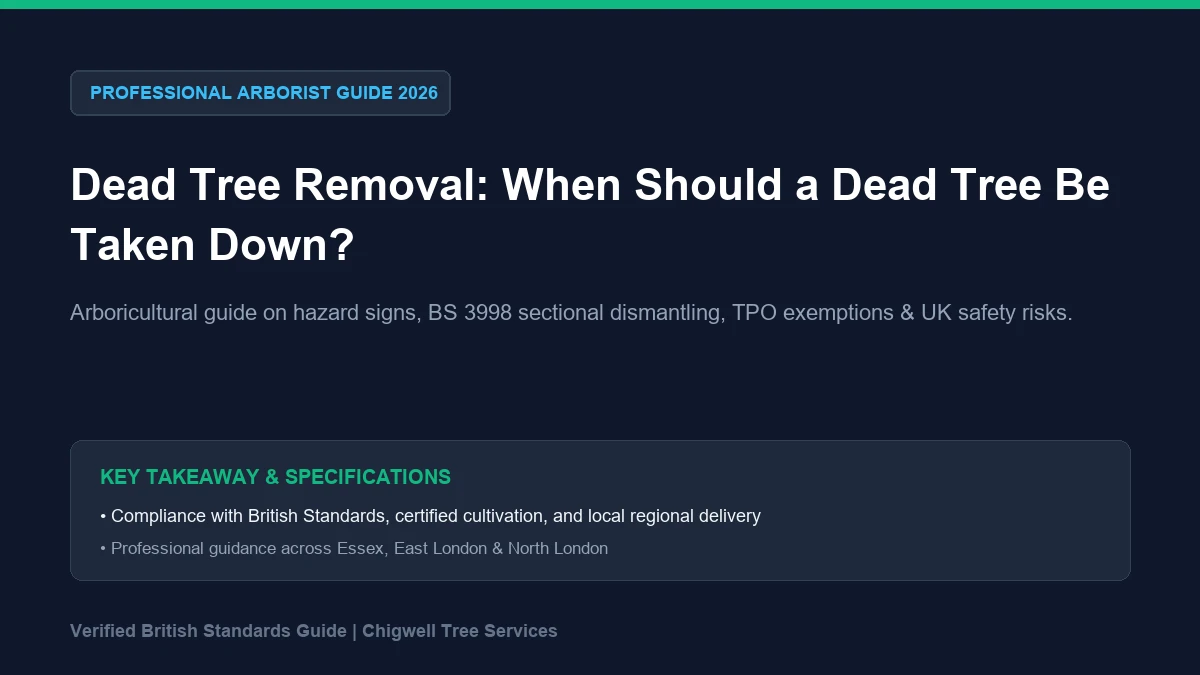
A mature tree adds majestic beauty, shade, and ecological character to any British garden, but when that tree succumbs to disease, drought, or old age, it transitions from a cherished landscape feature into a hazardous structural liability. Deciding on dead tree removal is often emotionally difficult for homeowners, yet delaying action when timber has lost structural integrity invites catastrophic consequences. As a dead tree dries out, its vascular system collapses, wood fibers turn brittle, and foundational root anchors decay silently beneath the lawn surface.
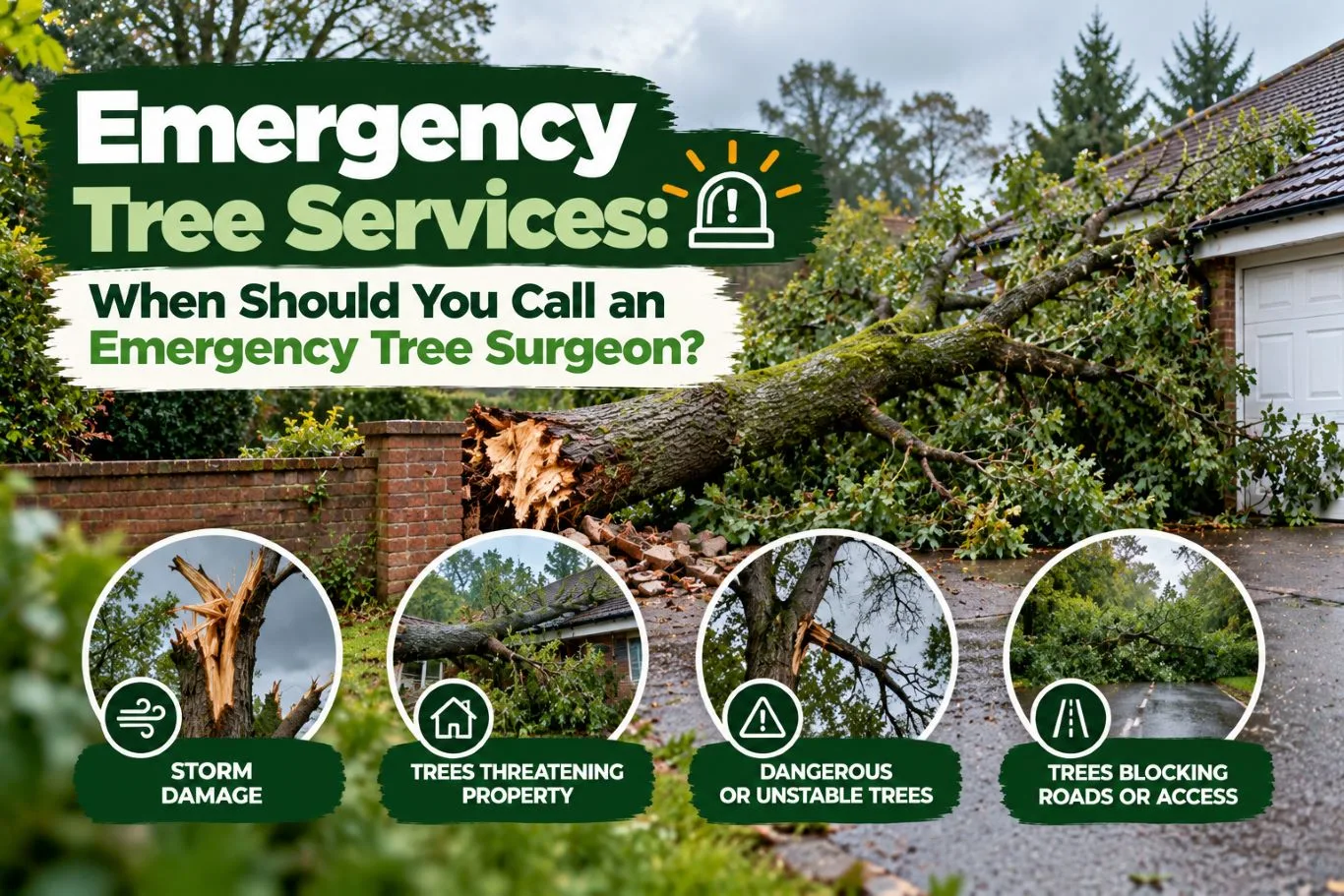
Across Essex, East London, and North London, unpredictable weather events, intense winter gales, and heavy autumn rain frequently expose the structural weakness of unmanaged deadwood. When gusts exceed 50 mph, dead branches snap without warning, crushing conservatories, puncturing slate roofs, and totaling vehicles parked on residential driveways. Furthermore, under British common law and statutory legislation, property owners carry a strict legal duty of care to prevent avoidable harm caused by trees standing on their land.
If you suspect a tree in your garden is dying or dead, conducting a methodical dead tree assessment is vital. Knowing when to remove a dead tree allows you to plan a safe, controlled sectional dismantle before storm damage forces an emergency callout. This comprehensive guide details the key warning signs of dying timber, legal regulations governing tree removal, the dangers of DIY felling, and what to expect when hiring certified arborists.
Quick Summary: Dead Tree Removal
- Core Rule: A dead tree within falling distance of houses, boundaries, or public paths must be dismantled immediately before timber rots and becomes unclimbable.
- Legal Duty: Under the Occupiers’ Liability Acts (1957 & 1984), landowners are civilly and financially liable if neglected dead trees cause injury or property damage.
- TPO Exemptions: Trees protected by Tree Preservation Orders (TPOs) can be removed without standard 6-week delays if dead or posing imminent danger, provided 5 days’ written notice is given.
- Safety Protocol: Never attempt DIY felling on dead timber; brittle wood shears unpredictably without holding timber hinges, demanding certified aerial rigging under BS 3998 standards.
📋 Table of Contents
- → 1. How to Assess Dead Tree Signs
- → 2. When to Remove a Dead Tree: Urgency Factors
- → 3. Dangerous Dead Tree Safety Risks & Liabilities
- → 4. Ecological Value vs. Human Safety
- → 5. Deadwood and Tree Removal Regulations UK (TPOs)
- → 6. The Deadly Pitfalls of DIY Dead Tree Removal
- → 7. Professional Sectional Dismantling (BS 3998)
- → 8. Stump Grinding & Preventing Fungal Spread
- → 9. Dead Tree Risk Matrix & Action Table
- → 10. Frequently Asked Questions
- → 11. Summary: Protecting Your Home & Landscape
Concerned about an unstable, leaning, or dead tree near your home? Speak directly with our certified Essex arborists for an urgent safety assessment:
1. How to Identify Signs a Tree Needs Removing
Determining whether a deciduous tree is truly dead or merely dormant during autumn and winter months requires examining physiological indicators beneath the surface bark:
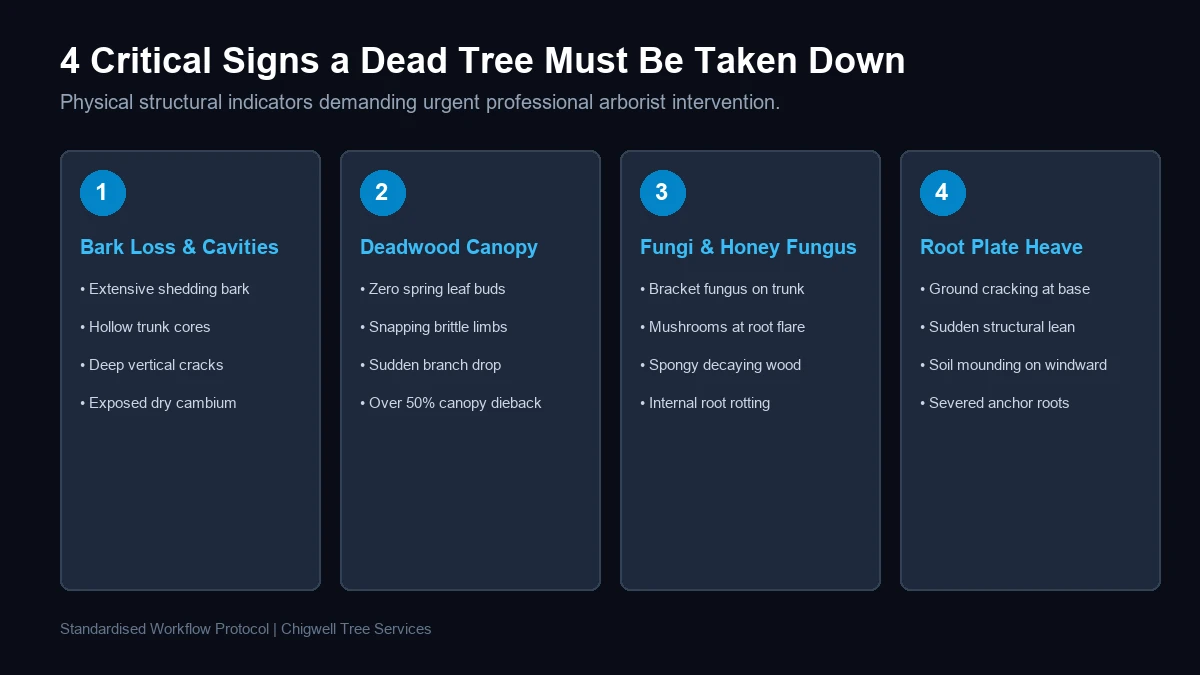
Figure 1: Visual indicators of structural tree decline, root compromise, and severe internal rot.
The Scratch Test (Cambium Inspection)
The most reliable DIY diagnostic is the scratch test. Use a pocketknife or your thumbnail to lightly scrape away the outer bark on several pencil-thick twigs across different sections of the canopy:
* Living Tissue: Reveals a vibrant green, moist, fleshy layer called the cambium layer.
* Dead Tissue: Appears dull brown, dry, and brittle, snapping cleanly in your fingers like a dry twig.
Canopy Dieback and Clinging Brown Leaves
In healthy deciduous species like Oak, Beech, or Ash, autumn leaves change colour and drop completely through a natural process called abscission. When a branch or entire tree dies suddenly during summer, the tree lacks the hydraulic energy to form the abscission layer. As a result, shriveled, dead brown leaves cling stubbornly to branches throughout winter. If over 50% of the upper crown exhibits zero foliage or dead branches, the tree is in terminal structural decline.
Trunk Fissures and Shedding Bark
As a tree dies, it loses moisture and shrinks, causing outer bark to peel away in large sheets, exposing bare wood underneath without new healing callus growth. Deep vertical cracks or longitudinal fissures extending into the trunk core indicate structural heartwood splitting.
Bracket Fungi and Basal Decay
The presence of shelf-like bracket fungi (Ganoderma or Inonotus) on the trunk or honey fungus rhizomorphs around the root flare indicates active fungal digestion of the tree’s lignin and cellulose. Fungi feed on dead and decaying heartwood; by the time fruiting bodies become visible, extensive internal hollows and structural rot are already present.
2. When to Remove a Dead Tree: Assessing Urgency
Homeowners frequently ask: “Can I wait until spring to take down my dead tree?” While living trees are best pruned during dormant winter months, dead trees follow an entirely different protocol:
A dead tree should be removed as soon as its death is confirmed.
Waiting makes the tree exponentially more hazardous:
1. Loss of Structural Flexibility: Living timber contains water and flexible fibers that bend in strong winds. Dead wood rapidly desiccates, turning brittle and prone to catastrophic snap fractures without warning.
2. Climber Anchor Failure: Certified tree surgeons rely on strong, living branch unions to anchor life-support climbing ropes. As a tree rots, branch unions become compromised, making the tree unsafe for arborists to climb. Unclimbable trees require expensive specialized mobile elevated work platforms (MEWPs) or heavy cranes to dismantle, significantly increasing tree removal costs.
3. Pest and Beetle Infestations: Dead timber attracts wood-boring insects, bark beetles, and carpenter ants, which can subsequently migrate to healthy neighboring garden trees or structural timbers in your house.
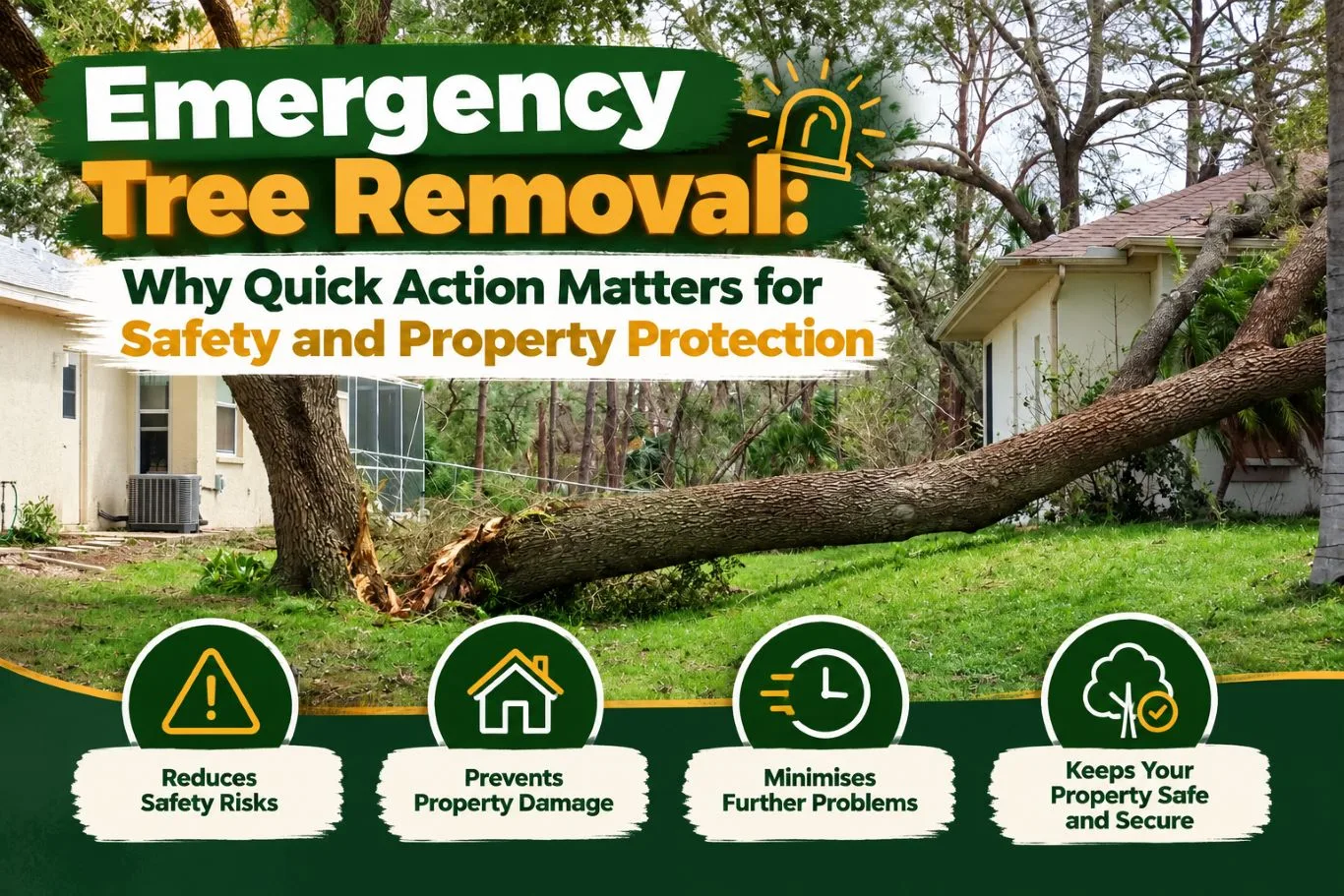
For immediate emergency response during extreme weather, learn more about our rapid emergency tree removal protocols across Essex and East London.
3. Dangerous Dead Tree Safety Risks & Legal Liabilities
Ignoring a dead tree on private land creates severe legal, financial, and physical liabilities:
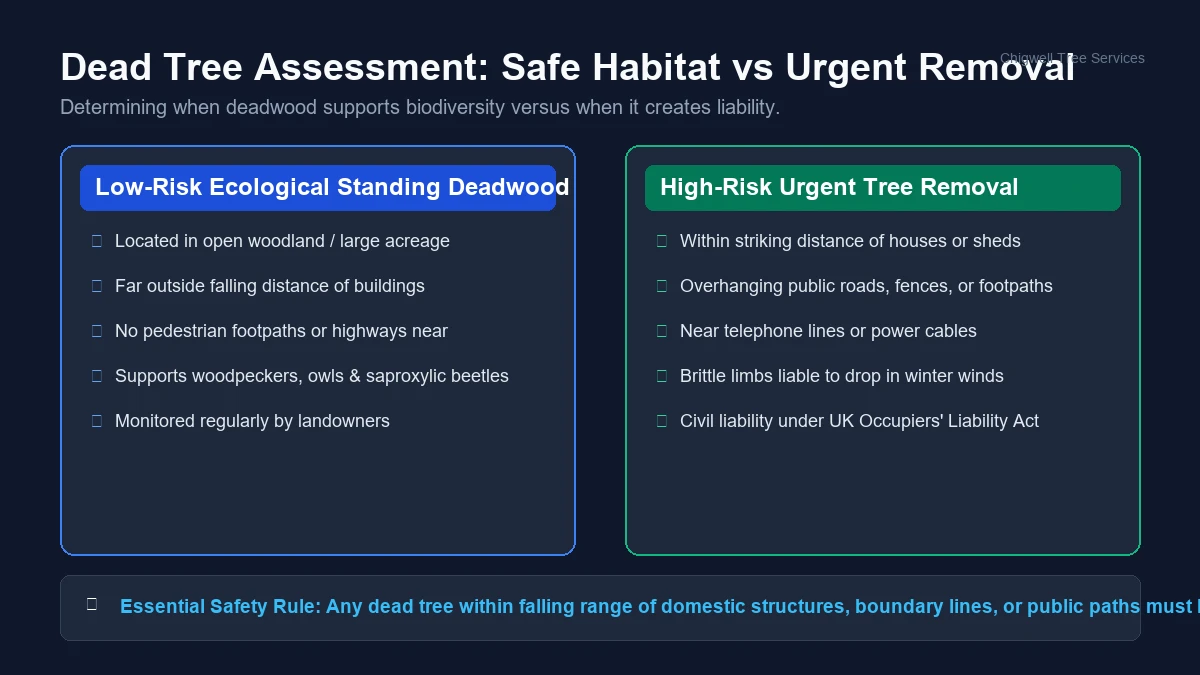
Figure 2: Comparing manageable rural wildlife deadwood against hazardous residential trees requiring immediate felling.
Civil Liability Under UK Law
Under the Occupiers’ Liability Act 1957 and Occupiers’ Liability Act 1984, landowners owe a common law duty of care to all visitors, neighbors, and passersby. If you know—or ought reasonably to have known—that a tree on your property was dead or dangerous, and you fail to take remedial action, you are legally negligent if it falls. Home insurance policies frequently exclude storm damage claims if the loss adjuster determines that an unmaintained, pre-existing dead tree caused the collapse.
Proximity to Buildings and Boundary Lines
In dense residential areas across North London (such as Enfield, Barnet, and Haringey) and urban Essex (such as Ilford, Romford, and Chigwell), trees stand in close proximity to extensions, fences, conservatories, and public highways. A falling branch weighing just 50 kg can easily penetrate a residential tiled roof, fracture gas mains, or sever overhead power and telephone lines.
Check customer reviews, local council approvals, and certified insurance credentials directly via our verified Chigwell Tree Services Google Business profile.
4. Ecological Value vs. Human Safety
From an environmental standpoint, deadwood is an invaluable ecological habitat. The Woodland Trust estimates that over 40% of woodland wildlife relies on decaying deadwood for food and shelter, including stag beetles, solitary bees, bats, and woodpeckers.
However, arboriculture draws a clear distinction between rural habitat retention and residential target zones:
* Open Parkland / Rural Acreage: A dead oak or beech standing 50 metres away from any building, public right of way, or car park can safely be left standing or monolith-pruned (reducing high branches while leaving the main trunk as a wildlife totem).
* Domestic Gardens: If any house, outbuilding, garden patio, children’s play area, or boundary fence falls within the potential striking zone (the height of the tree plus a 10% safety margin), human life and property safety strictly supersede ecological habitat.
5. Deadwood and Tree Removal Regulations UK (TPOs & Conservation Areas)
Before revving up a chainsaw, every property owner must determine whether the tree is subject to statutory planning protections under UK law:
Tree Preservation Orders (TPOs)
Carrying out unauthorized works on a tree protected by a Tree Preservation Order is a criminal offense subject to unlimited fines in the Magistrates’ or Crown Court. However, under Section 198(6)(a) of the Town and Country Planning Act 1990, an exemption exists for trees that are dead or dying:
* 5-Day Written Notice (Section 211 Notice): Even when a tree is dead, you cannot simply fell it without notification. You must give your Local Planning Authority (LPA)—such as Epping Forest District Council, Redbridge, or Waltham Forest—at least 5 working days’ written notice before removing the tree.
* Evidence Retention: Take clear, high-resolution photographs of peeling bark, trunk decay, and canopy dieback. Certified tree surgeons provide formal arboricultural hazard reports to submit with the exemption notice to protect you against legal disputes.
For detailed legal guidance, read our comprehensive overview explaining Tree Preservation Orders (TPO).
6. The Deadly Pitfalls of DIY Dead Tree Removal
Attempting to fell a dead tree yourself using a consumer chainsaw and ladders is extraordinarily dangerous. Statistics from the Health and Safety Executive (HSE) show that arboriculture is among the UK’s most hazardous industries, with non-professional DIY attempts resulting in severe crush injuries and fatalities every year.
Why Dead Timber Behaves Erratically
When felling a healthy tree, arborists cut a directional notch and rely on a strip of intact wood—the “holding hinge”—to guide the tree smoothly to the ground. In a dead tree:
* Hinge Wood Decay: The wood fibers are dry, rotted, or hollow, meaning the hinge snaps prematurely, causing the trunk to barber-chair (split vertically) or kick back violently.
* Vibrational Crown Drop: The vibration of a chainsaw touching the trunk can dislodge heavy dead branches (known colloquially as “widow-makers”) directly onto the operator below.
* Ladder Hazards: Resting a ladder against a brittle dead trunk is inherently unsafe, as dead limbs can collapse under the climber’s body weight.
7. Professional Sectional Dismantling (BS 3998 Standards)
When you commission professional tree removal services in Essex, qualified arborists adhere to British Standard BS 3998:2010 (Tree Work — Recommendations):
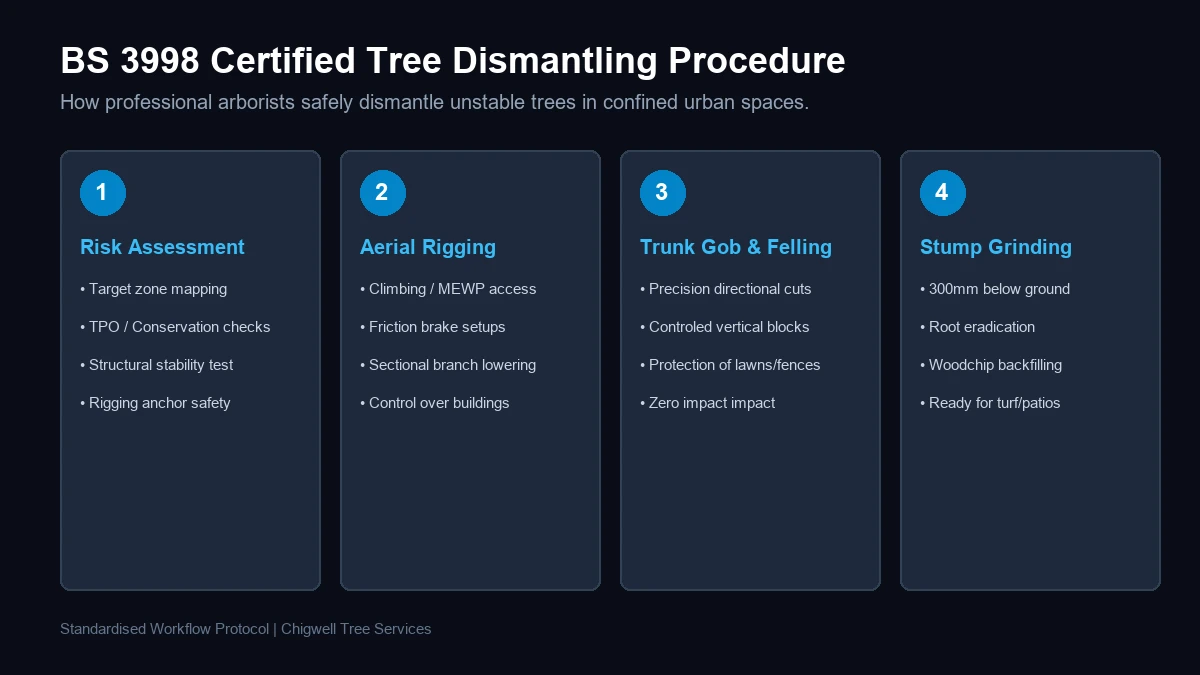
Figure 3: Step-by-step sectional rigging and dismantling protocol for hazardous dead trees.
In confined urban gardens, trees cannot be straight-felled from the ground. Instead, arborists employ sectional dismantling:
1. Rigging Systems: High-strength arborist ropes, friction bollards, and pulleys are anchored to lower the timber piece by piece under complete mechanical control.
2. MEWP / Crane Operations: If the trunk is structurally compromised and unsafe to climb, tree surgeons utilize lorry-mounted cherry pickers or cranes to dismantle the tree from the outside in without putting human weight on the timber.
3. Target Protection: Every branch is rigged over greenhouses, boundary fences, and manicured lawns, landing gently in drop zones with zero lawn impact.
Explore our dedicated tree removal services to see how our NPTC-certified teams execute complex urban tree felling.
8. Stump Grinding & Preventing Fungal Spread
Felling a dead tree down to ground level leaves a subterranean root system embedded in the soil. If the tree died from aggressive pathogens like Honey Fungus (Armillaria) or Dutch Elm Disease, leaving the stump to rot creates an underground breeding ground that infects surrounding healthy trees, shrubs, and hedges:
* Mechanical Stump Grinding: Powerful hydraulic carbide-toothed grinders mill the stump and root flare 300 mm below ground level, reducing root crowns to clean mulch.
* Ground Reinstatement: The resulting organic mulch can be composted, and the excavation backfilled with topsoil ready for turfing, paving, or replanting.
Learn more about specialized stump eradication by reading our full service guide on tree stump removal.
9. Dead Tree Risk Matrix & Action Table
Use this risk assessment framework to identify the urgency level of any dead or declining tree on your property:
| Tree Condition & Symptoms | Location / Target Zone | Risk Level | Recommended Action | Legal Requirement |
|---|---|---|---|---|
| Severe trunk cavity, fungal brackets & crown dieback | Within falling distance of house, highway, or pavement | Extreme / Urgent | Immediate emergency sectional dismantling via MEWP / crane | Immediate exemption notice to LPA if under TPO |
| Dead standing trunk, brittle limbs shedding bark | Overhanging garden lawn, patio, or neighbor’s fence | High | Schedule controlled rigging & dismantling within 14–30 days | Standard 5-day TPO deadwood notification |
| Over 50% canopy dieback, deadwood branches | Residential garden away from immediate structures | Moderate | Professional arborist assessment for crown reduction or felling | Check TPO / Conservation Area status before work |
| Dead standing trunk (monolith) with sound lower wood | Open rural meadow, large paddock, or woodland boundary | Low | Retain as standing deadwood habitat; annual safety check | None unless boundary borders public highway |
10. Frequently Asked Questions About Dead Tree Removal
How do I know if my tree is dead or just dormant?
Perform the scratch test on three or four pencil-thick twigs in the lower and middle canopy. If scraping away the outer bark reveals dry brown wood with zero green cambium underneath, that branch is dead. In spring and summer, a total failure to produce leaf buds or leaves that turn crisp brown and remain attached are definitive indicators of tree mortality.
Does my local council have to approve the removal of a dead tree?
If your tree is protected by a Tree Preservation Order (TPO) or is situated within a designated Conservation Area, you cannot remove it without notifying the council. Under the Town and Country Planning Act, dead trees are exempt from full 6-week applications, but you must submit a 5-day written notice accompanied by photographic proof of death before taking the tree down.
What happens if a dead tree on my property falls on my neighbor’s house?
Under UK common law, if you were aware (or ought to have known) that the tree was dead and neglected to take remedial action, you can be held legally negligent for the resulting property damage. Your neighbor’s insurer will seek to recover all rebuilding and repair costs directly from you or your home insurance policy.
How much does professional dead tree removal cost in Essex?
The cost of taking down a dead tree depends on its height, trunk diameter, structural soundness, and ease of site access. Small dead fruit trees typically range between £250 and £500, whereas mature dead oaks or poplars requiring specialized rigging, MEWP platforms, or crane assistance generally range between £800 and £2,500+. Always obtain a detailed written quote from insured, NPTC-qualified arborists.
What should be done with the tree stump after removal?
It is strongly recommended to mechanically grind the stump at least 300 mm below ground level. Leaving dead stumps creates an ideal breeding ground for wood-boring pests and fungal root rots like Honey Fungus (Armillaria), which spread through subterranean soil to infect neighboring shrubs and trees.
11. Summary: Protecting Your Home & Landscape
Proactive dead tree removal is essential to safeguarding your family, home, and neighbors from catastrophic storm failure. Dead timber deteriorates rapidly, transforming predictable trees into brittle, dangerous structures that become more complex and costly to dismantle with every passing month.
By conducting regular tree inspections, recognizing warning signs like bracket fungus and canopy dieback, and commissioning NPTC-certified arborists who comply with British Standard BS 3998, you can remove hazardous timber safely, legally, and with minimal disruption to your garden.
Do you have a dead, diseased, or hazardous tree on your property? Contact our expert tree surgeons in Essex and East London today for a free, no-obligation inspection and quote: