Quick Summary
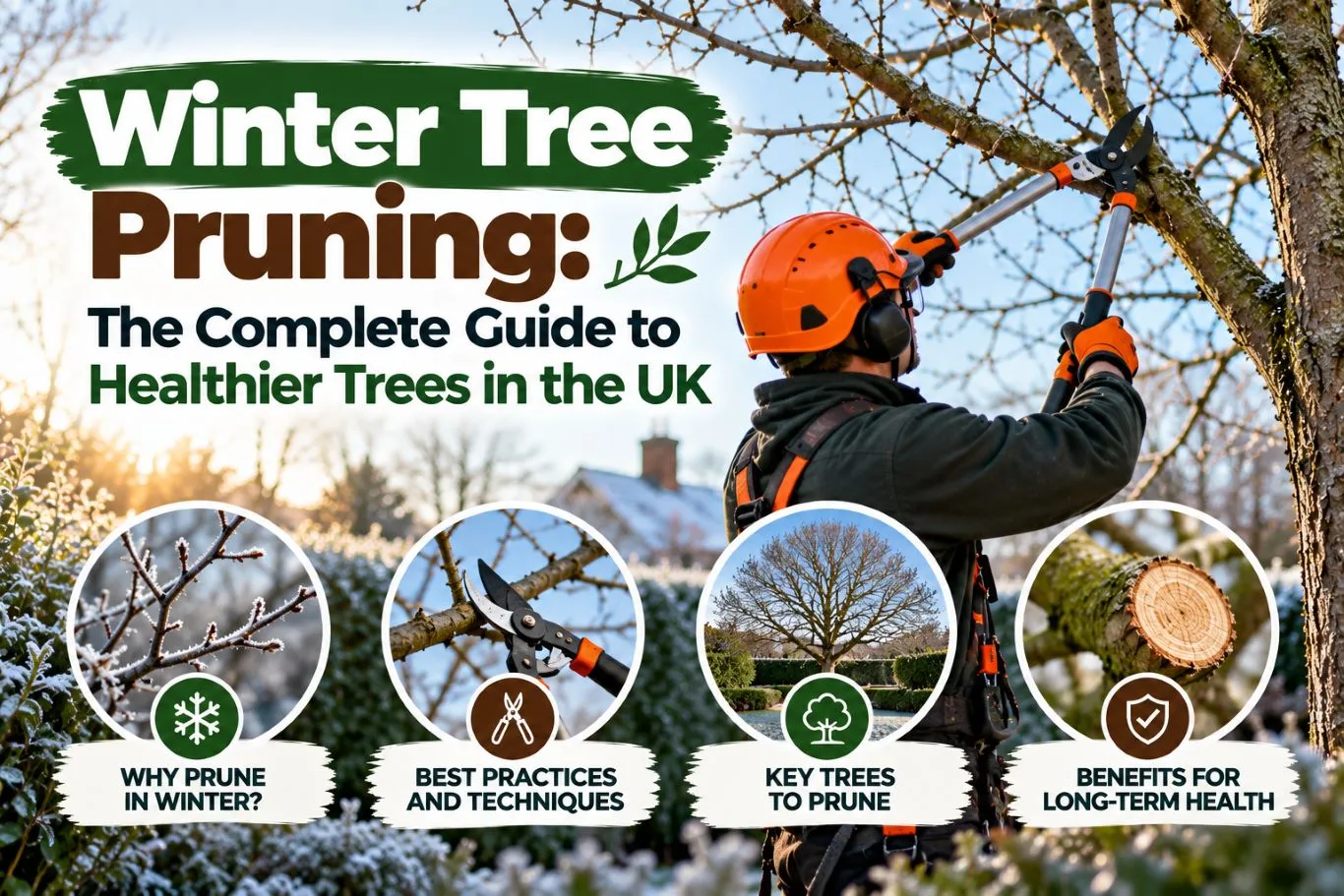
- Professional winter tree reduction capitalises on seasonal dormancy to scale back overgrown canopies while protecting botanical vitality.
- Bare, leafless crowns provide complete architectural visibility, enabling arborists to identify hidden defects, crossing limbs, and fungal cavities with pinpoint accuracy.
- Reducing canopy volume lowers dynamic wind resistance, preventing seasonal gales from tearing heavy limbs down onto roofs, conservatories, and boundary fences.
- The dormant winter window minimises sap bleeding and suppresses fungal pathogen transmission, leading to cleaner wound occlusion.
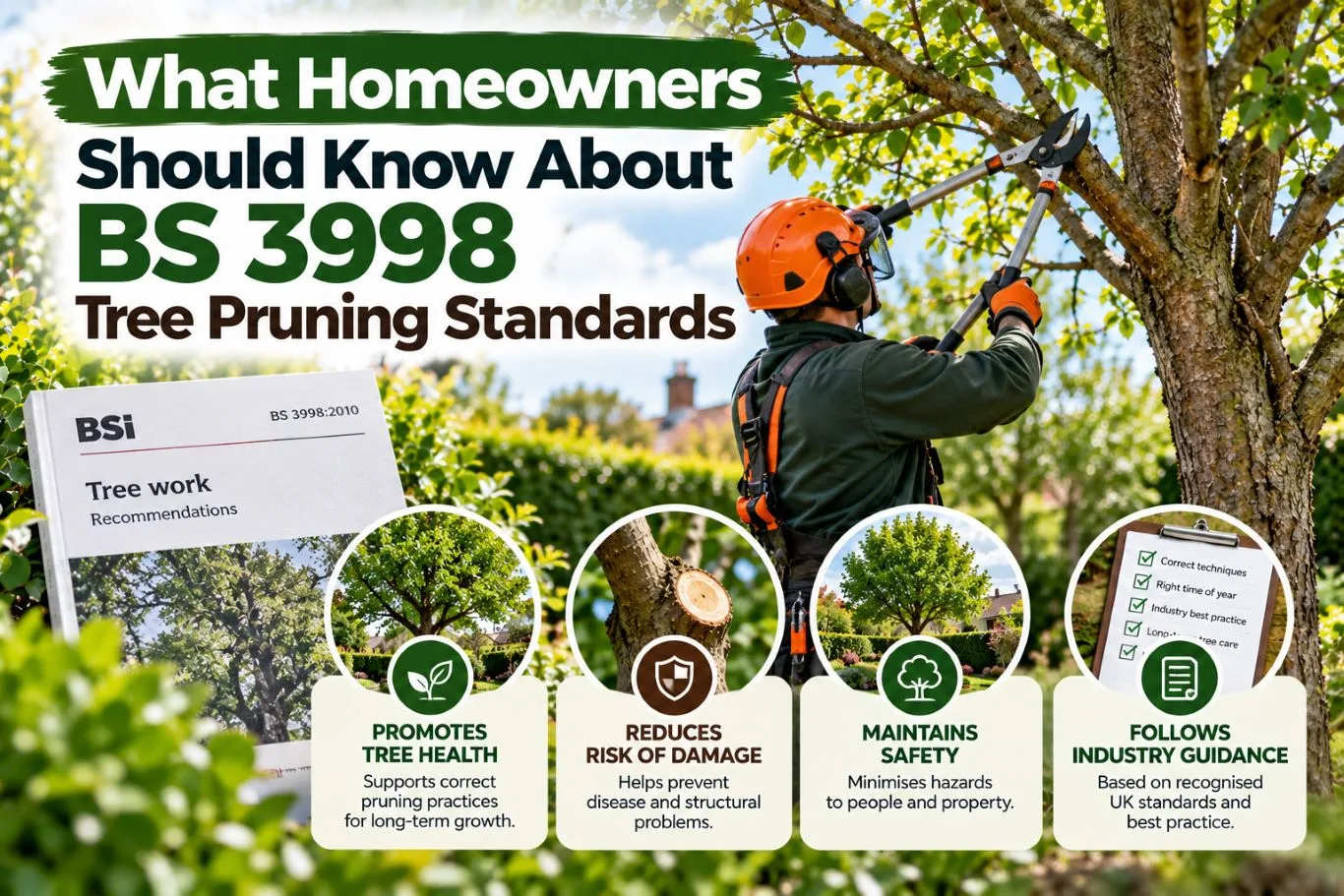
- Learn how certified tree surgeons adhere to British Standard BS 3998 to ensure balanced, natural regrowth ahead of spring bud burst.
Introduction
When autumn leaves drop and frost settles across British gardens, outdoor maintenance is often shelved until the warmer months. Yet for professional arborists and informed property owners, the colder period represents the premier window for major canopy work. Scheduling strategic winter tree reduction between late November and early March allows mature broadleaves to be scaled back safely without inducing physiological shock. Because deciduous trees enter a dormant state and store their energy reserves deep in the root system, reducing crown height and spread during cold weather protects vascular health while eliminating storm-induced safety risks. At Chigwell Tree Services, our certified arborists deliver dependable, affordable, and professional tree services for residential & commercial properties across Essex, East London & North London / UK and surrounding areas, helping homeowners achieve balanced, storm-resilient canopies that flourish come spring.
Ready to reduce overgrown canopies, eliminate storm risks, and boost garden light this winter? Chat with Chigwell Tree Services on WhatsApp for expert tree reduction advice across Essex, East London, and North London :
What Is Winter Tree Reduction?
Unlike general garden pruning or dangerous topping practices, a tree crown reduction is a precision arboricultural technique governed by British Standard BS 3998 (Tree Work Recommendations). It systematically decreases the overall height and radial spread of a tree’s canopy by pruning terminal branches back to viable lateral growth points.
Core Objectives of Tree Size Management in Winter:
- Proportional Volume Reduction: Scaling back outer branch boundaries by a specified percentage (typically 15% to 30%).
- Retaining Natural Silhouette: Preserving the tree's natural species-typical shape rather than leaving flat, hacked stems.
- Biomechanical Load Relief: Easing structural leverage on long, over-extended boughs and heavy limb unions.
- Enhancing Environmental Balance: Opening sightlines and restoring daylight to shaded gardens and windows.
Carrying out tree crown reduction in winter ensures that cuts are executed while the tree's vascular system is resting, providing the foundation for controlled and balanced recovery.
The 4 Core Benefits of Winter Tree Reduction
Opting for seasonal reduction work delivers immediate practical advantages for garden safety and tree vitality:
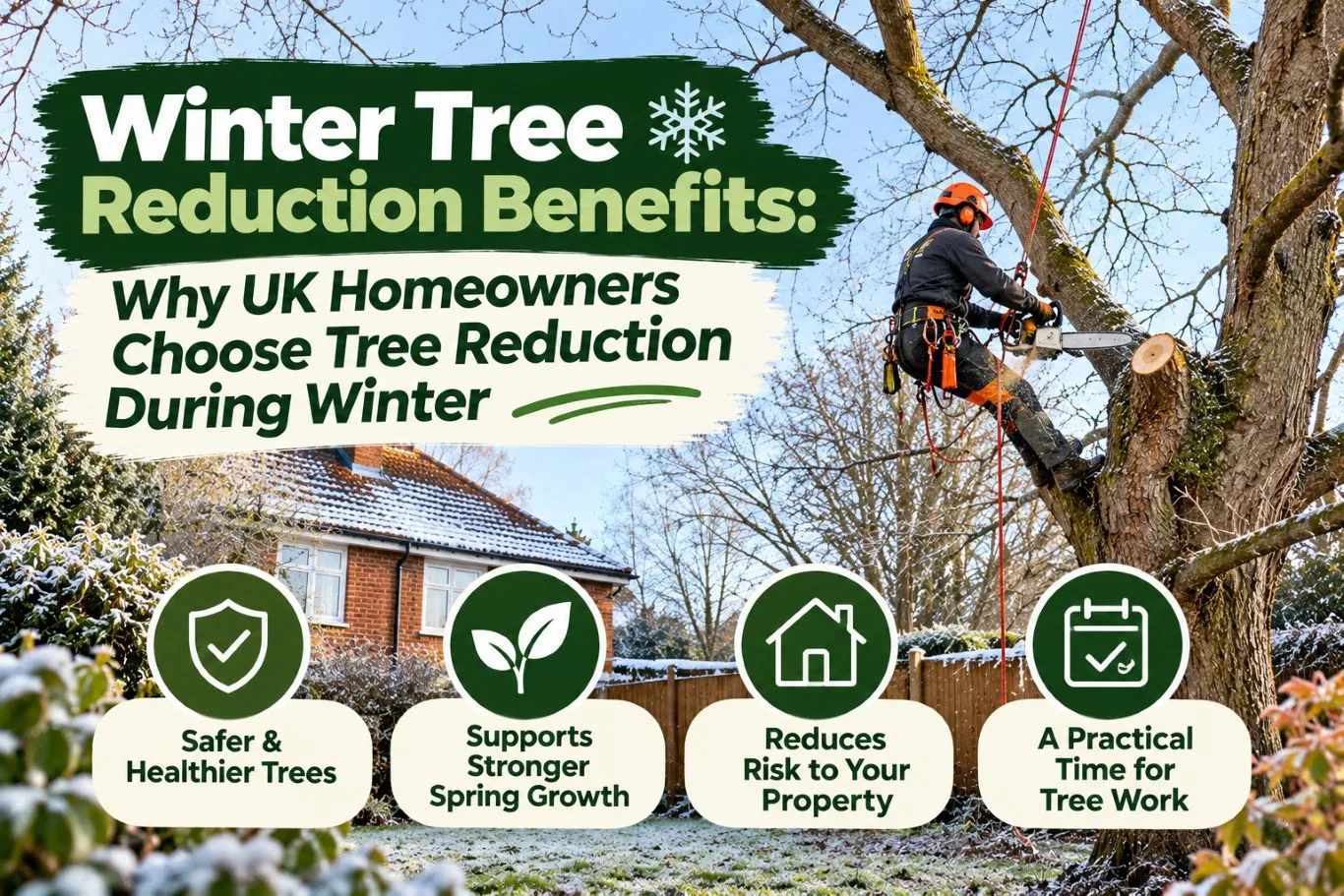
| Core Advantage | Direct Operational Benefit | Impact on Property & Landscape |
| 1. Safer & Healthier Trees | Relieves end-weight on mature boughs and removes concealed diseased or dead wood. | Prevents limb split-outs, eliminates decay pockets, and extends overall tree lifespan. |
| 2. Supports Stronger Spring Growth | Stored root carbohydrates remain intact to fuel vigorous, targeted bud burst in April. | Creates balanced foliage density and avoids erratic, weakly attached epicormic shoots. |
| 3. Reduces Risk to Your Property | Lowers canopy “sail area”, stopping violent winter winds from levering shallow root plates. | Protects roof tiles, guttering, brick boundary walls, glasshouses, and parked vehicles. |
| 4. A Practical Time for Tree Work | Bare silhouettes ensure precise cuts; frozen or firm ground minimises lawn compaction. | Clean site clearance, faster arborist access, and zero disturbance to nesting wild birds. |
Why Dormancy Matters: The Biological Advantages
To understand the winter tree reduction benefits, one must examine seasonal tree physiology. Throughout spring and summer, trees expend immense energy photosynthesising and distributing sap. Pruning during active growth stages can drain moisture and shock the cambium layer.
1. Carbohydrate Preservation in the Root Plate
Come late autumn, deciduous trees withdraw sugars and essential minerals from their leaves, storing these reserves in their root systems. Because the sap flow slows to a trickle during winter dormancy, pruning wounds made in December or January do not cause nutrient loss. The tree retains its full energy reserve to drive recovery once temperatures rise.
2. Pathogen and Fungi Inactivity
In warm, humid weather, airborne fungal spores and wood-boring insects actively seek out fresh cuts on tree bark. During crisp British winters, these biological threats remain largely inactive. Cut surfaces dry naturally in cold air, preparing to form a clean barrier of wound wood (callus tissue) at the earliest sign of spring.
3. Clear Structural Visibility
Dense summer foliage easily conceals structural weaknesses. A bare winter canopy allows tree surgeons to inspect the entire framework from ground level and within the crown, exposing tight V-shaped crotches, internal hollows, rubbing limbs, and stress cracks that must be corrected.
The Best Time for Tree Reduction in the UK
Pinpointing the best time for tree reduction in the UK depends on local climate conditions and tree species:
UK Winter Tree Work Schedule:
– Late November to December: Excellent window for standard deciduous broadleaves (Oak, Beech, Hornbeam, Lime) following leaf drop.
– January to Mid-February: Deep dormancy. Ideal for structural crown reductions, canopy lifting, and heavy limb restructuring.
– Late February to Early March: Final dormant window. Best for finishing crown thinning and reductions before spring sap begins to rise.
Crucial Arboricultural Note: Avoid carrying out major reduction work on days when temperatures drop severely below freezing. Sub-zero frosts make timber brittle and can cause delicate cambium tissue around cut margins to suffer freeze-crack damage.
Managing Tree Size: Why Winter Reduction Beats “Topping”
Many untrained contractors offer cheap “topping” or “lopping” services, which involve cutting off large vertical limbs at arbitrary heights. Topping severely damages trees and creates serious long-term liabilities:
- Weak Regrowth: Indiscriminate cuts trigger an emergency survival response, forcing the tree to produce clusters of rapid, weakly attached water shoots that easily snap in future winds.
- Extensive Heartwood Rot: Large, flat wounds cannot heal cleanly, creating open pathways for rain and wood-decaying fungi to rot the main trunk from the inside out.
- Permanent Disfigurement: Topping ruins the tree's natural silhouette, turning an elegant garden asset into an unsightly, hazardous stump.
By contrast, professional tree size management using BS 3998-compliant reduction techniques shortens branches back to viable lateral boughs at least one-third the diameter of the parent cut. This preserves the branch collar, maintains natural sap movement, and encourages orderly regrowth.
For extensive grounds, commercial developments, and private estates requiring compliant canopy management, booking professional tree reduction services for residential & commercial properties across Essex, North London & East London ensures high-altitude work is carried out using load-rated rigging equipment and expert lowering techniques.
Legal and Environmental Compliance in the UK
Before scheduling winter tree maintenance, homeowners must ensure all statutory regulations are met:
- Tree Preservation Orders (TPOs): If your tree is protected by a council TPO, unauthorized reduction—even by a few branches—is a criminal offense. A formal application must be submitted to your Local Planning Authority (LPA), a process typically taking six to eight weeks.
- Conservation Areas: Properties in designated Conservation Areas require six weeks' written notice (Section 211 Notice) before completing tree works on stems exceeding 75mm in diameter.
- Wildlife Protection: Carrying out major crown reductions during the winter window naturally avoids the active bird nesting season (March to August), keeping your project fully aligned with the Wildlife and Countryside Act 1981.
Reputable tree surgeons regularly liaise with local council planning officers, submitting accurate crown reduction specifications and handling planning documentation on your behalf.
Why Hire Professional Tree Reduction Services?
Large-scale crown reductions require technical climbing, precise balance, and heavy rigging. Engaging certified professional tree reduction services delivers clear safeguards:
- Sectional Lowering: Heavy boughs are dismantled section by section and guided to the ground using lowering ropes and friction brakes, preventing impact damage to roofs, fences, and lawns.
- Species-Specific Botanical Knowledge: Qualified arborists know exactly how much canopy volume each species can tolerate losing without triggering stress (for example, reducing an Oak by 20% versus a vigorous Willow by 30%).
- Complete Green Waste Clearance: All branch arisings are processed through commercial woodchippers and removed, leaving garden beds swept and lawns clean.
FAQs
1. How much of the tree canopy can safely be removed during a winter reduction?
Under British Standard BS 3998, professional arborists generally recommend removing no more than 15% to 30% of the overall crown volume in a single operation. Removing more than 30% can deplete vital energy reserves and shock the root system, even during winter dormancy.
2. Can all garden trees be reduced in winter?
Most deciduous broadleaves (such as Oak, Beech, Field Maple, and Hazel) thrive with winter reduction. However, stone fruit trees (Plum, Cherry, Damson) must never be pruned in winter due to the risk of deadly Silver Leaf fungal disease; these should only be pruned in mid-summer. Additionally, heavy sap bleeders like Birch and Walnut should be pruned in late summer or very early winter before root pressure builds.
3. How quickly can your local arborists visit to provide a quote?
Our local teams provide prompt site surveys across the region. We typically attend domestic gardens or commercial facilities to inspect tree structure, assess site access, and supply a detailed, fixed quotation within 24 to 48 hours.
4. What regional areas do your tree reduction crews cover?
Our operational network covers the whole of Essex—including Chigwell, Loughton, Woodford, Buckhurst Hill, Epping, Brentwood, Romford, and Chelmsford—alongside adjacent North London and East London boroughs.
5. Will winter reduction stop light from being blocked in my garden next summer?
Yes. By reducing the overall perimeter spread and thinning internal secondary branches, winter reduction significantly increases sunlight penetration to lawns, patios, and flower beds, keeping the space bright while maintaining shade and privacy.
Conclusion / Final Thoughts
Taking proactive advantage of the colder months for planned winter tree reduction is one of the smartest investments a property owner can make. By working with the tree's natural dormant cycle, you eliminate heavy storm-sail weight, prevent limb fractures, and open up garden light while protecting the underlying vascular health of your trees. With bare silhouettes guiding precise cuts, certified arborists ensure your trees maintain an attractive, balanced form that produces vigorous, healthy foliage when spring returns.
At Chigwell Tree Services, our arborists combine certified arboricultural expertise with specialised aerial rigging gear, full public liability insurance, and strict adherence to British Standard BS 3998. Whether you need an overgrown garden oak balanced, boundary clearance over neighbouring roofs, or proactive canopy management for commercial grounds, our friendly local specialists provide dependable, high-quality care. Safeguard your property and prepare your trees for a vibrant spring—contact our team today to book your free, no-obligation site consultation.