Quick Summary
- Professional winter tree pruning takes full advantage of seasonal dormancy to sculpt branch architecture, stimulate spring vitality, and prevent storm damage.
- A leafless canopy provides complete structural visibility, making it easy to identify crossing limbs, tight V-crotches, and hidden structural defects.
- Cutting during cold weather dramatically lowers the risk of pest infestations and fungal spore contamination compared to warmer months.
- Discover which species thrive with winter pruning (such as apples, pears, and many broadleaf hardwoods) and which trees must strictly wait until summer.
- Learn how certified arborists ensure full legal compliance with British Standard BS 3998, Tree Preservation Orders (TPOs), and Conservation Area rules.
Introduction
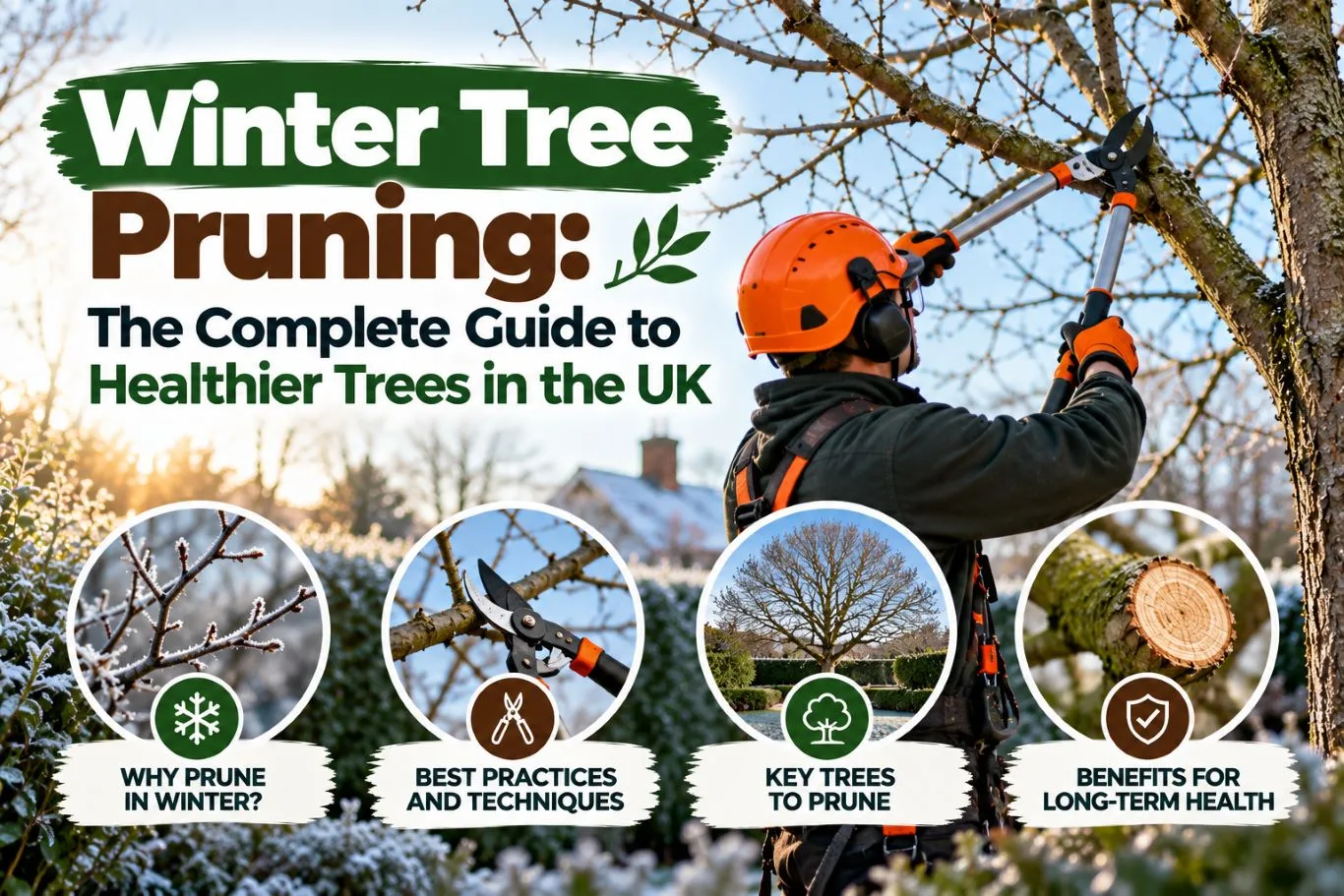
When autumn leaves fall and British gardens settle into winter frost, most outdoor maintenance grinds to a halt. Yet for professional arborists, the arrival of cold weather marks the most productive, biologically advantageous window of the entire calendar year. Carrying out methodical winter tree pruning between late November and early March allows trees to be reshaped, thinned, and relieved of heavy deadwood with minimal physiological disruption. Because deciduous trees have paused active growth and drawn valuable energy reserves underground into their root plates, pruning during winter dormancy avoids the sap loss and open-wound stress associated with summer cutting. At Chigwell Tree Services, our certified arborists deliver dependable, affordable, and expert tree services for residential & commercial properties across Essex, East London & North London / UK and nearby areas, helping homeowners and property managers protect their canopies against harsh winter weather while setting the stage for vibrant spring growth.
Ready to prepare your garden for a thriving spring with expert dormant pruning? Chat with Chigwell Tree Services on WhatsApp for professional advice across Essex, East London, and North London :
Why Prune in Winter? The Science of Dormancy
Understanding winter tree maintenance begins with plant biology. Throughout the spring and summer, trees work continuously: their leaves photosynthesise, converting sunlight into sugars that are transported across the vascular system. Come autumn, deciduous trees pull those essential starches back from the canopy and store them safely inside the root system before shedding their foliage.
Biological Advantages of Winter Dormancy:
- Energy Conservation: Stored root starches remain untouched because cuts are made while vascular activity is dormant.
- Clear Architectural Visibility: Without dense foliage, internal branch defects, crossing limbs, and cavities are fully visible.
- Suppressed Pathogens: Bacteria, airborne fungal spores, and wood-boring insects are inactive in freezing temperatures.
- Clean Wound Sealing: Wounds dry cleanly during cold spells, preparing to form protective callus wood the moment sap rises in spring.
- Firmer Ground Conditions: Frozen or settled turf suffers less compaction from lowering equipment and timber dollies.
By scheduling dormant season tree pruning, you work in complete harmony with the tree's natural resting cycle rather than fighting against its active growth phases.
The Core Benefits of Winter Pruning
Applying targeted winter tree care tips delivers structural, aesthetic, and financial benefits across residential landscapes:
| Practical Advantage | Direct Garden & Property Benefit |
| Unrivalled Structural Visibility | Arborists can spot subtle cracks, weak V-shaped unions, and rubbing limbs that were completely concealed by summer leaves. |
| Reduced Storm Sail Area | Selectively thinning and reducing the canopy reduces wind resistance, stopping winter gales from tearing heavy limbs down over roofs or fences. |
| Minimal Pest & Disease Spread | Fungal spores (such as fireblight or honey fungus spores) cannot easily infect freshly cut branch collars in sub-zero or near-freezing air. |
| Explosive Spring Regeneration | Because the root system retains full energy reserves, winter cuts prompt targeted, vigorous growth in selected lateral buds come April. |
| No Nesting Wildlife Disruptions | Major structural cuts avoid the active bird breeding season (March to August), keeping work compliant with the Wildlife and Countryside Act 1981. |
Best Time to Prune Trees in Winter: The Seasonal Window
For optimal results in winter tree pruning UK, timing must be tailored to weather patterns and species characteristics:
UK Winter Pruning Timeline:
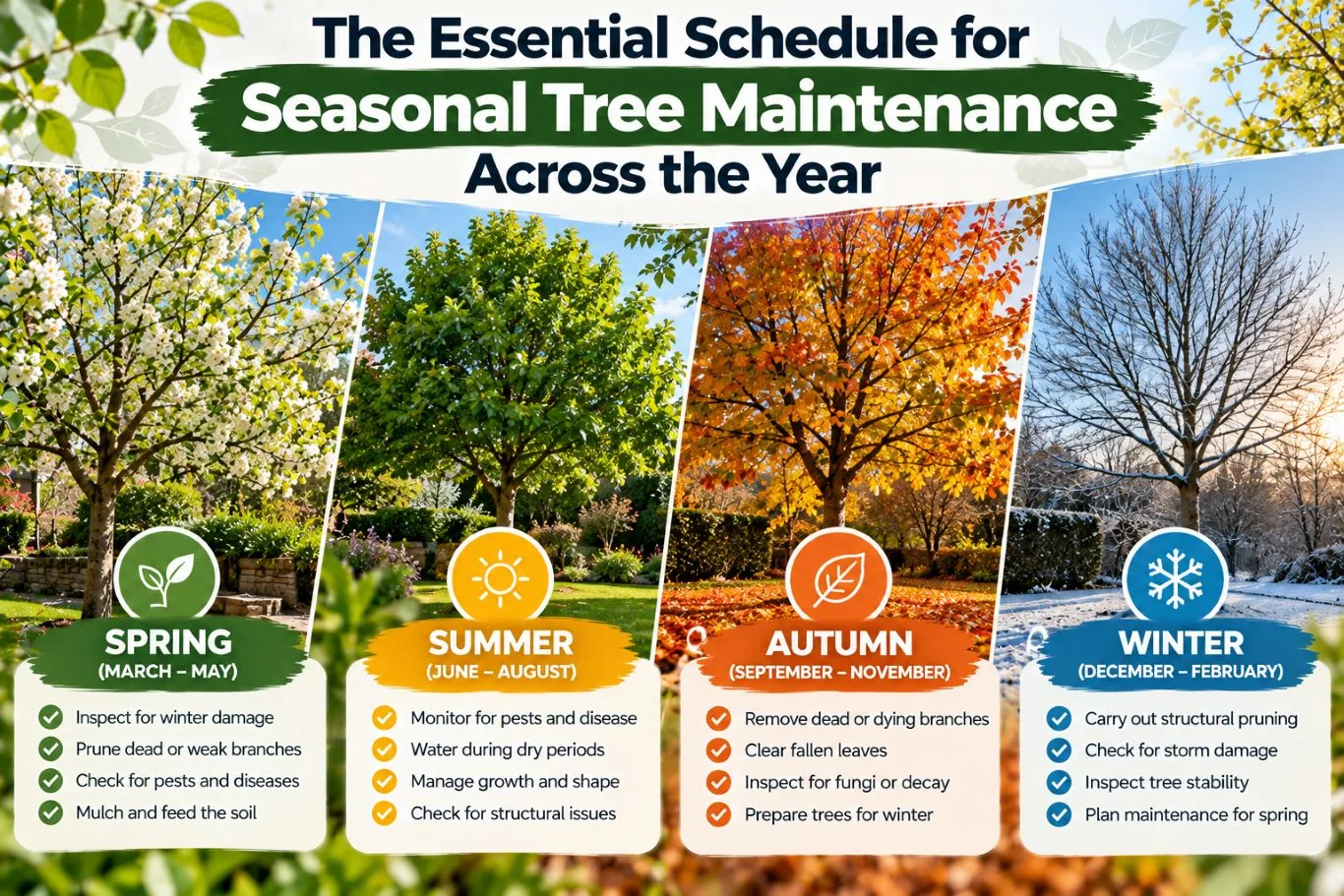
– Late November to December: Excellent window for standard deciduous trees (Oak, Ash, Lime, Beech, Field Maple). Best time for free-standing Apple and Pear trees.
– January: Deep dormancy. Ideal for canopy reductions, crown lifting over public paths, and major deadwood removal.
– February to Early March: Final dormant window. Best for general crown thinning before buds begin to swell. Complete all work before bird nesting activity starts.
Crucial Pruning Rule: Avoid pruning on days when temperatures drop severely below freezing or during biting frost snaps. Extremely cold timber can become brittle and freeze-crack around cut margins, delaying callus formation.
Which Trees Thrive with Winter Pruning (and Which Must Wait)?
Not every tree should be pruned during the winter months. Understanding species-specific requirements is critical to avoid devastating your trees.
1. Trees Best Pruned in Winter
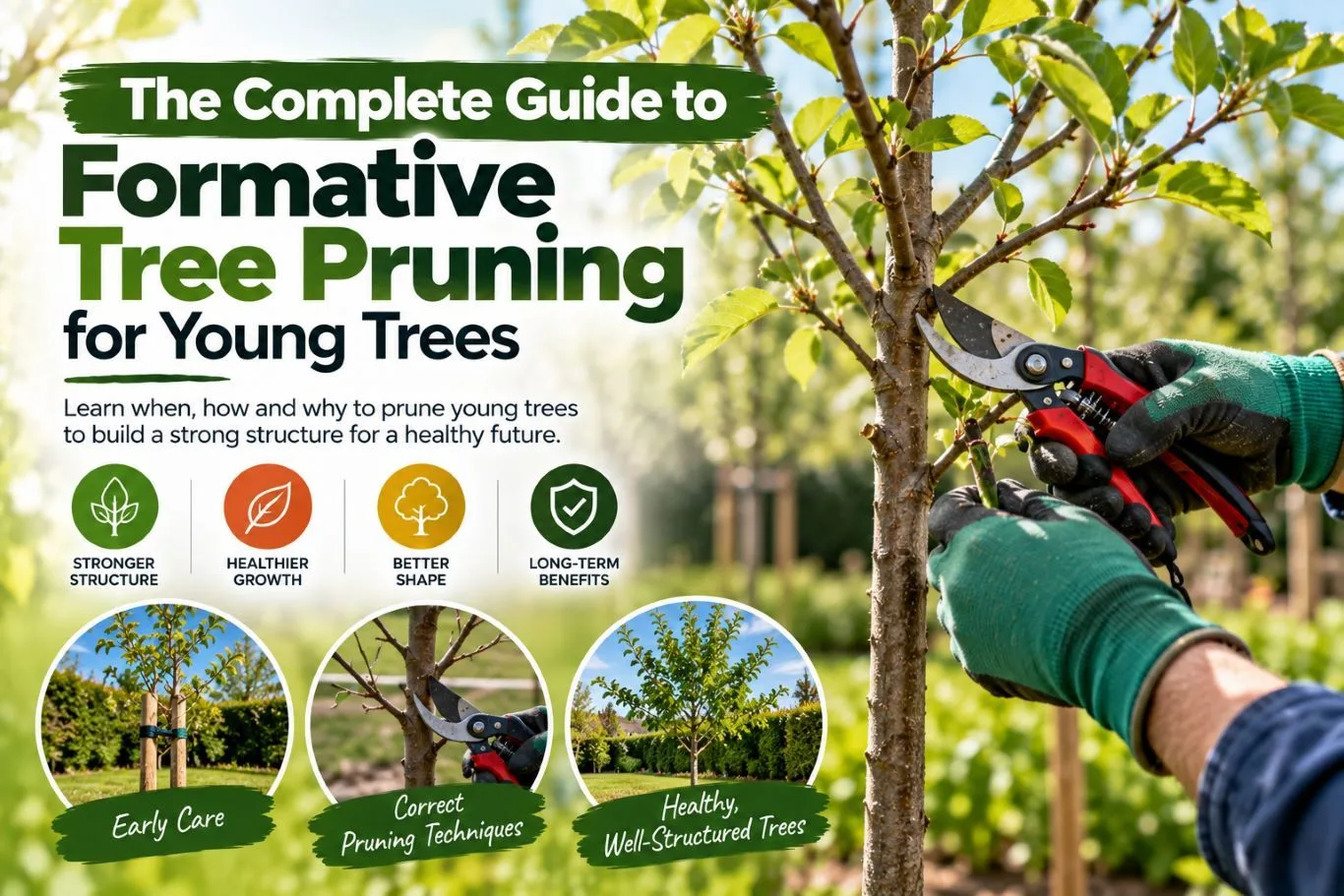
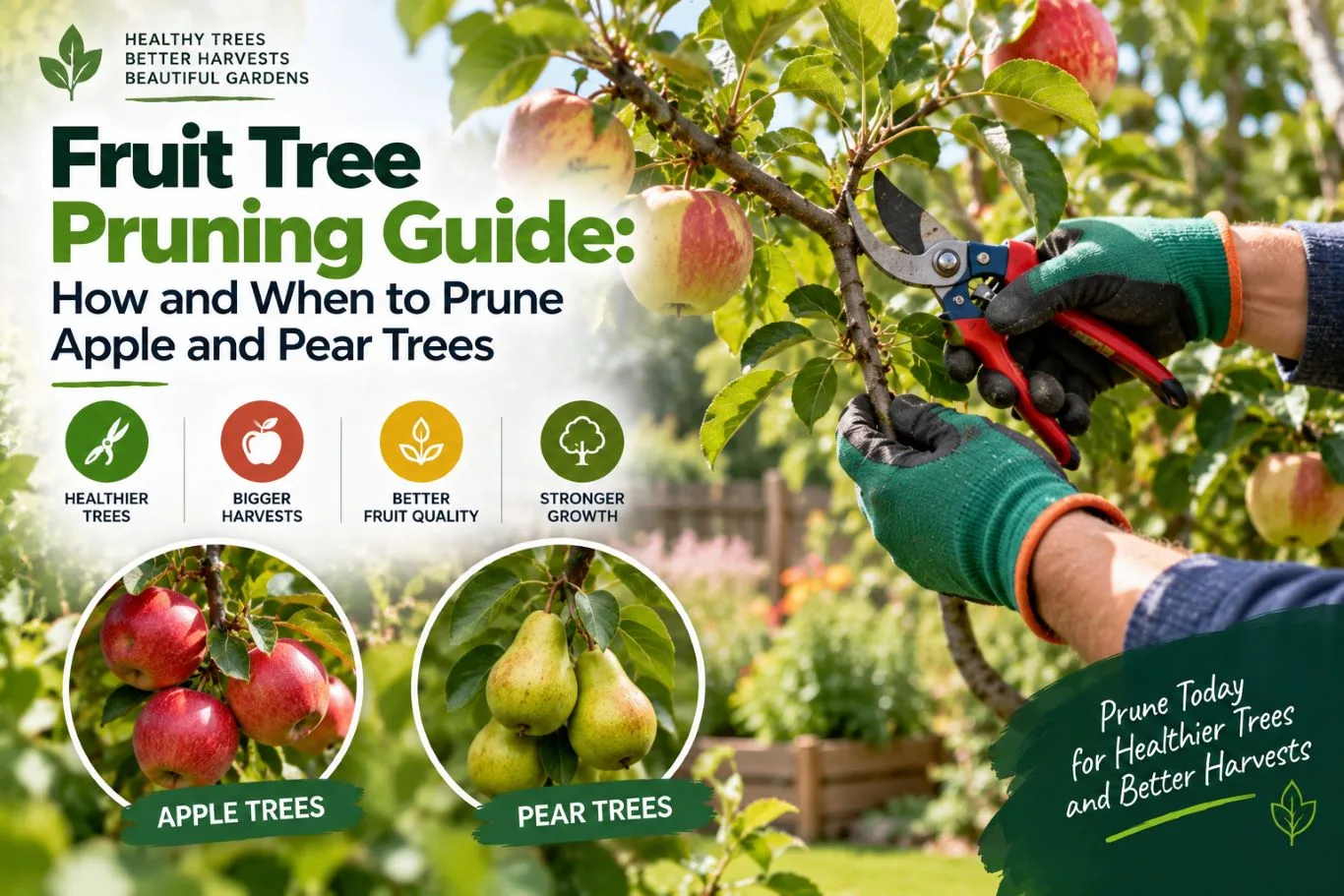
- Pip Fruit Trees (Apples and Pears): Freestanding apple and pear trees depend on winter pruning to remove water shoots, spur-prune lateral growth, and maintain an open “goblet” crown that welcomes summer sun.
- Hardy Deciduous Broadleaves: Native species like Oak, Beech, Hawthorn, Lime, and Ash tolerate winter structural reduction and thinning exceptionally well.
- Deciduous Hedges: Overgrown boundary hedges (such as Hornbeam and Field Maple) can be laid, coppiced, or given heavy restorative reductions throughout winter dormancy.
2. Species That Must Strictly Wait
- Stone Fruit Trees (Prunus Species): Cherries, Plums, Gages, Apricots, and Peaches must never be pruned in winter. Pruning them in damp, cold conditions exposes fresh cuts to the airborne fungal spores that cause deadly Silver Leaf disease (Chondrostereum purpureum) and bacterial canker. Always prune stone fruits in mid-summer (June to August).
- Heavy “Bleeders” (Birch, Maple, Walnut): Silver Birch, Sycamore, Field Maple, and Walnut build strong root pressure in late winter. Pruning them in January or February causes excessive sap bleeding from the wounds. While rarely fatal, bleeding attracts pests and depletes nutrients; prune these species either in late summer or very early winter (November) before root pressure builds.
- Spring-Flowering Ornamentals: Magnolia, ornamental Cherry, and Lilac set their flower buds the previous autumn. Pruning them in mid-winter simply strips away your upcoming spring floral display. Wait until immediately after flowering.
How to Prune Trees in Winter: Best Practices and Techniques
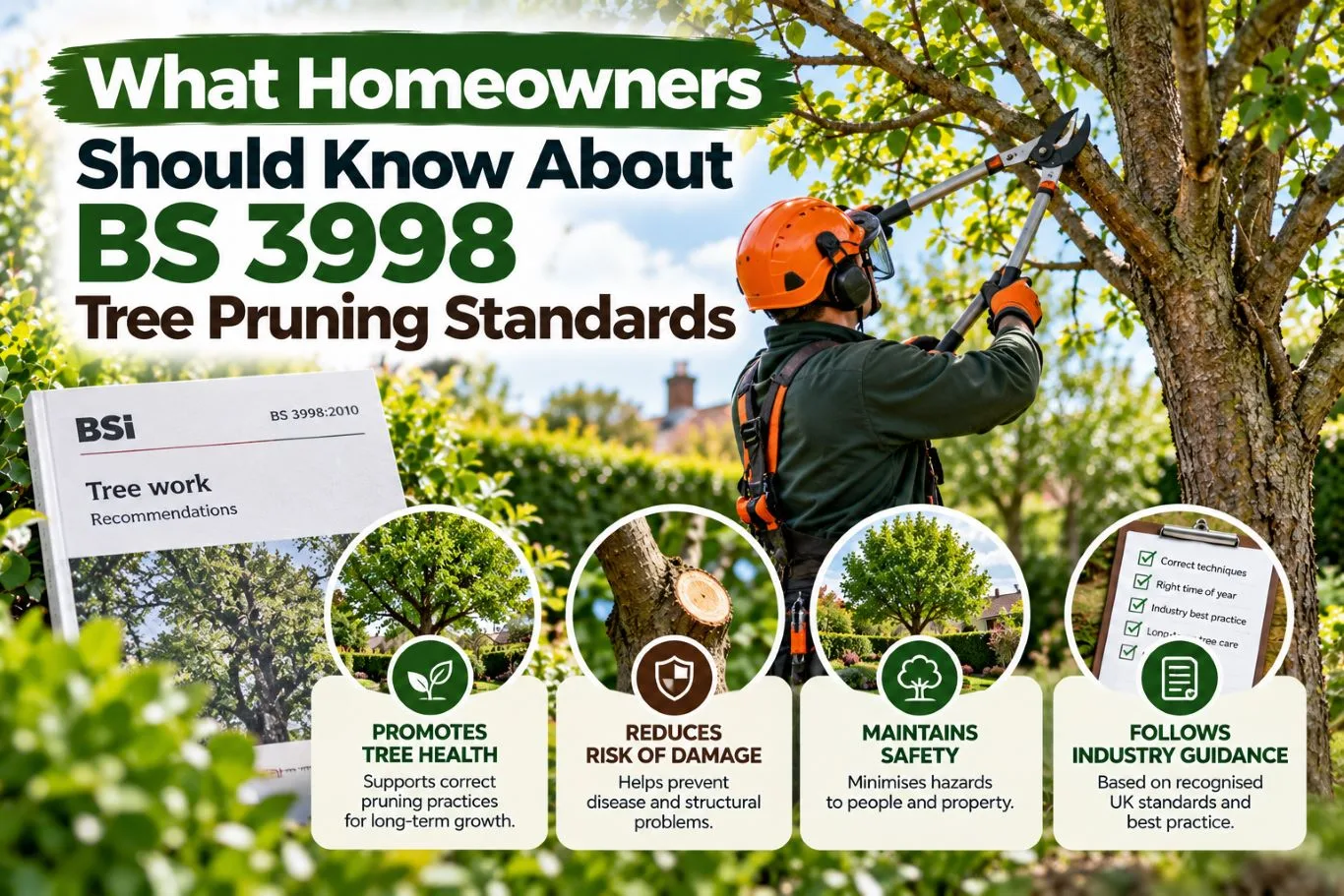
Executing proper how to prune trees in winter guidelines requires adherence to British Standard BS 3998 (Tree Work Recommendations), protecting the branch collar and preserving natural compartmentalisation.
Step-by-Step Winter Crown Care:
- Ground Assessment: Stand back to evaluate the leafless silhouette from multiple angles, identifying dominant leaders and weight imbalances.
- The “Three Ds”: Systematically remove Dead, Diseased, and Damaged timber right back to healthy tissue.
- Canopy Clearance: Eliminate crossing branches that rub against neighbouring limbs, which creates open sores on bark.
- Crown Thinning (10% to 20%): Remove selective internal epicormic growth and water shoots to allow winter air to flow through.
- Structural Reductions: Shorten over-extended branches back to viable growing points (lateral growth at least 1/3 the diameter of the parent cut).
Proper Cut Placement: Protecting the Branch Collar
Never make flush cuts against the main trunk, and never leave protruding stubs. Locate the branch bark ridge and the swollen branch collar at the base of the bough. Cut cleanly just outside this boundary. Preserving this natural junction leaves the tree's chemical barrier intact, allowing it to seal the wound cleanly once spring arrives.
For residential estates, commercial facilities, and property developers requiring compliant arboricultural operations, booking professional tree pruning services for residential & commercial properties across Essex, North London & East London ensures high-altitude canopy care is completed safely and methodically.
Understanding Tree Pruning Regulations in the UK
Before picking up a pruning saw this winter, property owners must navigate statutory tree pruning regulations UK:
- Tree Preservation Orders (TPOs): If your tree is protected by a council TPO, carrying out unauthorized pruning—even minor winter trimming—is a criminal offense carrying substantial fines. A formal planning application must be submitted to the Local Planning Authority (LPA), typically requiring six to eight weeks for approval.
- Conservation Areas: If your property falls within a designated Conservation Area, any tree with a stem diameter greater than 75mm (measured 1.5m above ground level) requires six weeks' written notice (a Section 211 Notice) before work can start.
- Wildlife Protection: Although winter avoids the active bird nesting season, veteran trees often contain cavities used by hibernating bats, which are strictly protected under the Conservation of Habitats and Species Regulations 2017. Arborists carry out ecological pre-work checks before cutting veteran hollows.
Enlisting accredited professional tree surgeons in Essex takes the paperwork off your shoulders, as reputable contractors manage council portal submissions, planning liaisons, and TPO applications on your behalf.
FAQs
1. Why is winter considered the best time to prune most broadleaf trees?
Winter provides three clear advantages: complete dormancy means the tree does not lose actively circulated sap; the absence of leaves provides an unobstructed view of branch architecture, defects, and fungal rot; and cold temperatures naturally suppress wood-decaying fungal spores and insect activity.
2. Can heavy winter pruning kill a healthy tree?
Yes, if performed incorrectly. Aggressive “topping” or removing more than 25% to 30% of a tree's total canopy can shock the root system, deplete vital stored starches, and leave large, flat wounds that cannot seal. Pruning should always follow the measured biological parameters set out in British Standard BS 3998.
3. How quickly can your local team arrange a winter tree survey?
Our local arborists provide fast, responsive site visits across the region. We typically visit domestic gardens or commercial facilities to complete a site survey and provide an itemised, fixed-price quotation within 24 to 48 hours of initial contact.
4. What regional areas do your winter pruning teams cover?
Our daily operational footprint spans the whole of Essex—including Chigwell, Loughton, Woodford, Buckhurst Hill, Epping, Brentwood, Romford, and Chelmsford—alongside adjacent North London and East London boroughs.
5. What happens to the branches and timber removed during winter pruning?
Our professional teams chip, collect, and clear all green waste as part of our comprehensive tree pruning services in Essex. Woodchips are recycled locally as organic mulch, and larger timber sections can either be removed or logged into manageable rounds for your fireplace or wood burner.
Conclusion / Final Thoughts
Taking advantage of the dormant months for planned winter tree pruning is one of the most effective ways to invest in the long-term health, safety, and visual elegance of your property. By pruning when branch structure is fully exposed, fungal threats are low, and energy is safely stored in the root system, you help your trees endure winter weather while preparing them for vigorous, balanced growth in spring.
At Chigwell Tree Services, our team brings qualified arboricultural knowledge, specialized climbing equipment, and comprehensive insurance cover to every residential garden and commercial landscape we manage. Whether you need formative winter pruning on fruit trees, canopy weight reduction ahead of seasonal storms, or full planning support for trees under local authority protection, our local specialists deliver reliable, high-quality care.
Protect your home and prepare your garden for a thriving spring—contact our friendly team today to book your free, no-obligation site consultation. :