Quick Summary
- Discover why structured seasonal tree maintenance is the single most cost-effective way to preserve tree health and protect your property year-round.
- Follow a practical four-season UK tree care calendar covering vital checks from spring bud break to winter dormant pruning.
- Learn when to undertake key arboricultural operations, including crown thinning, deadwood removal, mulch application, and storm-damage inspections.
- Understand the critical risks of mistimed pruning, including disease vulnerability, sap bleeding, and disruptions to nesting wildlife under UK law.
- Find out how partnering with certified, fully insured arborists ensures all work complies strictly with British Standard BS 3998.
Introduction
A mature tree adds undeniable grace, natural shade, and character to any British garden or commercial landscape. Yet, like any living asset exposed to the unpredictable UK climate—from heavy winter storms and saturated clay soils to scorching summer dry spells—trees require consistent, timely intervention. All too often, tree care is treated reactively: homeowners call for help only after a massive bough snaps over a conservatory or roots crack a boundary wall. Adopting a structured routine of seasonal tree maintenance shifts your property care from stressful emergency callouts to proactive preservation. By aligning key tasks such as inspections, mulching, and targeted pruning with natural biological growth cycles, you protect your outdoor space while extending the life of your canopy. At Chigwell Tree Services, our certified arborists deliver dependable, affordable, and expert tree services for residential & commercial properties across Essex, East London & North London / UK and surrounding areas, ensuring your landscape stays vibrant, safe, and resilient through every season.
Want to keep your trees balanced, healthy, and storm-ready across every season? Chat with Chigwell Tree Services on WhatsApp for tailored maintenance advice across Essex, East London, and North London :
Why a Seasonal Tree Care Calendar Matters
A tree's physiological needs and vulnerabilities change dramatically as the seasons transition. Pruning a tree at the wrong moment in its annual growth cycle can disrupt nutrient storage, trigger excessive sap loss, or expose open wounds to airborne fungal spores.
Biological Drivers Across the Four Seasons:
- Spring (Bud Break & Growth Surge): High vascular energy; trees direct stored starch into foliage and blossoms.
- Summer (Transpiration & Canopy Stress): Peak photosynthesis; trees manage high water loss and battle fungal pathogens.
- Autumn (Senescence & Preparation): Leaves drop, sap retreats into root plates, and fungal fruiting bodies appear.
- Winter (True Dormancy): Minimal physiological activity; the leafless branch architecture is visible for structural work.
Following a structured tree care calendar ensures that every cut, soil treatment, and hazard check supports the tree's natural defence mechanisms rather than stressing them.
Spring (March – May): Awakening, Nutrition, and Health Checks
As temperatures climb and daylight hours lengthen, trees wake from their winter slumber. Spring is a season of rapid development, making it an essential window for health assessments and root care.
1. Inspect for Winter Storm Damage
Winter gale-force winds often leave cracked branch unions, hung-up limbs, or micro-fractures hidden in the crown. As soon as bud break begins, conduct a thorough ground-level inspection. Look up into the canopy for hanging broken wood and check the ground around the base for soil lifting or severed root flares.
2. Spring Pruning and Formative Training
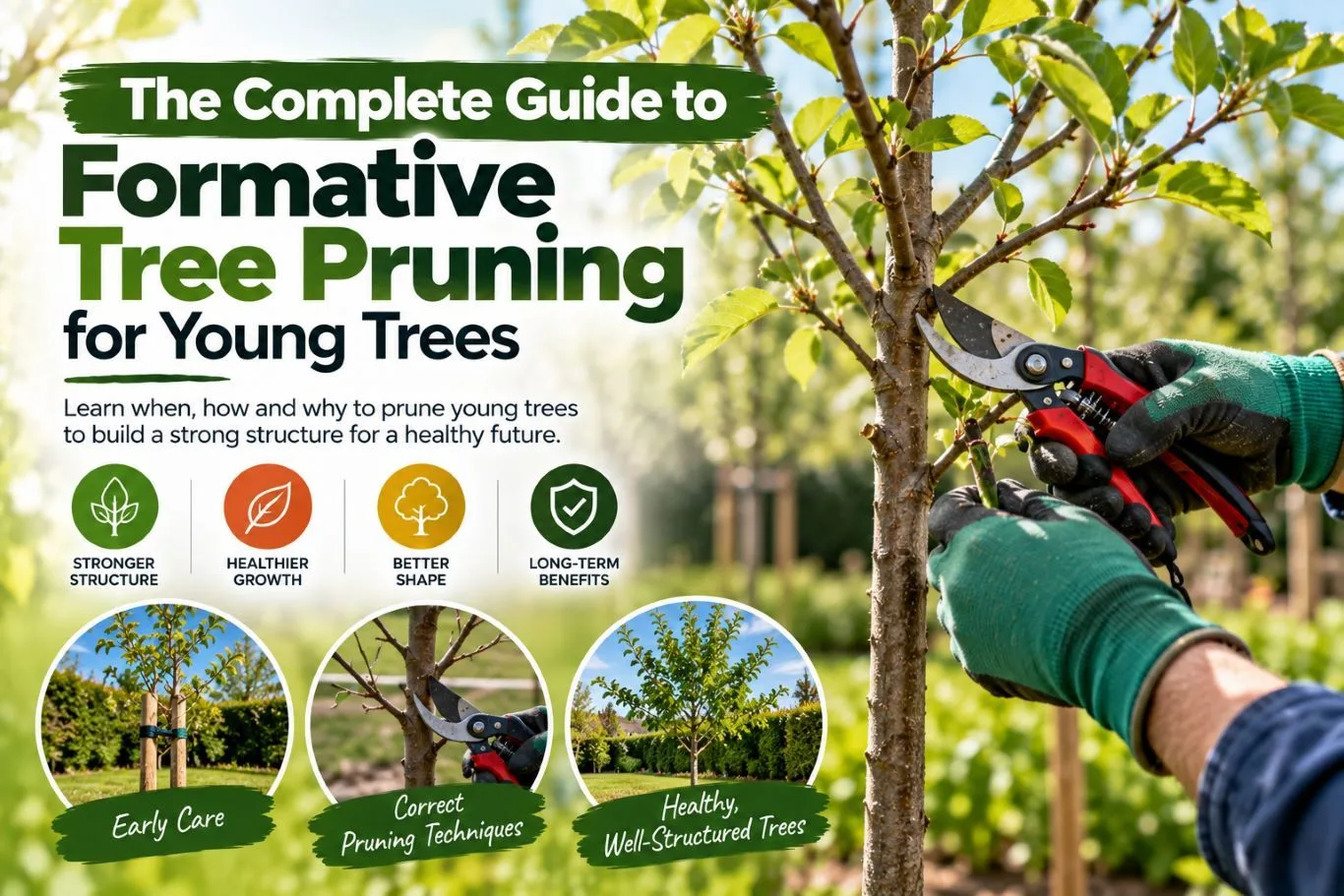
While heavy structural reshaping is best reserved for winter, spring is suitable for light corrective tidying. Prune out dead, snapped, or frost-damaged twigs before the foliage becomes overly dense. For young trees, early spring is an excellent opportunity for light formative training to eliminate crossing shoots before they harden.
3. Soil Conditioning and Root Zone Mulching
After winter rains have leached nutrients and compacted surface soils, replenish the root zone:
- Apply a 50mm to 75mm layer of well-rotted organic woodchip mulch across the root plate.
- Keep the mulch pulled back roughly 100mm from the trunk flare itself to prevent bark softening and collar rot.
- Mulch conserves vital soil moisture ahead of warmer weather, moderates soil temperature, and steadily feeds mycorrhizal fungi.
4. Early Pest and Disease Monitoring
Keep an eye out for early signs of common UK tree pests and infections, such as aphids, caterpillar infestations, powdery mildew, or oak processionary moth (OPM) activity. Early identification allows for biological or mechanical management before infestations spiral out of control.
Summer (June – August): Hydration, Vigour Management, and Light Pruning
British summers can bring prolonged dry spells that place serious transpiration stress on mature broadleaf trees, especially those growing in heavy, shrinkable clay subsoils.
1. Deep Watering Strategies
Young saplings planted within the last three to five years are particularly vulnerable to drought stress because their root systems are still confined.
- Provide young trees with 40 to 50 litres of water weekly during dry periods, applying it slowly to allow absorption into the root zone rather than runoff.
- For mature specimens showing early leaf wilt or premature leaf drop, use soaker hoses around the drip line (the circumference of the outer canopy).
2. Targeted Summer Pruning and Growth Checks
While extensive canopy reduction should generally wait, summer is the optimal time for specific tasks:
- Pruning Stone Fruits: Species in the Prunus genus (Plums, Cherries, and Damsons) must only be pruned from June to August. Pruning them in wet winter months dramatically increases the risk of Silver Leaf disease and bacterial canker infections.
- Restricted Form Pruning: Espalier, cordon, and fan-trained fruit trees rely on late-summer pruning (July–August) to check vigorous vegetative growth and direct sunlight onto ripening fruit spurs.
- Canopy Clearance: Selectively lift lower branches obstructing vehicular sightlines, pedestrian paths, or garden sheds.
3. Respecting Nesting Birds and UK Wildlife Law
Before undertaking any tree trimming, property owners must be mindful of the Wildlife and Countryside Act 1981. It is an offense to intentionally damage or destroy the nest of any wild bird while it is being built or in use. Professional arborists conduct comprehensive pre-work nesting surveys before making any cuts during the active breeding season (March to August).
Autumn (September – November): Sanitation, Decay Audits, and Winter Preparation
Autumn is a season of dramatic transformation. As deciduous trees withdraw chlorophyll and shed their leaves, internal structural defects and subterranean decay issues become much easier to spot.
Key Autumn Maintenance Priorities:
– Fungal Decay Audits: Check for bracket fungi (e.g., Honey Fungus, Inonotus, Ganoderma) on trunks and root flares.
– Deadwooding: Strip brittle, dead branches before autumn storms turn them into falling hazards.
– Lawn & Gutter Clearing: Clear heavy leaf carpets from lawns, roofs, and drainage runs to prevent damp issues.
– Pre-Storm Cable Bracing: Inspect existing non-invasive tree bracing systems for proper tension.
1. Fungal Audits and Root Health
Autumn is the primary fruiting season for wood-decay fungi. Inspect the base of the trunk, the crotches of main boughs, and the surrounding turf. The appearance of brackets, shelf fungi, or clusters of mushrooms around the base indicates internal wood decay that compromises mechanical strength. Identifying fungal activity early allows an arborist to determine whether the tree requires canopy reduction, bracing, or sectional removal before winter gales strike.
2. Proactive Deadwood Removal
As leaves drop, deadwood stands out clearly against the bare sky. Removing brittle, dead boughs during autumn prevents falling branches from damaging roofs, conservatories, boundary fences, or parked vehicles during severe weather.
Winter (December – February): Dormant Pruning and Major Structural Reductions
Winter is the cornerstone season for major arboricultural operations. With deciduous trees in complete winter dormancy, physiological stress is minimised, and the underlying branch framework is fully exposed.
| Winter Arboricultural Operation | Technical Purpose | Primary Benefit |
| Crown Reduction | Proportionally reducing overall canopy height and spread in line with BS 3998. | Decreases wind sail area, relieving pressure on roots and weak unions. |
| Crown Thinning | Selectively removing weak, crowded, or crossing internal branches. | Improves light penetration and allows storm winds to pass through harmlessly. |
| Sectional Dismantling & Felling | Safely removing dead, hazardous, or poorly sited trees in confined urban plots. | Eliminates catastrophic failure risks before severe winter storms hit. |
| Mechanical Stump Grinding | Eradicating old stumps and subterranean root plates 200mm–400mm below soil grade. | Eliminates trip hazards and removes food sources for honey fungus. |
Why Winter Is Ideal for Structural Work
Because sap flow has slowed to a halt, trees experience far less physiological shock from pruning cuts made in deep winter. Cuts made during dormancy dry cleanly without attracting wood-boring insects or airborne fungal pathogens, and the tree can allocate its spring energy reserves straight into callusing over the wound margins.
For commercial estates, property managers, and private homeowners seeking dependable seasonal tree maintenance services across Essex, North London & East London, scheduling heavy pruning work during this dormant window ensures optimal arboricultural outcomes and site safety.
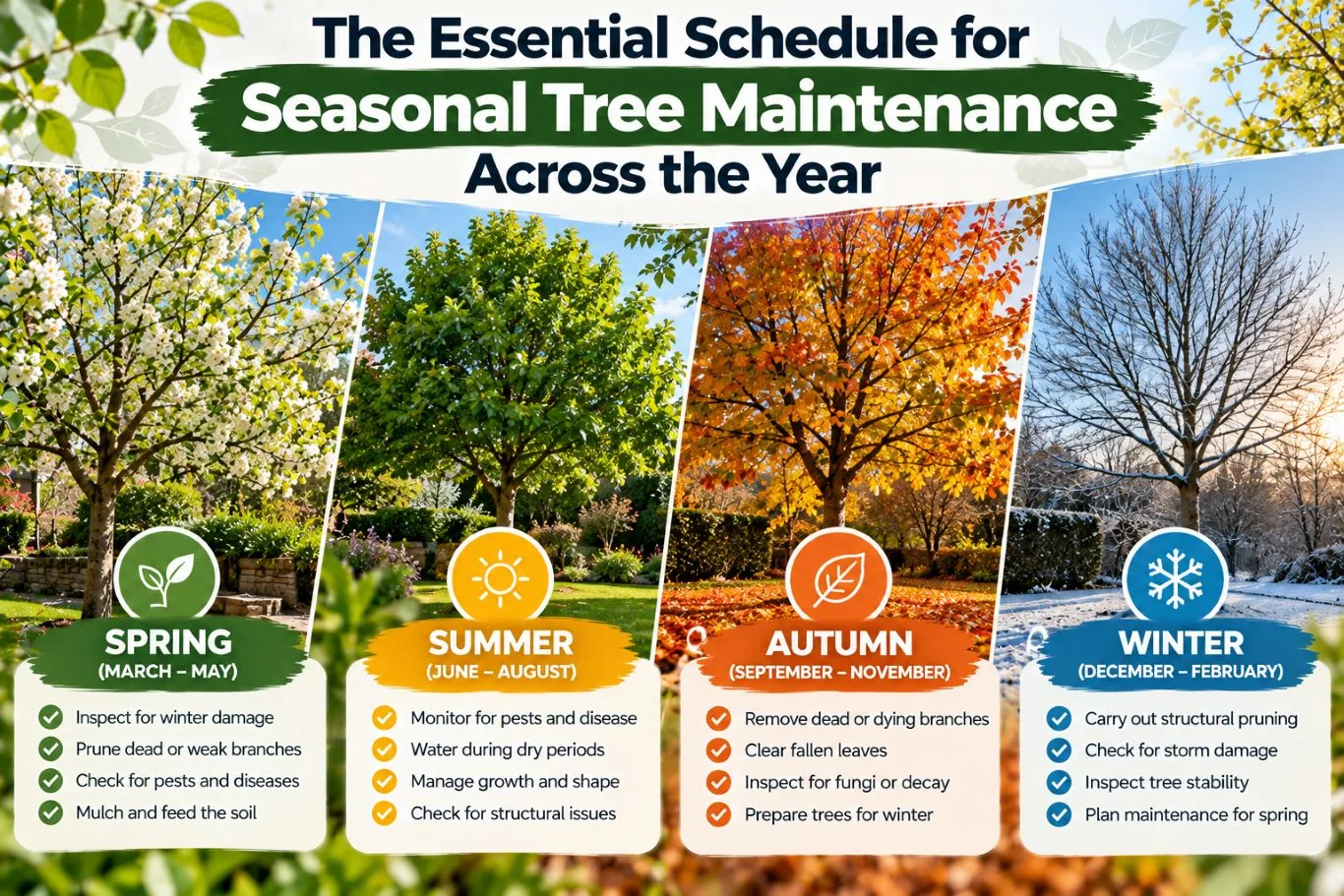
Year-Round Seasonal Tree Care Schedule Overview
To help you manage your garden maintenance efficiently, here is a practical overview of how tasks distribute across the year:
| Month Range | Season | Priority Tasks |
| March – May | Spring | Inspect storm damage; apply organic mulch; spot-prune broken branches; monitor pest emergence. |
| June – August | Summer | Deep watering during dry periods; prune stone fruits (Prunus); check nesting wildlife; trim hedges. |
| Sept – Nov | Autumn | Survey for fungal brackets; clear drainage runs; carry out targeted deadwooding; prep for winter storms. |
| Dec – Feb | Winter | Major crown reductions; structural reshaping; sectional dismantling; mechanical stump grinding. |
The Value of Professional Arboricultural Care
While simple ground-level maintenance like mulching, leaf clearing, and low-branch secateur work can be handled by keen gardeners, climbing into mature canopies with chainsaws carries significant hazards.
Partnering with certified professional tree care specialists guarantees:
- Adherence to British Standards: All work is carried out to the strict specifications of BS 3998:2010 (Tree Work Recommendations), preserving natural balance rather than mutilating branches through aggressive topping or lopping.
- Statutory Compliance: Arborists handle council portal checks for Tree Preservation Orders (TPOs) and Conservation Area restrictions, submitting required planning notifications on your behalf.
- Comprehensive Insurance: Reputable companies carry robust Public Liability Insurance (typically £5m–£10m), protecting your domestic or commercial premises against accidental damage.
Securing certified professional tree services for residential & commercial properties across Essex, North London & East London ensures your grounds receive tailored, scientific care that keeps trees healthy and properties safe in every season.
FAQs
1. What is the best time of year to prune mature garden trees?
For the vast majority of UK broadleaf deciduous trees (such as Oak, Beech, Lime, and Ash), late autumn through deep winter (November to February) is optimal. The tree is dormant, meaning cuts cause minimal physiological stress, and the bare canopy allows arborists to clearly evaluate branch architecture. However, stone fruit trees (Plum, Cherry) must be pruned in mid-summer to prevent Silver Leaf disease.
2. How does regular seasonal maintenance save money over time?
Proactive seasonal care catches minor structural defects, weak V-shaped unions, and early fungal infections before they lead to whole-branch failure or root heave. Addressing small issues through light pruning and health checks is significantly cheaper than dealing with emergency storm callouts, property repairs, or large-scale hazardous tree removals.
3. How quickly can your local team carry out a seasonal tree health assessment?
We operate an efficient, local scheduling network. For residential gardens and commercial facilities across our service area, we can typically visit your property to complete an initial inspection and provide a transparent, written quotation within 24 to 48 hours of your inquiry.
4. What geographical areas do your seasonal tree care teams cover?
Our daily operational footprint covers all of Essex—including Chigwell, Loughton, Woodford, Buckhurst Hill, Epping, Brentwood, Romford, and Chelmsford—alongside adjacent North London and East London boroughs.
5. Can you carry out tree surgery if there are nesting birds in the canopy?
Under the Wildlife and Countryside Act 1981, it is illegal to disturb active wild bird nests. If our pre-climb survey discovers an active nest, non-urgent work must be paused until the chicks have fledged. However, emergency stabilization of an imminently dangerous branch threatening life or property can proceed under specific statutory health-and-safety exemptions.
Conclusion / Final Thoughts
Implementing a planned schedule of seasonal tree maintenance is the most effective way to safeguard your trees, preserve landscape beauty, and protect your home from sudden storm damage. By understanding what trees need during each distinct phase of the year—from spring root mulching and summer drought monitoring to autumn decay surveys and winter structural reductions—you ensure your outdoor spaces remain an asset rather than a liability.
At Chigwell Tree Services, we take pride in delivering dependable, professional, and customer-focused arboricultural solutions for domestic homeowners and commercial estates alike. Our qualified arborists combine deep botanical knowledge with specialized rigging equipment and strict British Standard compliance, ensuring your grounds receive the highest standard of year-round care. Whether you need a seasonal safety check, targeted deadwood removal, or extensive crown management, our friendly local specialists are here to help.
Keep your trees healthy, safe, and flourishing in every season—contact our dedicated team today to book your free, no-obligation site consultation :