Quick Summary
- Master the fundamentals of seasonal fruit tree pruning to boost tree health, encourage larger harvests, and improve fruit quality.
- Understand the vital differences between winter dormant pruning (which drives vigorous spring growth) and summer pruning (which checks vigour and improves fruit ripening).
- Learn step-by-step methods for the “Three Ds”—removing dead, diseased, and damaged wood—while opening the centre to airflow and sunlight.
- Discover specific techniques for spur-bearing versus tip-bearing apple and pear varieties, avoiding common cutting mistakes.
- Find out when to tackle domestic fruit trees yourself and when to bring in professional arborists for mature orchard restoration.
Introduction
Few garden additions offer the reward, seasonal beauty, and fresh produce of home-grown apple and pear trees. From delicate spring blossoms to crisp autumn fruit, a flourishing orchard tree is a garden centerpiece. However, without regular, methodical care, pip fruit trees quickly develop dense, congested canopies filled with crossing branches, water shoots, and fungal decay. The key to maintaining a productive crop and a balanced framework lies in mastering fruit tree pruning. Rather than letting your trees run wild into messy thickets of tangled wood, timely pruning directs the tree’s energy into robust fruiting spurs, lets ripening sunlight reach the inner canopy, and reduces fungal infections such as apple scab and canker. At Chigwell Tree Services, our certified arborists provide reliable, affordable, and expert tree services for residential & commercial properties across Essex, East London & North London / UK and surrounding areas, helping homeowners nurture productive, structurally sound trees year after year.
Want healthier apple and pear trees with bigger, juicier harvests this season? Chat with Chigwell Tree Services on WhatsApp for expert fruit tree pruning advice across Essex, East London, and North London :
Why Pruning Apple and Pear Trees Is Vital
Unlike ornamental hardwoods that are primarily pruned for clearance and symmetry, pomme fruit trees (apples and pears) are pruned to balance vegetative growth against fruit production.
Core Biological Objectives of Fruit Tree Pruning:
- Regulate Yield: Prevents “biennial bearing” (bumper crops one year followed by nothing the next).
- Sunlight Penetration: Ensures sunlight reaches every developing fruit to develop natural sugars and color.
- Air Circulation: Promotes rapid drying of leaves after rain, preventing apple scab, mildew, and canker.
- Structural Strength: Thickens primary scaffold boughs to support heavy fruit loads without snapping.
- Continuous Renewal: Replaces old, unproductive wood with vigorous young fruiting spurs.
Neglecting annual pruning results in small, misshapen fruit, shaded inner canopies, and tall branches that place fruit well out of harvesting reach.
When to Prune Fruit Trees: Winter vs. Summer Pruning
Timing is critical when deciding when to prune fruit trees. Apples and pears respond in completely different physiological ways depending on whether cuts are made during the dormant winter months or active summer growth.
Seasonal Pruning Schedule:
– Winter (November – Early March): The dormant season. Best for standard, freestanding bush and orchard trees. Stimulates strong vegetative regrowth in spring.
– Summer (July – August): The active season. Essential for trained forms (espaliers, cordons, fans). Checks excessive vigour and channels energy into blossom buds.
Winter Dormant Pruning
The best time to prune fruit trees grown as traditional freestanding trees is while they are dormant between November and early March, well before leaf buds swell. Because the canopy is bare, branch architecture is clearly visible. Winter pruning is invigorating; removing wood while the roots store energy prompts vigorous new shoots in spring, helping you establish a balanced, open framework.
Summer Pruning
Summer pruning is performed in July and August. Instead of stimulating shoot growth, cutting back the lush current season’s green shoots slows the tree down, directs energy toward next year's blossom clusters, and opens up the canopy so ripening apples and pears receive late-summer sunlight. Summer pruning is mandatory for restricted forms like cordons, espaliers, and step-overs.
Understanding Your Tree: Spur-Bearing vs Tip-Bearing
Before making pruning cuts, identify how your tree produces its fruit. Apple and pear cultivars fall into two distinct fruiting categories:
| Fruiting Habit | How & Where Fruit Forms | Common Cultivars | Pruning Approach |
| Spur-Bearing (Approx. 85% of trees) | Fruit forms on short, knobbly clusters of wood (spurs) that live along older branches. | Cox’s Orange Pippin, Bramley, Conference Pear, Doyenne du Comice | Prune side-shoots back to 2–3 buds to encourage permanent spur systems. |
| Tip-Bearing (Approx. 15% of trees) | Fruit forms at the very tips of long shoots produced during the previous summer. | Discovery, Worcester Pearmain, Irish Peach | Avoid trimming shoot tips indiscriminately; only thin out whole shoots at their base. |
Tip: If you are unsure which variety you have, spend a summer observing where blossom and fruit set. If it forms along old branches on compact, multi-bud stubs, it is spur-bearing.
Step-by-Step: How to Prune Apple Trees and Pear Trees
Whether tackling an established garden tree or training a young sapling, following these structured fruit tree pruning techniques will prevent over-pruning while establishing an open, vase-shaped “goblet” crown.
1. Clear the “Three Ds” First
Always begin with sanitation. Using clean, razor-sharp bypass secateurs and a pruning saw, cut away:
- Dead wood: Brittle, dry branches that snap cleanly.
- Diseased timber: Limbs showing signs of sunken bark or peeling cankers. Always cut back several inches into healthy white wood.
- Damaged branches: Split, rubbing, or storm-torn branches that could harbor fungal spores.
2. Remove Crossing and Inward-Facing Wood
Cut out any branches that cross through the center of the canopy or rub against neighboring limbs. The goal is an open, cup-shaped center that allows sunlight and fresh air to move freely through the canopy.
3. Thin Out Vigorous Water Shoots
Identify vertical, whippy, upright shoots (water shoots or suckers) that shoot up rapidly toward the sky. These vegetative shoots consume moisture and nutrients without setting fruit. Cut them cleanly flush back to the branch collar.
4. Shorten the Current Season's Growth (For Spur Bearers)
- For apple tree pruning, shorten lateral shoots grown in the current year back to three buds above the basal cluster. This prompts these buds to convert into compact, fat fruit buds for the following season.
- For pear tree pruning, be slightly more conservative. Pear trees produce spurs readily but are prone to vertical growth. Prune leading branches back by roughly one-third of their previous season’s extension to an outward-facing bud, encouraging a wider, lower branching habit.
Renovating Old, Overgrown Orchard Trees
Inheriting a long-neglected apple or pear tree can feel overwhelming. Old trees often reach 25 feet in height, choked with massive crossing limbs and water shoots.
Three-Year Renovation Strategy for Neglected Trees:
– Year 1: Remove all dead, diseased, and low-hanging limbs. Reduce overall height by no more than 20%.
– Year 2: Thin out crowded central boughs to restore a goblet shape. Thin remaining water shoots.
– Year 3: Shorten outer lateral branches and prune individual congested spur systems to space future fruit evenly.
Never prune more than 25% of an overgrown tree's canopy in a single winter. Over-pruning shocks the root system, triggering a dense forest of hundreds of vertical water shoots the following spring that chokes the canopy worse than before.
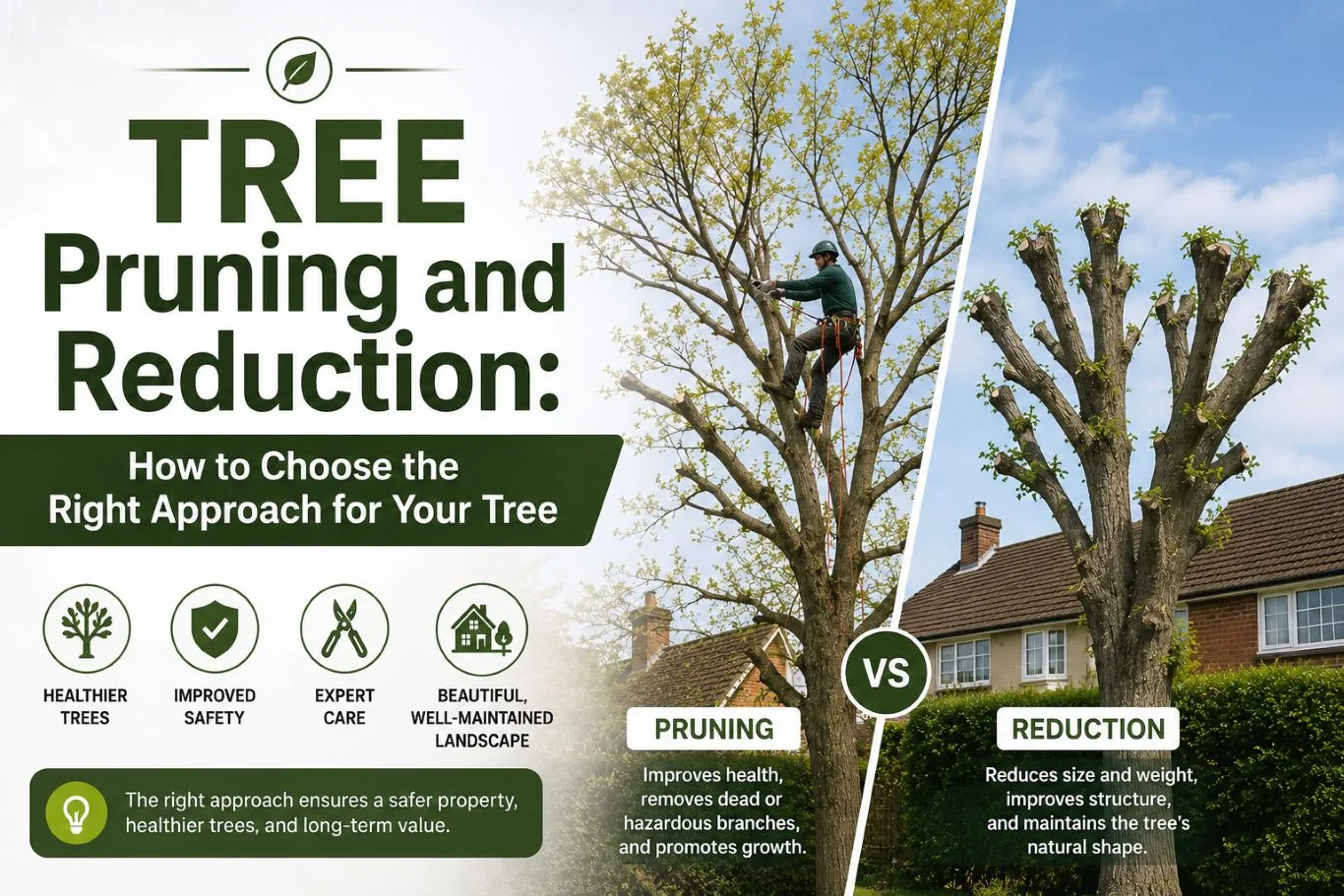
For mature, towering, or historically neglected fruit trees requiring high-climbing saws and complex canopy reductions, booking professional tree pruning services in Essex ensures heavy restoration work is carried out systematically without stressing ancient root plates.
When to Call a Professional Tree Surgeon
While general ground-level trimming is a rewarding weekend task for keen gardeners, certain situations warrant the safety, tools, and technical skill of professional tree pruning services:
- Height and Access Hazards: Pruning mature standard trees from ladders is a leading cause of domestic garden accidents. Certified arborists use climbing ropes, harness lines, and pole saws to work safely at height.
- Advanced Canopy Canker: Bacterial and fungal canker can ring entire main limbs. Certified tree surgeons know precisely where to cut to stop systemic infections from reaching the main trunk.
- Orchard Restorations: Renovating old heritage orchards or balancing root-to-canopy ratios after structural storm damage requires certified arboricultural experience.
FAQs
1. What is the difference between pruning apple trees and pear trees?
While both belong to the pome fruit family and follow similar principles, pear trees break bud earlier in spring and naturally form upright, vertical habits. Pear trees generally tolerate slightly firmer pruning than apples, but they require extra care to direct growth outward to prevent a tall, conical, unmanageable shape.
2. Why did my apple tree produce hundreds of water shoots after pruning?
This is a stress reaction caused by over-pruning. If you remove more than 25% to 30% of the live canopy in a single winter, the tree's root system pushes up an abundance of vertical, whippy shoots to replace lost foliage. Thin these out in late summer to suppress regrowth.
3. How quickly can your local team assess and prune garden fruit trees?
Our local arborists provide fast, responsive scheduling across the region. We typically conduct an on-site consultation and provide a clear, fixed-price quote within 24 to 48 hours of your inquiry.
4. What geographical areas do your pruning teams cover?
Our daily service route covers the whole of Essex—including Chigwell, Loughton, Woodford, Epping, Brentwood, Romford, and Chelmsford—alongside neighboring communities across East London and North London.
5. What should I do with my pruning clippings and branches?
Our team chips and clears all green waste and diseased wood from your garden, leaving the site neat. If you prefer to keep healthy timber for smoking woods, pizza ovens, or garden mulch, we can cut and stack it on-site for your convenience.
Conclusion / Final Thoughts
Mastering fruit tree pruning transforms neglected, low-yielding apple and pear trees into healthy, vigorous specimens that produce heavy harvests of delicious fruit year after year. By understanding the distinction between winter structural pruning and summer vigour control, clearing away the “Three Ds”, and opening up the canopy to air and light, you protect your garden orchard against disease while elevating its overall look.
At Chigwell Tree Services, we bring years of qualified arboricultural training, precision tooling, and British Standard expertise to domestic gardens and commercial landscapes alike. Whether you need a seasonal tidy-up for young espaliers or full restorative pruning on a towering heritage orchard tree, our dedicated local team is here to help. Enjoy healthier trees and heavier harvests—contact our friendly specialists today to book your free, no-obligation site consultation.
Keep your garden fruit trees free from canker, mildew, and crossing branches while boosting fruit quality—reach out to our experienced regional arborists today :