Quick Summary
- Master the seasonal timing of winter hedge trimming to capitalise on plant dormancy, retain sharp boundary lines, and encourage dense spring growth.
- Discover why winter provides the legal and ecological sweet spot for major height reductions without disturbing nesting wild birds.
- Learn species-specific requirements: why deciduous boundaries welcome hard renovation cuts, while evergreen conifers need careful maintenance to avoid permanent brown patches.
- Explore the essential cutting geometry—the “batter” technique—to ensure your hedges receive equal sunlight from crest to base.
- Understand when routine shears are sufficient and when complex, high-reach hedgerows require accredited arboricultural teams.
Introduction
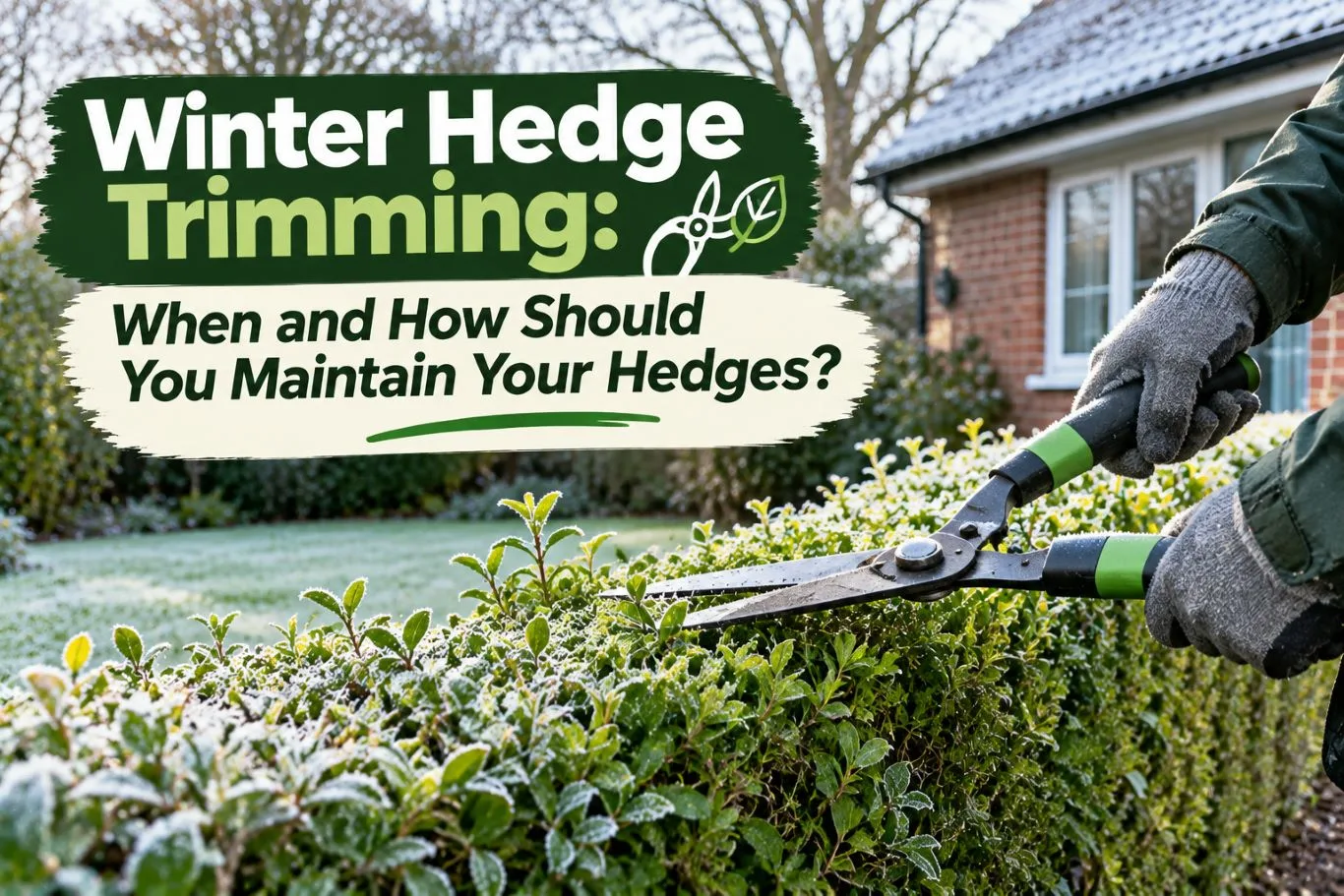
When frost blankets the lawn and the growing season grinds to a halt, most homeowners assume garden upkeep is finished until spring. Yet, the colder months offer the single best opportunity to reshape overgrown boundaries, restore light to outdoor spaces, and complete major restorative work. Carrying out planned winter hedge trimming between late November and February allows you to tackle unruly boundaries while plants are dormant and sap flow is minimal. Because deciduous varieties shed their foliage, their woody frameworks are fully visible, making it simple to spot crossing stems, diseased timber, and structural gaps. At Chigwell Tree Services, our certified specialists deliver dependable, affordable, and professional tree services for residential & commercial properties across Essex, East London & North London / UK and adjacent areas, ensuring boundary lines remain sharp, tidy, and healthy throughout the winter months.
Looking to tidy overgrown garden boundaries before the spring nesting season? Chat with Chigwell Tree Services on WhatsApp for expert winter hedge trimming across Essex, East London, and North London :
Why Winter Is the Ideal Window for Boundary Care
Winter boundary management is rooted in plant biology and UK environmental law. Trimming during the active summer flush often leads to fast, erratic shoot growth that requires frequent touch-ups. In contrast, winter work delivers long-lasting structural results.
Key Advantages of Winter Hedge Maintenance:
- True Vegetative Dormancy: Reduced sap flow means cuts do not bleed moisture or deplete stored energy reserves.
- Full Framework Clarity: Bare deciduous branches reveal the internal framework, making precision cutting straightforward.
- Pest and Fungal Inactivity: Near-freezing temperatures suppress active fungal spores, allowing clean cut margins to dry out safely.
- Minimal Ground Compaction: Firm, cold soil stands up well to ladders, scaffold towers, and foot traffic without ruining lawns.
- Zero Wildlife Disruption: Work falls safely outside the peak bird breeding window, ensuring full legal compliance.
By working in harmony with seasonal dormancy, winter hedge pruning sets up your hedgerows for vigorous, bushy growth as soon as soil temperatures warm in April.
Deciduous vs Evergreen: Species-Specific Rules
Not every hedge responds to cold-weather cutting in the same way. Knowing how to trim hedges in winter begins with identifying whether your hedge is deciduous or evergreen.
1. Deciduous Hedges (Beech, Hornbeam, Hawthorn, Blackthorn)
Deciduous species are the premier candidates for hard winter renovation. Because these varieties shed their leaves, they can handle significant height and width reductions during deep dormancy:
- Native Field Mixes & Hawthorn: Ideal for heavy shaping, flailing, or coppicing back to old wood to thicken up the lower stems.
- Beech (Fagus sylvatica) & Hornbeam (Carpinus betulus): While they often cling to crisp copper leaves through winter (marcescence), their vascular system is asleep, allowing for heavy reductions without stress.
2. Evergreen Broadleaves (Privet, Laurel, Holly)
Semi-evergreen and evergreen broadleaves require a balanced approach:
- Privet (Ligustrum): Highly resilient. Can be trimmed through early winter to tidy up loose summer shoots and keep boundaries looking crisp.
- Cherry Laurel (Prunus laurocerasus): Avoid mechanical hedge trimmers where possible, as high-speed blades shred large, glossy leaves, leaving brown, ragged edges. Use hand shears or secateurs to cut stems back to individual leaf nodes.
3. Conifers and Leylandii (Cupressus)
Conifers demand caution during cold weather:
- The “Brown Wood” Rule: Unlike broadleaves, conifers (with the exception of Yew) will not regenerate from old, brown wood. Never cut back beyond the green foliage layer, or you will leave permanent, unsightly bare patches.
- Timing: Carry out light tidying in early winter or wait until late winter before spring growth begins. Avoid trimming conifers during severe, sub-zero frosts, which can cause foliage burn on fresh cuts.
The Master Technique: Cutting with a “Batter”
The most common mistake amateur gardeners make is trimming hedges with vertical, 90-degree sides. Over time, the wider top branches cast shade over the lower stems, causing the bottom of the hedge to thin out, become bare, and collect leaf debris.
The Correct Cutting Geometry (The Batter):
– Tapered Profile: Trim sides so the hedge is slightly narrower at the top and wider at the base.
– Light Distribution: This subtle inward slope ensures sunlight reaches the bottom branches all day.
– Snow Shedding: A tapered top sheds heavy snow loads quickly, preventing snow from splaying or breaking internal stems.
– Clean Base Density: Equal light levels prevent the bottom 30–50cm of the hedge from becoming woody and hollow.
To achieve clean, professional lines, run a taut builder’s stringline between two secure timber stakes to serve as a level cutting guide along the top crest.
UK Hedge Trimming Regulations and Wildlife Protection
Before starting any cutting, property owners must understand hedge trimming regulations UK:
1. Wildlife and Countryside Act 1981
Under Section 1 of the Wildlife and Countryside Act 1981, it is an offence to intentionally damage or destroy the nest of any wild bird while it is in use or being built. The main bird breeding season runs from 1st March to 31st August. Scheduling hedge maintenance between November and February provides the safest, most responsible way to maintain boundaries without disturbing wildlife. Even in winter, a quick visual sweep for lingering roosts is essential practice.
2. High Hedges Legislation (Anti-Social Behaviour Act 2003)
Under Part 8 of the Act, local councils have the power to intervene if a domestic evergreen or semi-evergreen hedge exceeds 2 metres in height and blocks reasonable light to a neighbour’s home or garden. Routine winter maintenance prevents boundaries from exceeding acceptable heights and avoids neighbour disputes.
For domestic boundaries, agricultural perimeters, and business parks, arranging professional hedge trimming services for residential & commercial properties across Essex, North London & East London ensures your hedges comply with local guidelines and are maintained using high-reach equipment.
When to Trim Hedges in Winter: Month-by-Month Guide
Pinpointing the best time to trim hedges in winter ensures cuts heal quickly without risking frost shock:
| Winter Month | Recommended Hedge Work | Varieties Covered | Key Precautions |
| Late November | Formative shaping and light maintenance trimming. | Privet, Holly, Beech, Hornbeam | Ensure autumn leaf drop has finished; clear base weeds. |
| December | Hard structural renovation, major height reductions, coppicing. | Native Hawthorn, Field Maple, Hazel | Avoid pruning on days with freezing temperatures. |
| January | Deep dormant pruning, thick stem reduction, root-line tidying. | Overgrown deciduous hedgerows | Keep cuts sharp; avoid tearing frozen wood fibres. |
| February | Final tidy-up trimming and boundary levelling. | Conifers, Yew, Laurel, Box | Complete all work before the 1st March nesting cut-off. |
Practical Winter Hedge Care Tips
Follow these proven field rules to keep your boundaries healthy:
- Avoid Sub-Zero Cutting Days: Never cut hedges when temperatures dip well below freezing. Sub-zero cold makes woody stems brittle, causing blades to crush and shatter branch ends rather than slicing cleanly.
- Sharpen and Disinfect Blades: Dull trimmer teeth crush vascular tissues, slowing healing and opening the door to bacterial cankers. Wipe blades with methylated spirits between different hedges to stop disease transmission.
- Clear Snow Accumulations: Heavy, wet snow resting on wide hedge tops can splay branches outward, breaking internal limbs. Use a soft broom to gently knock fresh snow off flat-topped hedges.
- Mulch the Root Run: After winter trimming, lay a 5–7cm blanket of well-rotted organic mulch or woodchips over the root plate to insulate shallow roots against hard frost and lock in soil moisture for spring.
Why Hire Professional Hedge Trimming Services?
While low, ornamental garden borders are easy enough to trim with hand shears, tall boundaries and long perimeter lines present clear hazards.
Booking certified hedge trimming services in Essex and London delivers distinct advantages:
- Safe High-Reach Platforms: Experienced crews use lightweight tripod ladders, mobile access towers, and long-reach articulated pole hedge trimmers, removing the risk of dangerous ladder falls.
- Laser-Straight Sights: Experienced operators cut clean, level lines across long boundaries, keeping your property looking immaculately presented.
- High-Capacity Waste Processing: A 20-metre run of overgrown hedge produces large volumes of bulky green waste. Professional teams run cuttings through commercial woodchippers and clear all debris, leaving lawns and patios tidy.
FAQs
1. Can you trim an evergreen hedge in mid-winter?
Yes, but with care. Tough species like Privet and Laurel tolerate light winter trimming well. For conifers such as Leylandii, avoid hard cuts during sub-zero cold spells to prevent frost scorch on the foliage, and never cut back into old brown wood that lacks green needles.
2. Will winter trimming harm my hedge if it freezes the next night?
Light overnight frosts rarely cause damage to healthy, dormant hedges. However, you should avoid pruning on days when sustained sub-zero temperatures are forecast, as frozen wood can splinter under trimmer blades.
3. How quickly can your team provide a local hedge trimming quotation?
Our estimators carry out site assessments across our coverage areas daily. We typically visit your property, inspect hedge access, measure the linear run, and supply a clear, fixed-price quotation within 24 to 48 hours.
4. Which areas do your professional hedge trimming teams cover?
Our local crews operate throughout Essex—including Chigwell, Loughton, Woodford, Buckhurst Hill, Epping, Brentwood, Romford, and Chelmsford—alongside all adjacent North London and East London boroughs.
5. Is it legal to trim boundary hedges in January and February?
Yes, January and February represent the ideal legal window. The Wildlife and Countryside Act 1981 protects nesting wild birds, whose breeding season typically begins on 1st March. Completing your trimming before the end of February ensures full compliance with UK wildlife law.
Conclusion / Final Thoughts
Carrying out well-timed winter hedge trimming is one of the most effective ways to preserve the structural balance, privacy, and long-term health of your garden boundaries. By taking advantage of seasonal dormancy, you can perform necessary height reductions, shape clean tapered sides, and eliminate diseased stems without stressing your plants or disturbing active bird nests. When spring arrives, your hedgerows will respond with dense, uniform foliage that enhances your property’s kerb appeal.
At Chigwell Tree Services, our team brings certified expertise, professional high-reach equipment, and full public liability insurance to every job. Whether you need a short garden border trimmed, a towering conifer screen scaled back, or comprehensive boundary maintenance for a commercial facility, our local specialists deliver tidy, dependable results. Give your boundaries the care they deserve this season—reach out to our friendly team today to book your free, no-obligation site consultation.