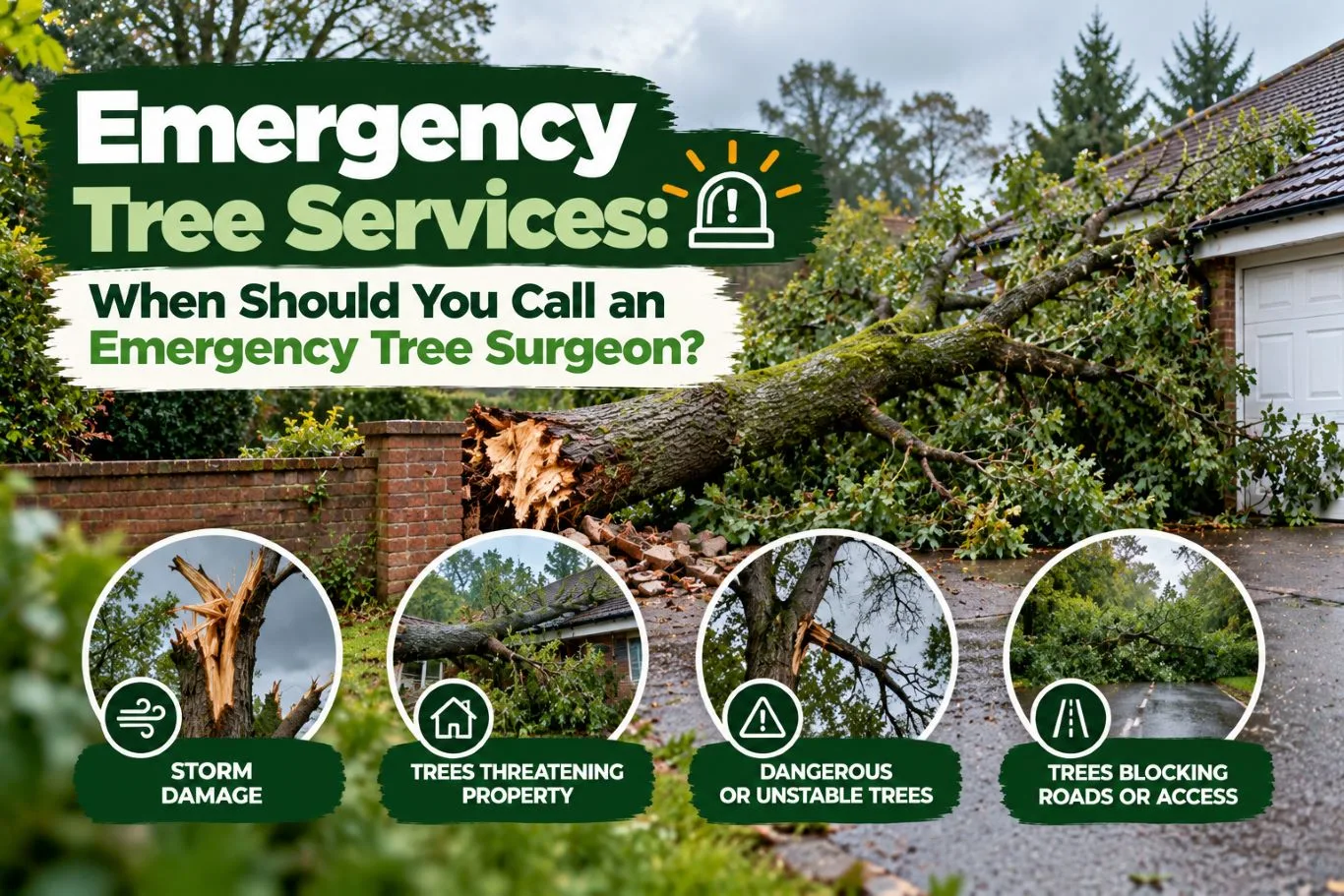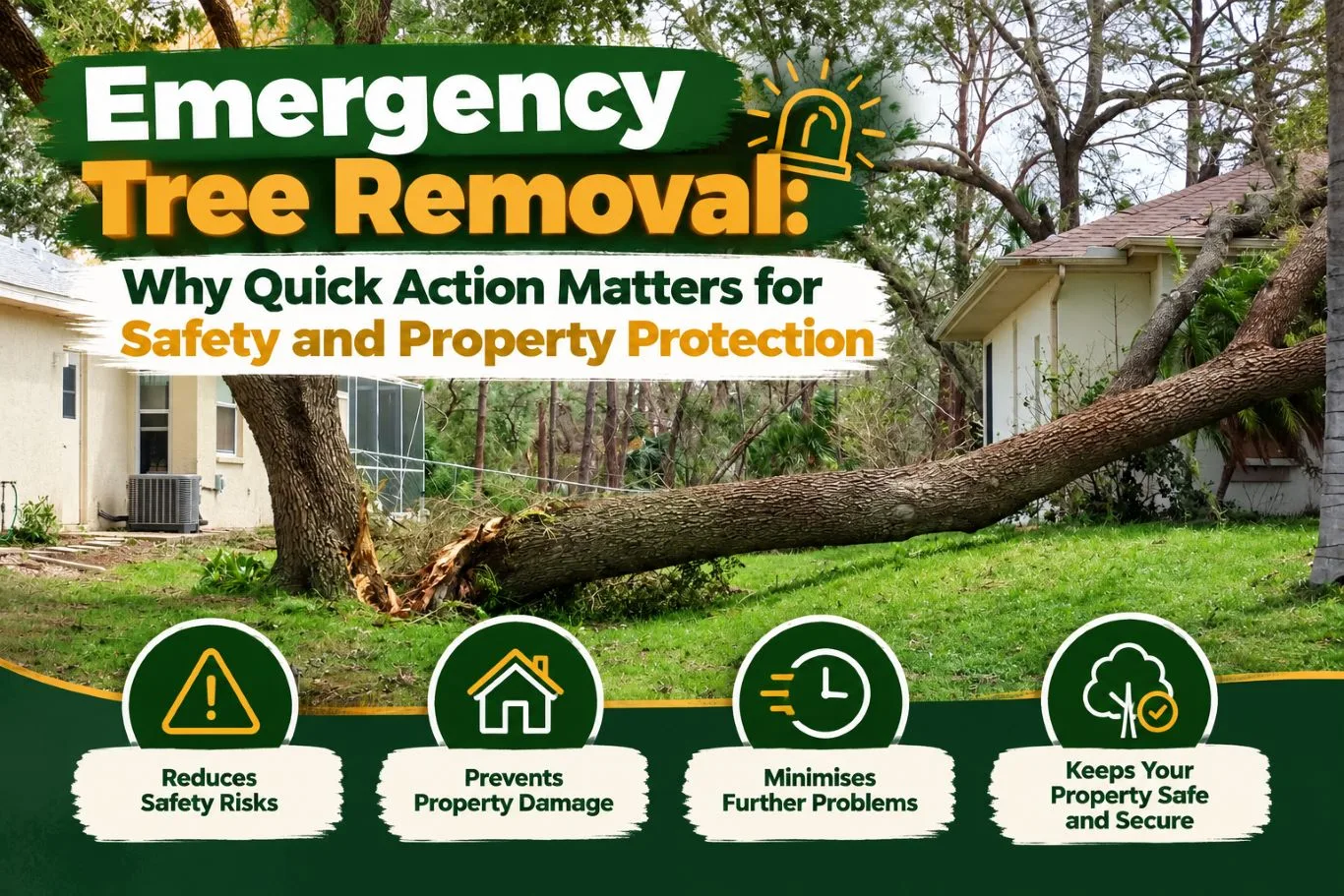
Living alongside mature trees brings undeniable environmental benefits, seasonal beauty, and leafy shade to suburban homes. However, when a sapling planted decades ago expands into a massive, towering canopy standing just a few metres from your brickwork, having an overgrown tree near house structures quickly raises serious anxieties. Homeowners frequently find themselves battling blocked roof gutters, darkened living rooms, cracked boundary walls, and persistent fears of branch failure during winter storms.
Across Essex, East London, and North London, residential properties frequently share compact boundaries with mature Forest-scale trees such as Oak, Sycamore, Poplar, and Ash. In addition to physical branch encroachment, subsoil moisture extraction by extensive root networks across heavy London clay can trigger subsidence or structural foundation movement. Furthermore, navigating legal boundaries and disputes regarding tree branches overhanging a property requires a clear understanding of UK common law and local planning restrictions.
Fortunately, having an oversized tree close to your property does not automatically mean it must be clear-felled. Arboricultural science offers a broad spectrum of sympathetic pruning and reduction techniques that preserve canopy health while completely mitigating structural hazards. This definitive homeowner guide explores your practical options for reducing tree size near a house, protecting building foundations, understanding UK legal rights, and choosing certified tree reduction services across Essex, East London & North London.
Quick Summary: Overgrown Tree Options
- Crown Reduction: Decreases overall canopy height and spread by 20–30% under BS 3998 standards, reducing wind sail effect while preserving natural tree shape.
- Crown Thinning & Lifting: Clears lower limbs from guttering and roofs, opening light pathways into windows without altering overall tree volume.
- Foundation Risks: High water-demand species (Oak, Willow, Poplar) on shrinkable clay soils extract moisture, risking subsidence; root barriers or felling may be required.
- Legal Boundary Rights: Under UK common law, you may trim overhanging branches back to your property boundary, provided the tree is not covered by a TPO or in a Conservation Area.
📋 Table of Contents
- → 1. The True Risks of an Overgrown Tree Near House
- → 2. Professional Tree Crown Reduction Services
- → 3. Crown Thinning & Crown Lifting Near Rooflines
- → 4. Tree Roots Damaging House Foundations & Heave
- → 5. UK Law: Overhanging Branches & Neighbor Rights
- → 6. Tree Preservation Orders (TPOs) & Council Consent
- → 7. When Complete Tree Removal Is the Only Safe Path
- → 8. Overgrown Tree Options: Comprehensive Comparison
- → 9. Frequently Asked Questions
- → 10. Summary & Expert Arborist Recommendations
Are overhanging branches or encroaching tree roots threatening your home? Contact our licensed Essex arborists today for an expert site survey and tailored quote:
1. The True Risks of an Overgrown Tree Near House Structures
An unmanaged mature tree growing within striking distance of a domestic dwelling presents three distinct categories of risk:
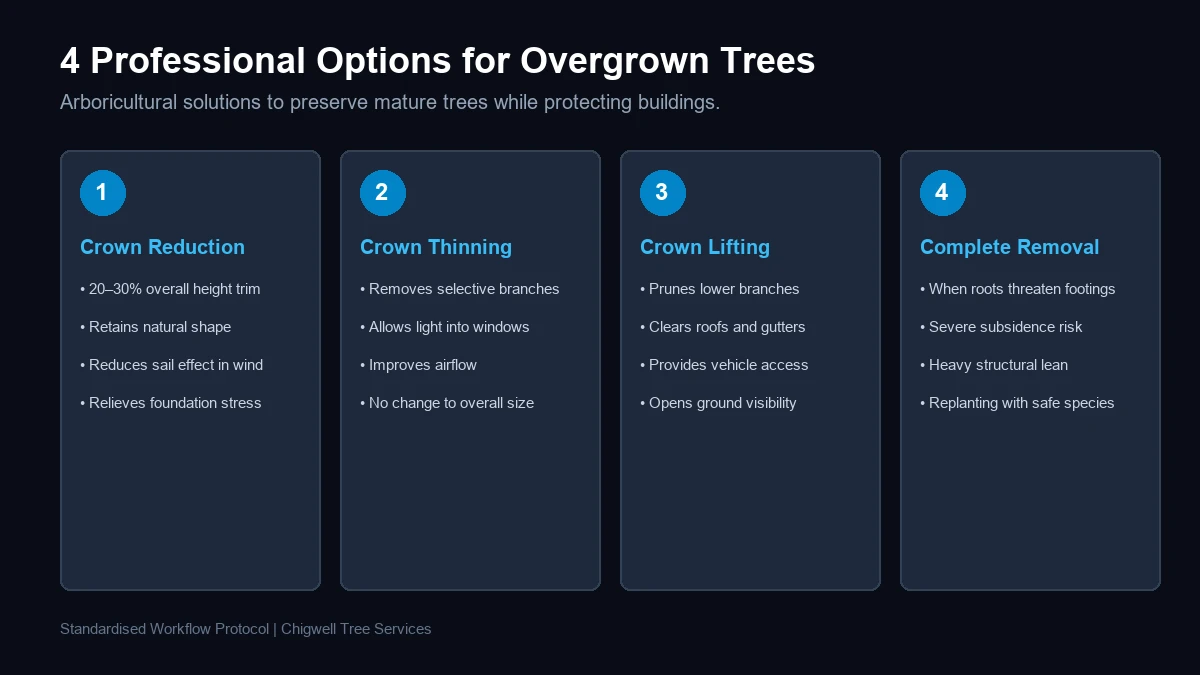
Figure 1: Core arboricultural options for managing overgrown trees near domestic buildings.
- Direct Physical Impact: During high wind storms and winter gales, excessive branch sway can scour roof tiles, dislodge chimney cowls, and shatter window glazing. In severe storms, heavy limb failures can puncture roof rafters or crush car ports.
- Moisture & Drainage Obstruction: Overhanging canopies drop vast volumes of leaves, pine needles, and twigs directly into roof valleys and gutters. Blocked gutters cause rainwater to back up beneath eaves, saturating exterior brickwork and creating severe internal damp and mould problems. Dense canopy shade also prevents sunshine from drying damp roof tiles, promoting heavy moss and lichen growth.
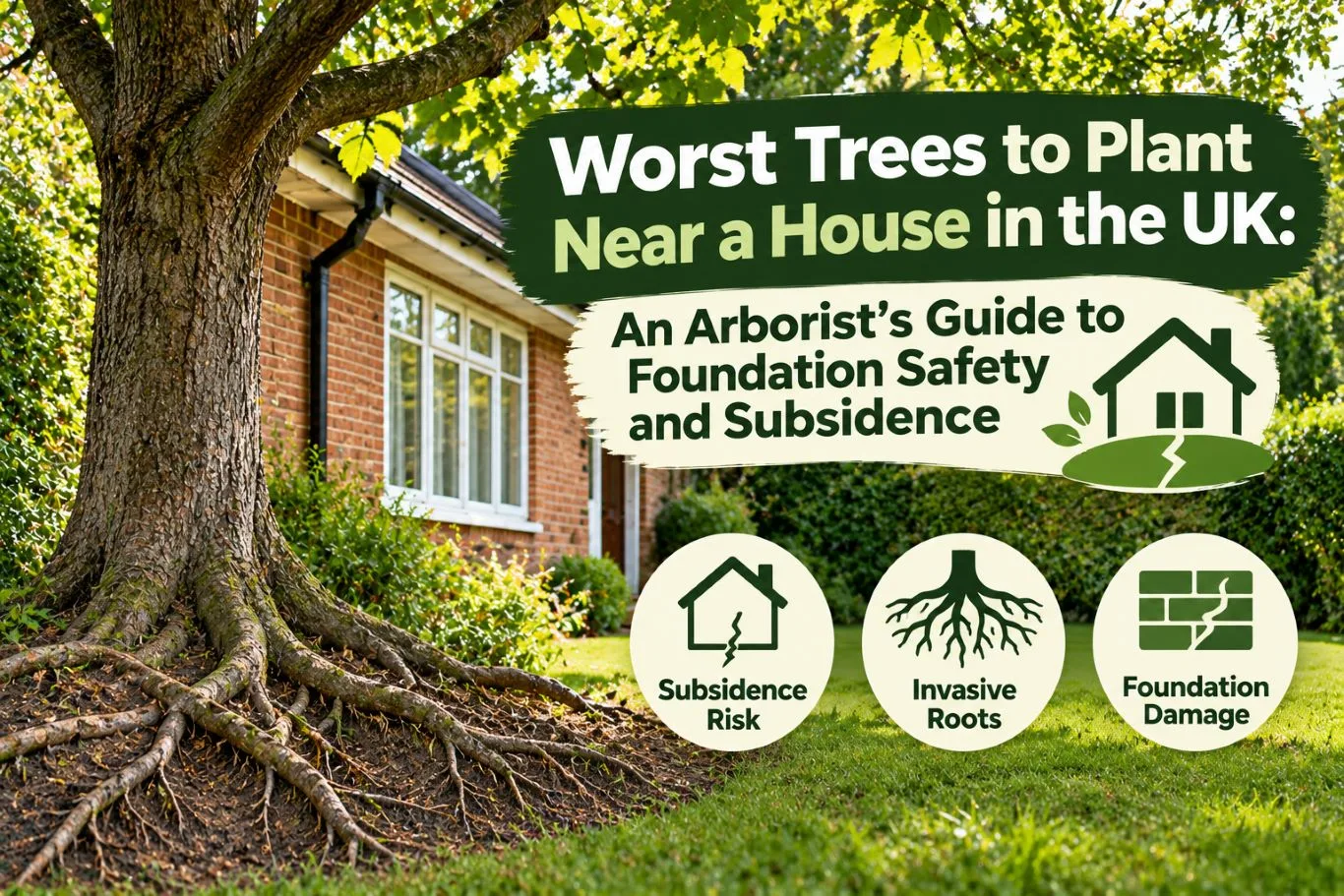
- Subterranean Soil Desiccation (Subsidence): In areas underlain by shrinkable clay subsoils—such as large portions of Essex, East London, and Hertfordshire—tree roots draw hundreds of litres of groundwater daily during summer. This causes clay volume shrinkage, removing support beneath shallow foundations and triggering diagonal brickwork cracking.
Understanding these mechanisms allows arborists to formulate a measured management plan rather than reacting with panic. To understand foundational risks in detail, explore our specialist guide on the worst trees to plant near a house.
2. Professional Tree Crown Reduction Services
When a homeowner wants to keep their tree but needs to significantly reduce its physical mass, tree crown reduction services UK represent the gold standard intervention:
A crown reduction systematically reduces the overall height and branch spread of the tree crown by pruning back the outer framework to suitable lateral growth points. Under British Standard BS 3998:2010 (Recommendations for Tree Work):
* Reductions are specified by exact percentages or measurements (typically 20% to 30% reduction in leaf area or branch length).
* Pruning cuts are made cleanly outside the branch bark ridge and collar, allowing the tree to form natural defense barriers against wood decay fungi.
* The natural outline, balance, and aesthetic shape of the species are strictly preserved.
Benefits of Crown Reduction
- Reduces Wind Sail Area: By decreasing crown volume, wind passes through the canopy with significantly less drag, dramatically reducing branch snap and trunk failure risks during severe storms.
- Lowers Water Demand: A reduced leaf canopy requires less moisture, slowing the rate of summer soil desiccation beneath nearby building foundations.
- Restores Daylight: Light penetration into upper bedrooms, conservatories, and patio gardens is substantially improved.
Learn more about certified pruning techniques by exploring our dedicated service page for crown reduction.
3. Crown Thinning & Crown Lifting Near Rooflines
If the overall height of the tree is acceptable but it blocks light or rubs against architectural fixtures, less intensive pruning methods can be deployed:
Crown Thinning
Crown thinning involves the selective removal of weak, crossing, duplicate, or secondary branches throughout the interior of the canopy.
* Up to 15% to 20% of the internal leaf structure is thinned out.
* The overall height and spread of the tree remain completely unchanged.
* It allows natural sunlight to filter directly through the canopy while permitting air to circulate freely, mitigating wind resistance without changing the tree’s silhouette.
Crown Lifting (Crown Raising)
Crown lifting removes the lowest branches of the canopy to raise the clearance height above ground level:
* Crucial for tree pruning near buildings where lower branches brush against guttering, shed roofs, or telephone wires.
* Provides essential legal clearance over public pedestrian footpaths (minimum 2.5 metres) and public roads (minimum 5.2 metres under the Highways Act 1980).
Review our full breakdown of precision pruning methodologies at expert tree pruning.
4. Tree Roots Damaging House Foundations & the Heave Phenomenon
One of the most complex challenges with an overgrown tree near house properties is subterranean root interaction:
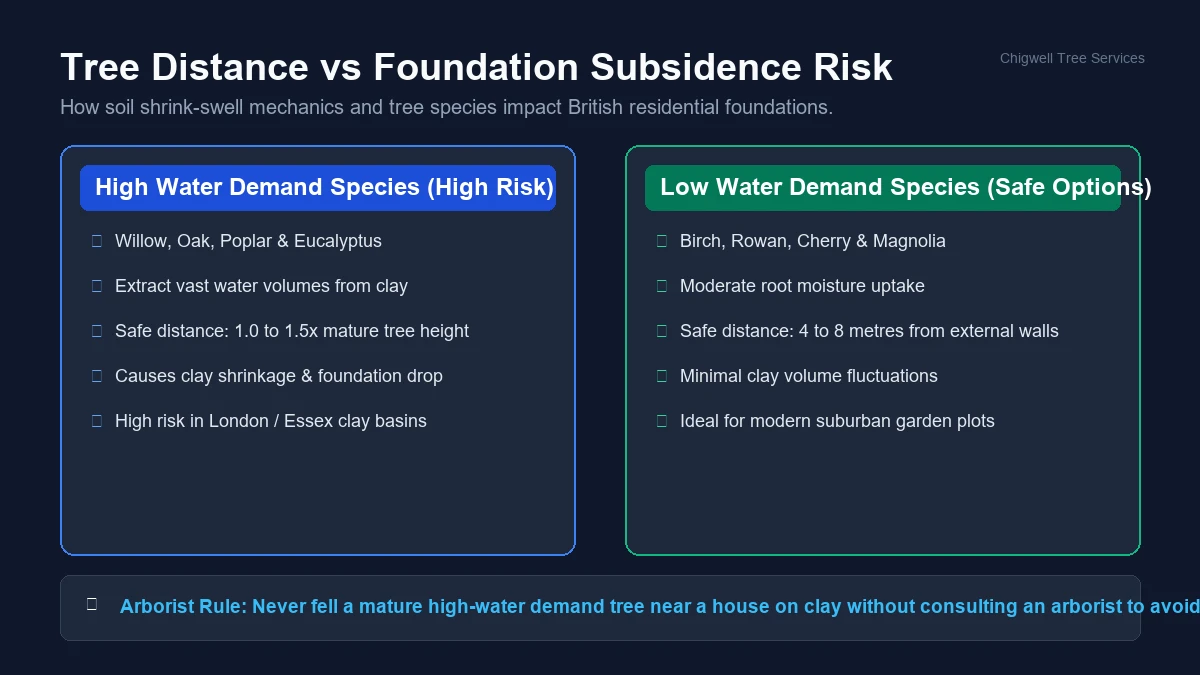
Figure 2: Safe planting distances and species-specific water demand profiles affecting shrinkable clay soils.
Direct Root Damage
Direct physical root damage occurs within 1 to 3 metres of the trunk. As primary structural roots expand in diameter, they exert radial pressure that can lift block paving, crack garden boundary walls, or dislodge shallow drainage pipes. Contrary to popular myth, tree roots rarely “punch holes” into solid concrete building foundations; instead, they exploit pre-existing cracks or failing mortar joints in search of water.
Indirect Subsidence on Clay Soils
The far greater danger across London and Essex clay profiles is indirect subsidence. High-water-demand trees—such as Oak, Willow, Poplar, and Leylandii—absorb thousands of litres of water each month. In hot, dry summers, this dehydrates the clay, causing it to shrink downward. If foundations were constructed prior to modern building regulations (shallow footings under 1 metre deep), the building settles unevenly, producing telltale stepped cracks across external masonry and around window frames.
The Danger of Ground Heave
Before rushing to fell a mature tree suspected of causing subsidence, you must obtain professional arboricultural guidance. If a mature tree that has grown alongside a house for 80 years is suddenly removed, the desiccated clay rehydrates and swells upward. This upward expansion—known as ground heave—can cause even more catastrophic structural damage to brickwork than subsidence. In such cases, phased crown reduction combined with engineered root barriers is often the safest remedial strategy.
Consult certified arborist credentials, reviews, and local project case studies directly on our verified Chigwell Tree Services Google Business profile.
5. UK Law: Overhanging Branches & Neighbor Rights
When an overgrown tree sits on a neighbor’s property but extends across the boundary fence, disputes frequently arise:
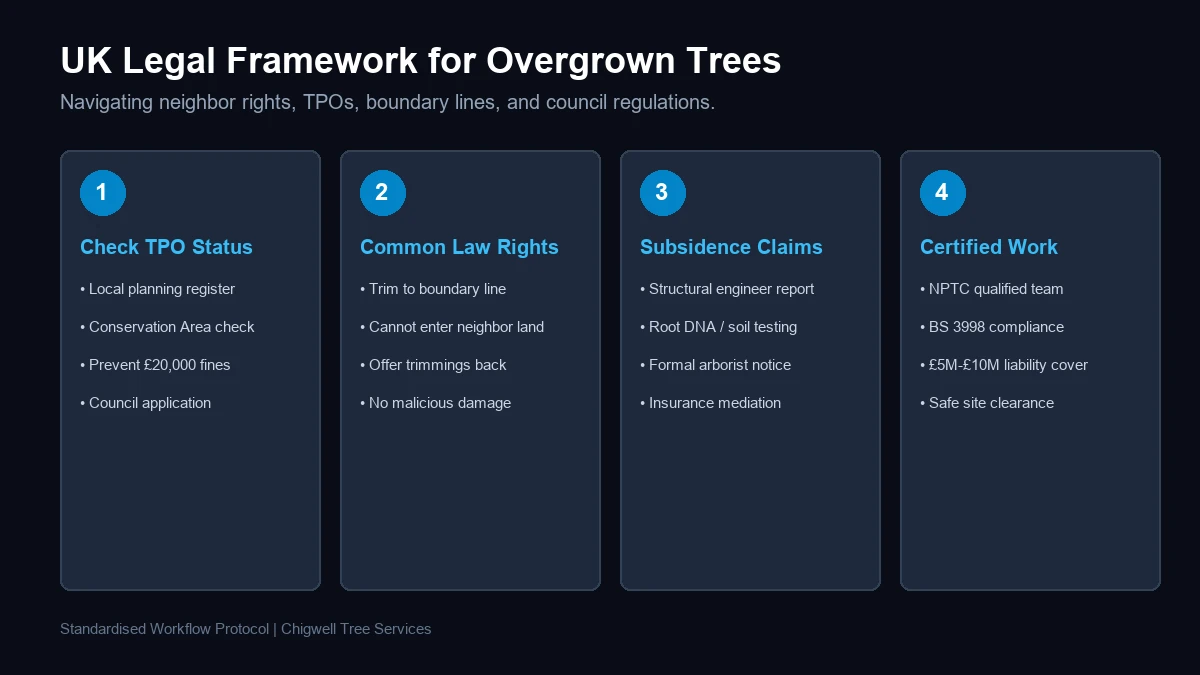
Figure 3: Legal procedures covering common law boundary pruning, TPO compliance, and insurance claims.
Under UK common law, you enjoy the legal right to abate a nuisance:
1. Right to Prune to the Boundary: You may cut back any branches or roots that cross your boundary line vertically upwards from the fence, provided you do not trespass onto the neighbor’s property to do so.
2. Duty of Care: You must not cause the tree to become structurally unstable or dead through reckless over-pruning, or you can be sued for property damage under civil law.
3. Ownership of Arisings: By law, the severed timber and fruit belong to the tree owner. You must politely offer them back to the neighbor; however, you cannot simply dump branches over the fence without their agreement, as this constitutes fly-tipping.
4. Who Pays?: The party exercising the right to cut back overhanging branches is responsible for the contractor costs unless the neighbor voluntarily agrees to contribute.
6. Tree Preservation Orders (TPOs) & Council Consent
Before instructing any tree surgeon to prune or reduce a tree, you must verify whether the tree is protected under statutory UK planning legislation:
- Tree Preservation Orders (TPOs): Local authorities (such as Epping Forest District Council, Redbridge, Waltham Forest, or Havering) place TPOs on individual trees or woodlands of high public amenity value. Pruning or cutting roots on a protected tree without formal council approval is a criminal offense, carrying fines up to £20,000 in the Magistrates’ Court (or unlimited fines in the Crown Court).
- Conservation Areas: In designated Conservation Areas, all trees with a trunk diameter exceeding 75 mm (measured 1.5 metres above ground level) receive automatic statutory protection. You must submit a formal Section 211 Notice to the council at least 6 weeks before commencing any tree works.
Professional tree surgery contractors handle council checks and submit formal planning applications on your behalf, providing photographic evidence and arboricultural justifications to guarantee compliant execution.
7. When Complete Tree Removal Is the Only Safe Path
While arborists always advocate preserving healthy trees, certain critical conditions leave complete felling and dismantling as the only prudent solution:
* The tree exhibits severe structural decay, trunk cavities, or honey fungus infection within striking distance of the house.
* Extensive root damage has irreversibly compromised the tree’s anchoring root plate, resulting in a noticeable lean following storm winds.
* A structural engineer confirms that tree-related soil subsidence cannot be halted through pruning alone.
In these circumstances, qualified arborists execute precision sectional dismantling using ropes and lowering pulleys to take down the tree safely without damaging roofs or gardens. For severe timber decay, review our complete guide on dead tree removal to evaluate structural stability.
8. Overgrown Tree Options: Comprehensive Comparison
Evaluate the most appropriate remedial action for your property using the comparative analysis below:
| Management Option | Primary Objective | Impact on Tree Health | Impact on Building Safety | Council Approval (TPO) |
|---|---|---|---|---|
| Crown Reduction (20–30%) | Reduce overall height, wind sail, and water uptake | Low (when performed under BS 3998 standards) | High (Reduces storm strain & water demand) | Full application required (6–8 weeks) |
| Crown Thinning (15–20%) | Increase light penetration & reduce wind drag | Very Low (retains structural framework) | Moderate (Decreases canopy wind buffeting) | Full application required (6–8 weeks) |
| Crown Lifting | Clear branches from roofs, gutters, and paths | Minimal (removes lower secondary limbs) | High (Eliminates direct roof/gutter abrasion) | Full application required (6–8 weeks) |
| Subterranean Root Barrier | Physically redirect roots away from foundations | Moderate (requires root trenching excavation) | High (Prevents root encroachment & moisture loss) | Only if cutting roots of protected tree |
| Complete Sectional Felling | Permanently eliminate dangerous tree hazards | Total tree removal | Maximum (Must evaluate heave risk first) | Full council application / deadwood notice |
9. Frequently Asked Questions About Trees Near Houses
How close is too close for a tree to a house?
Safe planting distances depend primarily on species and subsoil type. As a rule of thumb, low-water-demand ornamental trees (such as Rowan, Crab Apple, or Silver Birch) can safely grow within 4 to 8 metres of external walls. High-water-demand forest species (such as Oak, Willow, and Poplar) should stand at least 1.0 to 1.5 times their mature height away from homes built on clay subsoils.
Can tree roots crack concrete house foundations?
Tree roots do not possess the mechanical force to crack solid reinforced concrete foundation slabs. However, on shrinkable London clay, roots absorb soil moisture, causing the ground beneath foundations to shrink and subside, which cracks the superstructure above. In older properties with shallow brick footings, fine roots can also enter pre-existing mortar fractures and expand slowly over time.
Can my neighbor stop me from cutting overhanging branches?
Under UK common law, a neighbor cannot stop you from cutting overhanging branches back to the legal boundary line, provided the tree is not covered by a Tree Preservation Order or situated in a Conservation Area. However, you cannot step onto their land without permission, and you must not cause the tree to become unstable or diseased.
Will pruning an overgrown tree stop foundation subsidence?
Regular crown reduction carried out every 2 to 3 years reduces canopy foliage volume, which directly decreases the tree’s daily water uptake. While severe active subsidence often requires root barriers or felling, early crown reduction can stabilize seasonal subsoil moisture fluctuations and prevent foundation movement.
How much does professional crown reduction cost in Essex?
The cost of crown reduction depends on the tree’s height, canopy spread, access limitations, and proximity to buildings. Typically, professional crown reduction on a medium garden tree ranges between £350 and £750, whereas mature oaks or poplars requiring complex aerial rigging and traffic control generally cost between £800 and £1,800+. Always hire fully insured arborists holding NPTC certifications and £5M+ public liability cover.
10. Summary & Expert Arborist Recommendations
Managing an overgrown tree near house structures requires a careful balance between preserving natural canopy beauty and protecting your most valuable financial asset. Clear-felling is rarely the only choice; modern arboriculture provides targeted techniques—such as crown reduction, crown thinning, and crown lifting—that reduce wind loads, restore daylight, and protect building fabric.
By engaging certified tree surgeons who comply with British Standard BS 3998, verifying council planning protections, and inspecting trees annually, you can enjoy the full aesthetic and environmental benefits of mature garden trees with complete peace of mind.
Concerned about a large tree near your roofline, conservatory, or boundary fence? Contact our certified Essex and London tree care team today for professional advice and a free written quotation: