Quick Summary
- Exploring different tree stump removal methods helps property owners select the safest, most efficient, and cost-effective approach for their specific garden layout.
- Discover how mechanical stump grinding shaves leftover timber down below ground level with minimal disruption to your surrounding lawn.
- Learn about manual digging and complete root ball extraction for site preparation ahead of new construction or replanting projects.
- Understand chemical decomposition techniques, including potassium nitrate treatments, for slow-acting, low-effort timber breakdown.
- Find out how professional diagnostic checks protect underground utilities and ensure safe, eco-friendly green waste processing.
Introduction
After a mature or hazardous tree has been felled, dealing with the remaining wood protruding from your lawn becomes an essential next step. Leaving an old stump behind might seem like a simple way to defer costs, but leftover timber quickly creates practical and biological problems. Beyond being an obvious trip hazard for children and a constant nuisance for lawnmowers, decomposing wood attracts subterranean pests and acts as a reservoir for destructive fungal diseases like Honey Fungus (Armillaria). Evaluating the most suitable tree stump removal methods allows you to make an informed choice based on your timeline, budget, and future landscaping goals. At Chigwell Tree Services, we bring extensive practical experience and specialized equipment to every project, delivering trusted tree stump removal services in Essex to ensure your garden remains clean, safe, and ready for your next project.
Confused about which stump removal method fits your garden and budget? Chat with Chigwell Tree Services on WhatsApp for expert advice across Essex :
Why Removing Leftover Stumps Matters
Leaving a tree stump in the ground is rarely a neutral choice. Over time, wood naturally decomposes, but the way it rots underground can impact the surrounding landscape in several ways:
- Safety and Usability: Stumps create permanent trip hazards, particularly in high-traffic family gardens, and can easily damage mower blades or garden machinery.
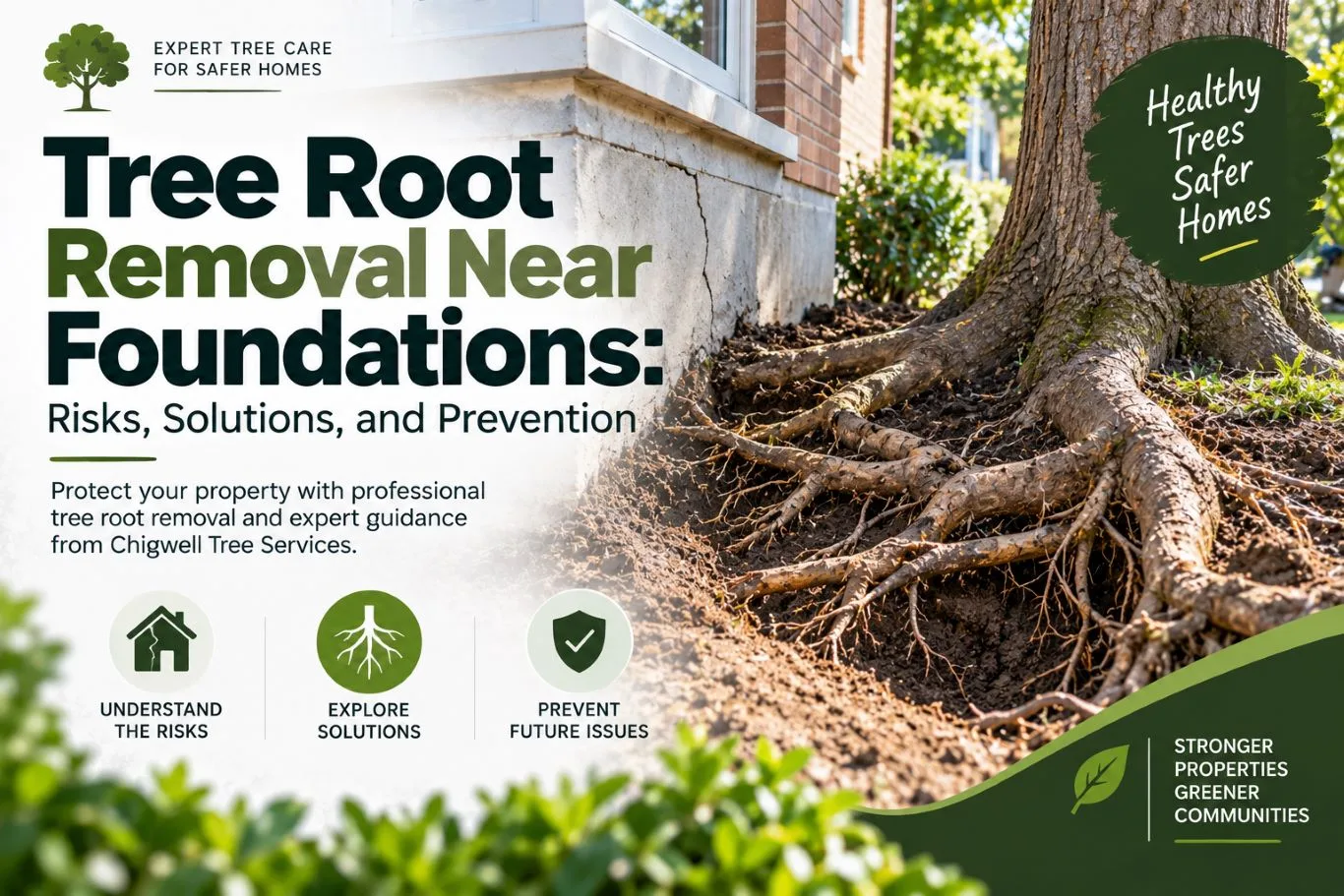
- Pest and Disease Prevention: Decaying wood attracts wood-boring insects, carpenter ants, and fungal spores that can spread through root networks to infect neighboring healthy plants.
- Regrowth and Suckering: Aggressive species such as Willow, Poplar, and Cherry often send up fresh suckers from the root base, resulting in untidy brush growth that steals nutrients from nearby lawn turf.
- Aesthetic and Space Optimization: Clearing a stump frees up valuable ground space for fresh turf, raised beds, garden rooms, or patio extensions.
Exploring the 4 Core Tree Stump Removal Methods
Choosing the right technique depends on the size of the stump, access restrictions in your garden, and your immediate plans for the area.
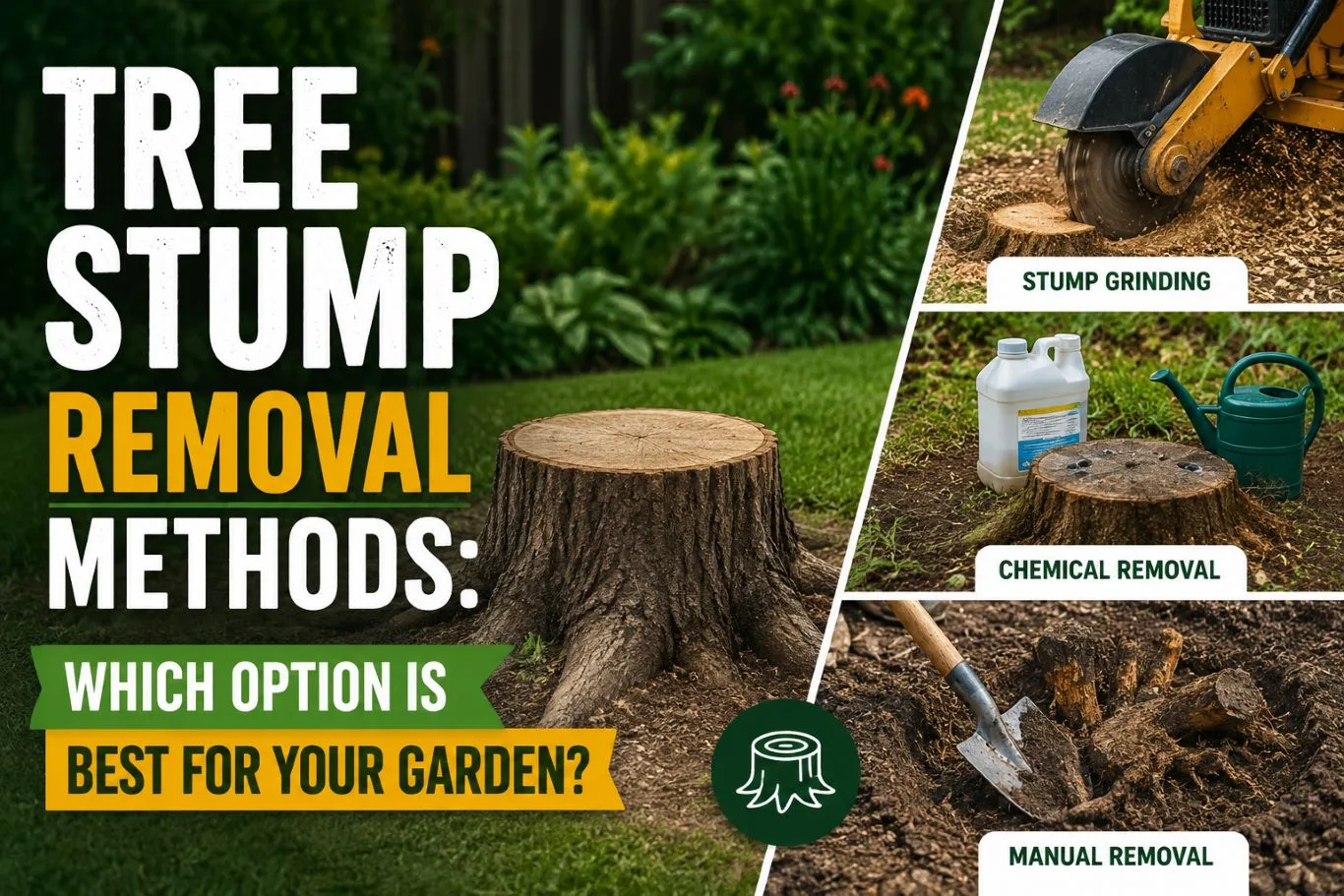
1. Mechanical Stump Grinding
Stump grinding is widely recognized as the most popular, efficient, and versatile technique for residential properties.
- How it works: A high-powered, petrol-driven machine featuring a rotating steel wheel fitted with carbide teeth systematically grinds the solid wood into fine woodchips and sawdust. The operator grinds the timber down 15 to 30 centimeters below ground level.
- Best for: Homeowners who want a fast, clean solution without tearing up the surrounding lawn. It allows the area to be easily covered with topsoil and re-turfed.
- Pros: Fast execution, minimal garden disruption, and cost-effective.
- Cons: Leaves the main lateral root matrix underground to decay naturally over time.
2. Complete Manual or Excavator Digging
Full physical extraction involves removing both the prominent stump and the massive root ball anchored beneath it.
- How it works: For small, shallow-rooted species, manual digging using Mattocks, spades, and root saws can work. For larger mature stumps, a mini-excavator or hydraulic winch is used to dig around the root flare, sever major anchor roots, and lift the entire subterranean mass out of the earth.
- Best for: Property owners preparing a site for heavy construction, building foundations, laying deep patio footings, or planting a new specimen tree in the exact same spot.
- Pros: Completely removes all underground wood, leaving a total blank slate.
- Cons: Labor-intensive, highly disruptive to surrounding turf, and leaves a large hole that requires topsoil backfilling.
3. Chemical Decomposition
Chemical stump removal relies on slow-acting chemical treatments to accelerate the natural rotting process of the wood.
- How it works: Holes are drilled vertically into the top of the stump, and chemical treatments—typically high-nitrogen substances or potassium nitrate stump removers—are poured inside. Water is added, and the stump is covered with a waterproof tarp to trap moisture and heat.
- Best for: Low-budget projects where time is not a factor and immediate ground clearance is not required.
- Pros: Inexpensive and requires minimal physical labor.
- Cons: Takes anywhere from 6 to 12 months (or longer) to break down the wood, and care must be taken around pets, children, and nearby waterways.
4. Eco-Plugging and Natural Acceleration
For property owners seeking a non-excavation method that stops suckering growth while allowing natural decay, eco-plugging offers a targeted alternative.
- How it works: Specialized plugs containing concentrated glyphosate or natural biological agents are inserted into pre-drilled holes around the living cambium layer. The plug seals the treatment inside, preventing sap flow and killing the root matrix cleanly from within.
- Best for: Preventing stubborn species from sending up fresh shoots without using open chemical sprays across borders.
- Pros: Highly targeted, safe for nearby plants, and completely stops root suckering.
- Cons: The physical wood remains in place until it naturally rots over several years.
Method Comparison: Choosing What Fits Your Space
Selection Framework:
– Choose Mechanical Grinding if: You want a fast, affordable finish to re-lawn or build flower beds with zero turf disturbance.
– Choose Full Excavation if: You are laying concrete foundations, building a garden home, or installing deep utilities.
– Choose Chemical / Eco-Plugs if: You are on a strict budget, have zero machinery access, and are willing to wait months for natural decay.
Professional Diagnostics and Safety Standards
While small sapling stumps can sometimes be dug out manually over a weekend, tackling mature stumps with heavy machinery requires specialized training, safety gear, and accurate underground utility checks.
Attempting DIY grinding without checking for buried gas lines, water pipes, or electrical conduits can result in costly property damage or severe injury. Furthermore, commercial stump grinders require professional handling to control flying debris and navigate narrow garden gates safely.
Working with established affordable tree surgeons in Essex ensures that all site hazards are identified early, underground utilities are mapped, and all green waste is processed efficiently or repurposed into clean garden mulch.
FAQs
1. Can I plant a new tree directly where an old stump was ground down?
It is generally recommended to plant a new tree slightly to the side of an old stump location. Even after deep grinding, leftover woodchips and decaying roots alter the soil nitrogen balance and physically obstruct fresh root growth for the first year or two.
2. What happens to the woodchips produced during stump grinding?
The grinding process creates a rich mixture of woodchips and soil. This material can be cleared out entirely, or repurposed as an effective organic mulch for flower beds and garden borders to retain moisture and suppress weeds.
3. How quickly can your local teams visit my property for a stump assessment?
We maintain a highly responsive local dispatch network. For standard domestic and commercial safety evaluations, we can typically schedule an expert on-site evaluation and provide a free quote within 24 to 48 hours of your inquiry.
4. What specific geographic areas do your field specialists cover?
Our operational network covers the entire county of Essex, including Chigwell, Loughton, Epping, Woodford, Brentwood, Buckhurst Hill, and nearby North London districts. This regional focus ensures we are always familiar with local soil types and access conditions.
5. Are your stump removal operations fully insured and accredited?
Yes, completely. Our entire operational crew holds fully verified NPTC and LANTRA qualifications for operating commercial arboricultural machinery. We carry extensive public liability insurance, ensuring all grinding and extraction work is completed safely and in accordance with strict industry standards.
Conclusion / Final Thoughts
Selecting the right option among various tree stump removal methods comes down to balancing your budget, timeline, and long-term plans for your landscape. Whether you opt for the surgical speed of mechanical stump grinding to restore your lawn quickly, or require complete excavation to prepare ground for a new building project, addressing leftover timber promptly protects your home from trip hazards, fungal decay, and unwanted pests. Taking a proactive approach ensures your outdoor spaces remain clean, safe, and fully functional.
At Chigwell Tree Services, we take pride in delivering honest, professional, and customer-focused care for domestic gardens and commercial landscapes alike. We pair advanced, modern machinery with certified arboricultural techniques to deliver clean, efficient, and precise results. If you are looking for trusted tree stump removal services in Essex or need expert advice on the best approach for your grounds, our local specialists are always ready to assist. Restore your garden's true potential today by choosing a professional, authoritative standard of care for your grounds.
Eliminate dangerous trip hazards and give your landscape the seamless, pristine finish it deserves—partner with Chigwell Tree Services for complete stump removal :