Quick Summary
- Understanding the key differences in stump grinding vs stump removal is essential for choosing the right solution for your budget, timeline, and landscaping plans.
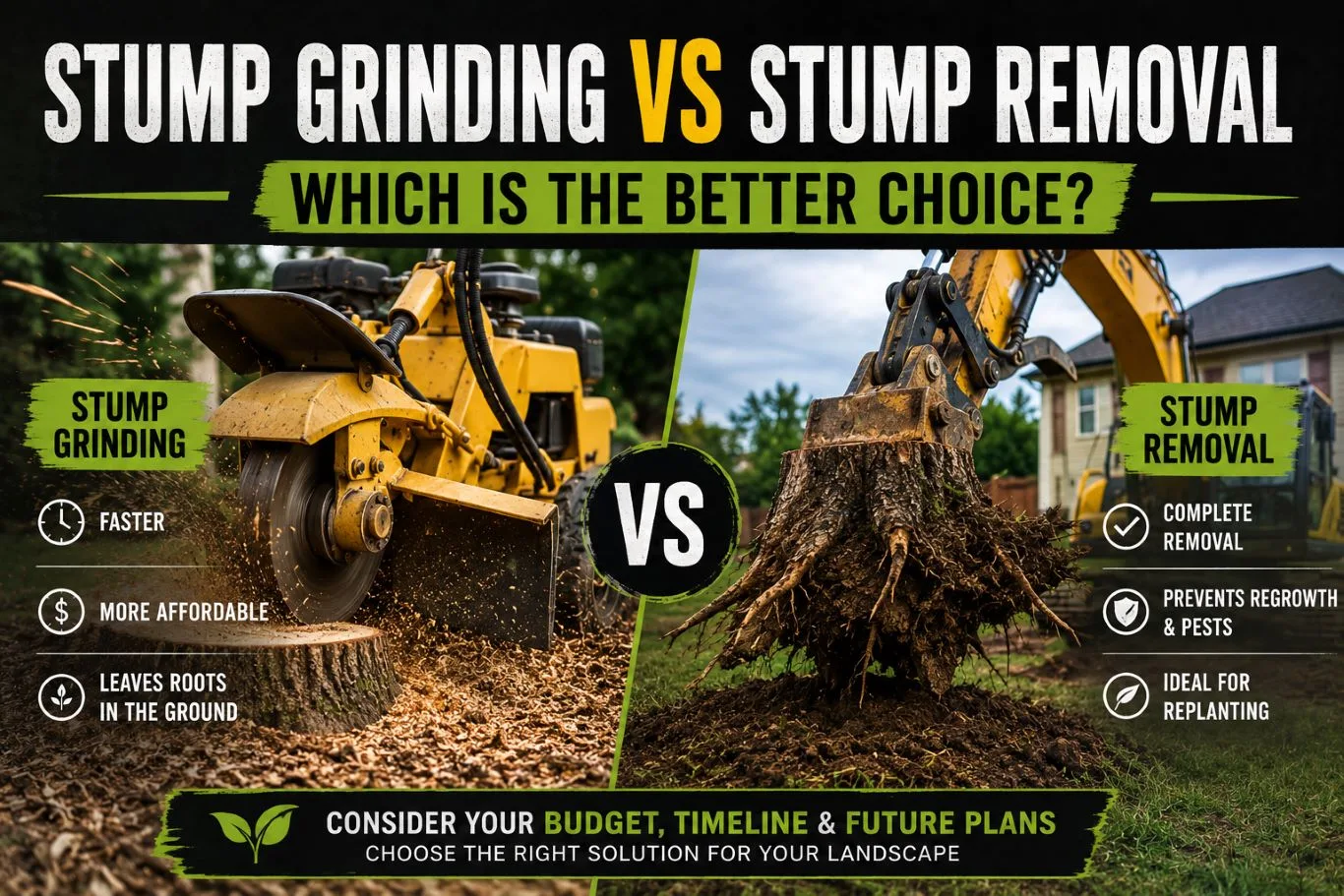
- Stump Grinding uses high-speed machinery to shave the wood down below ground level, leaving the deep root matrix intact to decay naturally over time.
- Stump Removal involves heavy excavation to pull out the stump alongside its entire root ball, leaving a clean slate for construction or replanting.
- Discover the financial, practical, and ecological trade-offs between both methods to prevent trip hazards, pest infestations, and fungal diseases.
- Learn how professional arborists evaluate soil conditions, access restrictions, and future land use before recommending a solution.
Once a mature or hazardous tree has been safely felled, property owners are left with a final, unavoidable decision: what to do with the remaining timber protruding from the lawn. Leaving an old tree stump in place might seem like a harmless, low-maintenance option, but leftover wood rapidly becomes a nuisance. Beyond creating a severe trip hazard for children and lawnmowers, decaying wood attracts unwanted pests like subterranean termites and carpenter ants, while serving as a breeding ground for fungal pathogens like Honey Fungus (Armillaria). Deciding on the best path forward comes down to weighing stump grinding vs stump removal to determine which approach aligns best with your garden goals. At Chigwell Tree Services, we specialize in managing complex landscape clearings with precision, offering tailored advice and expert solutions across the county to leave your outdoor space clean, safe, and beautifully maintained.
Ready to clear space for a new lawn, patio, or garden room? Message our friendly Essex specialists on WhatsApp for a quick stump grinding or stump removal consultation :
What Is Stump Grinding?
Stump grinding is the most popular, efficient, and minimally invasive method for dealing with leftover timber after a tree removal project.
How the Process Works
Professional arborists utilize specialized commercial machinery called a stump grinder. This machine features a heavy, high-speed rotating steel wheel fitted with sharp carbide teeth. The operator guides the cutting wheel back and forth across the stump, systematically shaving the solid wood down into fine woodchips and sawdust. The process continues until the main trunk structure is ground down well below the surrounding lawn surface—typically to a depth of 15 to 30 centimeters (6 to 12 inches).
What Happens to the Roots?
It is important to note that grinding does not extract the extended root matrix spreading across your garden. Instead, the main trunk core is severed below the soil line, and the remaining subterranean root system is left in place to naturally decay over several years. The resulting mixture of woodchips and soil created during the process can be repurposed as rich garden mulch or used to backfill the newly created depression.
What Is Full Stump Removal?
Full stump removal is a far more aggressive, heavy-duty operation designed to extract every piece of wood from the earth.
The Excavation Method
Unlike grinding, complete removal involves digging out both the prominent stump and the massive root ball anchored beneath it. This process requires heavy machinery, such as a mini-excavator or specialized hydraulic winch equipment, to sever major lateral roots and break the suction of the soil.
Leaving a Blank Slate
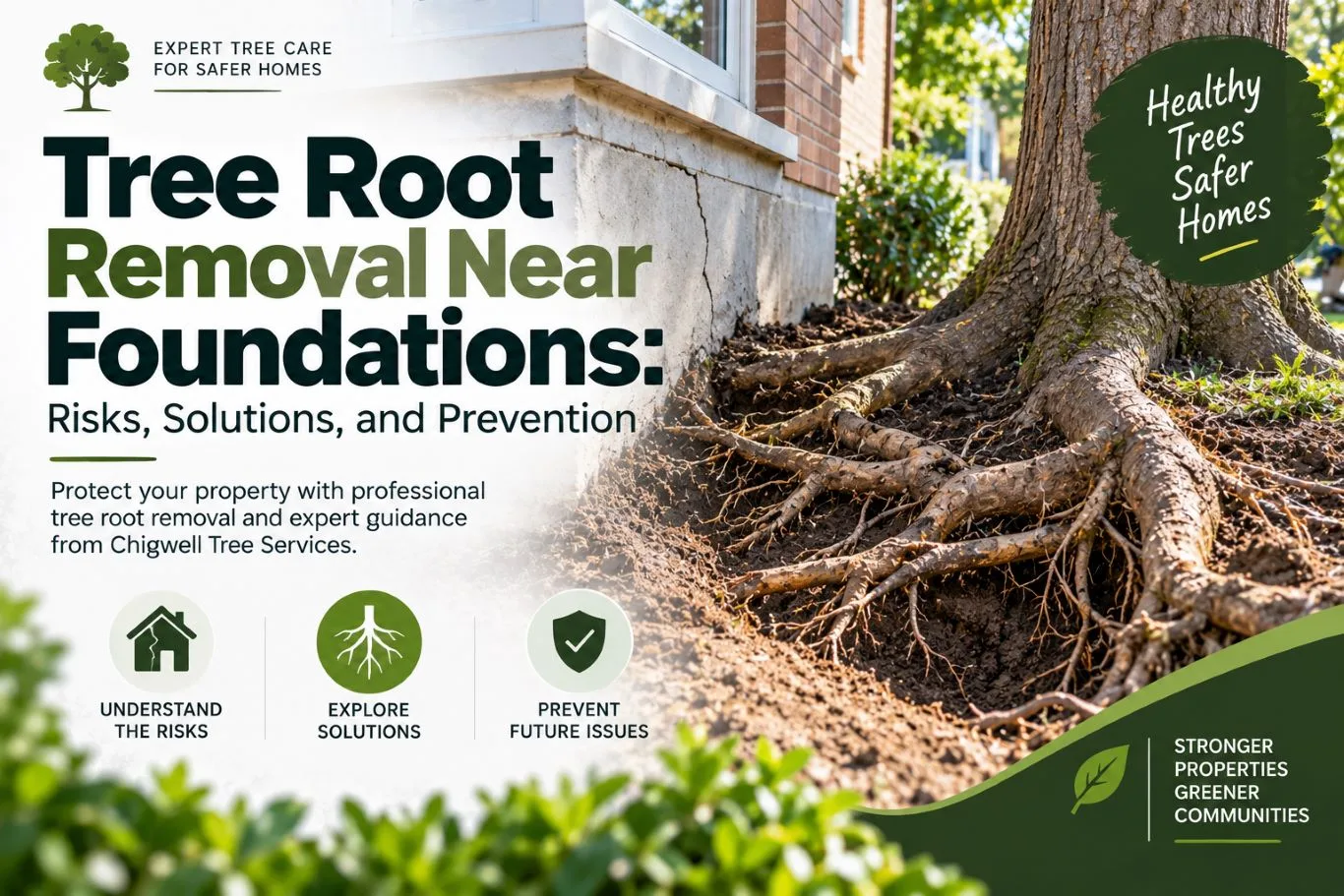
Once the main root ball is levered out of the earth, the entire subterranean structure is lifted out, leaving a sizeable crater in the garden. While this requires substantial backfilling and soil restoration, it completely eliminates any residual root system. This method guarantees that no hidden roots remain to interfere with deep foundation footings, patio installations, or the planting of new specimen trees in the exact same spot.
Key Comparison Factors: Grinding vs Removal
To help you decide between the two methods, let's compare how they perform across core practical categories:
Method Comparison Overview:
– Stump Grinding: Faster execution, lower relative cost, minimal lawn disruption, leaves root matrix underground.
– Full Removal: Complete root extraction, ideal for construction/replanting, higher labor demand, leaves a large pit to backfill.
1. Extent of Landscape Disruption
- Stump Grinding: Highly surgical. The machinery travels over the lawn on soft rubber tracks or tires, targeting only the stump itself. Surrounding turf, flower borders, and nearby paved pathways remain almost entirely untouched.
- Full Stump Removal: Highly invasive. Excavating a mature root ball requires heavy digging that extends well past the width of the original trunk. Lawn areas within a wide radius will be churned up, requiring secondary turf repairs and fresh topsoil once the crater is filled.
2. Time and Financial Investment
- Stump Grinding: Swift and cost-effective. Because it avoids heavy excavation, a standard residential stump can often be ground down within 30 to 90 minutes. This lower labor requirement makes it the more affordable choice for most homeowners.
- Full Stump Removal: Labor-intensive and higher cost. Digging out a stubborn root system requires larger equipment, extended labor hours, and secondary waste disposal fees to haul away the heavy root mass.
3. Future Land Use
- Stump Grinding: Perfect for standard garden restoration. Once ground down, the area can be covered with fresh topsoil and re-seeded with grass, creating a seamless, level lawn. However, because the deep roots remain, it is not suitable for immediate heavy construction or planting another large tree directly over the old spot.
- Full Stump Removal: Essential for construction and replanting. If you plan to lay building foundations, install a garden room, dig patio footings, or plant a new mature tree right where the old one stood, complete root extraction is necessary to clear the underground space.
Evaluating Pest and Biological Risks
A major reason homeowners address old stumps is to protect the wider health of their gardens from hidden biological hazards.
Preventing Fungal Spread
Decaying timber buried in damp ground creates ideal conditions for wood-rotting fungi. In the UK, species like Honey Fungus (Armillaria) spread through subterranean root networks, attacking the living roots of adjacent healthy shrubs and trees. If a tree was felled due to fungal infection, full removal or deep grinding paired with root treatment is essential to prevent the disease from spreading across your garden boundaries.
Eliminating Pest Refuges
As soft wood decomposes, it forms a natural sanctuary for wood-boring beetles, ants, and fungal colonies. Leaving a stump standing near your house or timber outbuildings creates an unnecessary bridge for pests. Resolving the stump quickly removes these breeding grounds before insects can move onto nearby structures.
Working with Local Specialists
Handling heavy stump grinders or operating excavation machinery requires formal training, commercial safety gear, and an understanding of underground utility lines. Attempting DIY stump removal without checking for buried electrical cables, gas pipes, or drainage lines can lead to costly property damage or severe injury.
When choosing affordable tree surgeons in Essex, it is vital to select an established team that conducts pre-work utility scans and uses modern machinery to minimize lawn impact. Professional operators can evaluate your soil composition, assess access width, and recommend whether grinding or excavation suits your specific garden goals.
FAQs
1. Can grass grow over a ground stump?
Yes, absolutely. After the stump is ground down 15 to 20 centimeters below the surface, the remaining woodchips can be cleared out, replaced with high-quality topsoil, and sown with grass seed or laid with fresh turf. Within a few weeks, the lawn will look completely seamless.
2. Will the remaining roots continue to grow after stump grinding?
In the vast majority of tree species, severing the trunk below ground level kills the root system entirely, causing it to rot away naturally without growing back. However, a few aggressively suckering species—such as Willow, Poplar, or Cherry—may attempt to send up fresh shoots from remaining roots. These can be easily managed with targeted eco-plugs or systemic root treatments.
3. How deep does a standard stump grinder go?
Commercial stump grinders typically operate between 15 and 30 centimeters (6 to 12 inches) below ground level. This depth is more than sufficient for establishing lawns, building flower borders, or laying light garden paving.
4. How quickly can your local teams respond to a domestic booking?
We operate a fast, flexible local dispatch system. For standard residential and commercial inquiries, we can typically schedule an expert on-site evaluation and provide a free quote within 24 to 48 hours of your initial contact.
5. Are your stump management operations fully insured and qualified?
Yes, completely. Our entire field crew holds fully verified NPTC and LANTRA qualifications for operating heavy arboricultural machinery. We carry comprehensive public liability insurance, ensuring all grinding and removal work is completed safely and in accordance with industry standards.
Conclusion / Final Thoughts
Weighing up stump grinding vs stump removal comes down to understanding your specific property goals, budget, and future landscape plans. For the vast majority of domestic gardens where the goal is a safe, level lawn free of trip hazards and pests, stump grinding offers the fastest, most affordable, and least invasive solution. However, if you are preparing a site for major construction, laying deep foundations, or replanting a large specimen tree, full extraction provides the clean slate you need.
At Chigwell Tree Services, we take pride in delivering clean, reliable, and professional solutions for properties of all sizes. Whether you need precise stump grinding services in Essex or full stump removal services in Essex, our experienced team uses modern machinery to leave your garden pristine. Contact our friendly specialists today to discuss your project, arrange an on-site assessment, and keep your landscape looking its best through every season.
Ready to reclaim your outdoor space for a new lawn, patio, or garden building? Contact our friendly local specialists for precision stump grinding or stump removal support :