Quick Summary
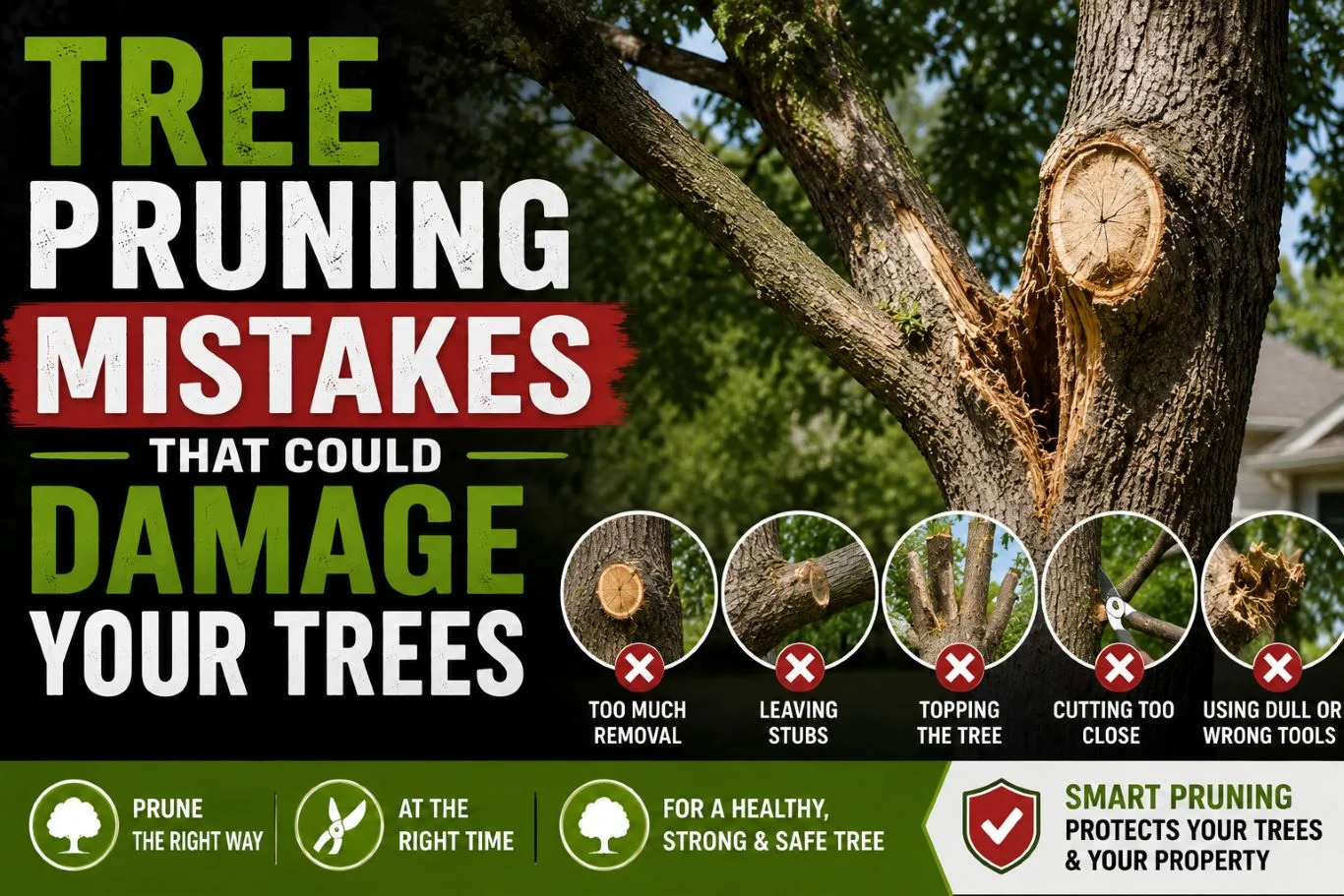
- Understanding common tree pruning mistakes helps you avoid irreversible structural damage, severe bark tearing, and long-term decay.
- Learn why aggressive practices like tree topping leave mature specimens weak, unsightly, and dangerously top-heavy.
- Discover the biological difference between flush cuts and stub cuts, and why respecting the branch collar is essential for natural healing.
- Understand the dangers of over-pruning, which deprives trees of the leaf area needed to generate energy through photosynthesis.
- Find out how using dull or unsterilized tools spreads fungal and bacterial pathogens across your garden boundary lines.
Introduction
Pruning is one of the most effective ways to maintain the safety, structure, and aesthetic beauty of your garden trees. When carried out with precision, selective cutting encourages healthy growth, improves canopy airflow, and removes hazardous deadwood. However, because trees are resilient organisms that react slowly to injury, many homeowners assume that any cut made with a pair of shears or a handsaw is beneficial. In reality, improper cutting techniques can inflict serious biological stress, leaving open wounds that invite fungal rot, boring insects, and structural weakness. Recognizing widespread tree pruning mistakes before picked-up tools touch your branches is essential for protecting your property's valuable green assets. At Chigwell Tree Services, we pair rigorous arboricultural science with years of practical experience, delivering reliable, expert tree pruning services in Essex to ensure your landscape remains safe, balanced, and structurally sound.
Worried bad cuts or improper pruning have damaged your trees? Chat with Chigwell Tree Services on WhatsApp for expert advice across Essex :
The Biology of a Pruning Cut: How Trees Heal
To understand why improper cutting techniques do so much damage, it helps to look at how a tree reacts to losing a branch. Unlike human skin, trees do not regenerate damaged tissue in the same spot. Instead, they use a process called compartmentalization to chemically wall off the damaged wood and grow new tissue around the edges of the cut.
The Role of the Branch Collar
At the base of every branch, where it meets the main trunk, sits a swelling of tissue known as the branch collar. This area contains specialized cells that produce natural chemical barriers against decay, alongside the active cambium that forms calloused wood over the cut.
When you make a clean cut just outside the branch collar, the tree rapidly seals the wound. However, if you damage or remove this collar, you destroy the tree's natural defense mechanism, allowing decay-causing fungi to penetrate deep into the heartwood of the main trunk.
6 Critical Pruning Mistakes That Threaten Your Trees
To help you protect your garden features, let's examine the six most damaging tree pruning errors that property owners and untrained handymen frequently make:
1. Tree Topping (Severe Crown Lopping)
Tree topping involves cutting back the main vertical stems or central leader of a mature tree to blunt, horizontal stubs. Homeowners often request this when they feel a tree has grown too tall.
Topping is arguably the most damaging practice in modern tree care. It removes the leafy canopy the tree relies on for photosynthesis, forcing it into emergency survival mode. The tree reacts by producing a dense cluster of upright, weakly attached shoots called epicormic growth. These fast-growing shoots snap off easily during high winds, creating a far greater hazard than the original, uncut canopy.
2. Making Flush Cuts
A flush cut happens when a branch is removed completely level with the main trunk, slicing straight through the swollen branch collar. Because this removes the tree’s natural protection zone, it leaves a large, open wound that cannot close efficiently. Flush cuts regularly lead to deep trunk cavities, internal wood rot, and structural hollows that weaken the tree from the inside out.
3. Leaving Long Branch Stubs
The opposite of a flush cut is a stub cut—leaving several inches or feet of dead wood protruding past the branch collar. Because there are no leaves on this dead stub to draw up sap, the remaining wood dies back. The tree cannot seal over a long dead stub, leaving it to rot gradually back into the main trunk and creating an entry point for wood-boring insects.
4. Over-Pruning (Lifting or Thinning Too Much)
Removing too much foliage at once is a classic case of improper tree pruning. A healthy tree should never lose more than 15% to 20% of its active canopy in a single season. Removing too many branches at once deprives the root system of vital starches and exposes the previously shaded inner bark to direct UV light, leading to severe sunscald and bark splitting.
5. Strip-Bark Tearing (Skipping the Three-Cut Method)
When cutting heavy limbs, simply sawing through from the top down is a recipe for disaster. As the limb gets heavy, it snaps under its own weight before the saw finishes the cut, tearing a long strip of living bark down the side of the main trunk. This severe wound can take years to heal and often leads to localized trunk decay.
The Three-Cut Pruning Sequence:
- Undercut: Saw 1/3 of the way through the bottom of the branch, 20-30 cm away from the trunk, to break the bark line.
- Top Cut: Saw completely through the branch from above, slightly further out. The limb will fall cleanly without tearing.
- Final Cut: Remove the remaining stub cleanly, just outside the branch collar.
6. Using Blunt or Contaminated Tools
Using dull blades tears and crushes plant tissue rather than making a clean cut, leaving ragged edges that take much longer to heal. Furthermore, moving from a diseased tree to a healthy one without sterilizing your tools can easily spread vascular diseases like Fire Blight, Bacterial Canker, or Dutch Elm Disease right across your garden.
Seasonal Considerations: When Proper Pruning Matters Most
Knowing how to prune trees correctly is as much about timing as it is about technique. Pruning at the wrong time of year can cause unnecessary stress and sap loss:
- Late Winter / Early Spring: The ideal time for major structural maintenance on most deciduous species. The tree is dormant, the bare structure is easy to evaluate, and rising spring sap speeds up wound closure.
- Late Spring / Early Summer: Avoid heavy cutting while leaves are expanding, as energy reserves are at their lowest. Furthermore, summer cuts can attract unwanted pests, while Maples, Birches, and Walnuts tend to “bleed” heavy volumes of sap if cut in late spring.
- Autumn: Avoid major pruning during damp autumn months. Airborne fungal spores are plentiful during this season, making open wounds far more vulnerable to rot.
Implementing targeted tree pruning tips helps ensure that every cut you make supports the long-term health and stability of your landscape.
The Value of Professional Arboricultural Care
While light maintenance on small fruit trees or low garden hedges can be managed with basic shears, working on large mature trees or clearing heavy deadwood over outbuildings requires specialist training and equipment.
Attempting DIY crown reductions using ladders or domestic chainsaws carries significant safety risks. Professional arborists use commercial rigging systems, aerial lifts, and sharp, sanitized tools to execute precise target cuts without damaging surrounding property or the tree's internal vascular system.
Working with established affordable tree surgeons in Essex ensures that your tree work complies with local council regulations, respects Tree Preservation Orders (TPOs), and leaves your garden clean, balanced, and secure.
FAQs
1. Can a tree fully recover after being topped by mistake?
Recovery from topping is difficult, but possible with long-term corrective management. An arborist can perform selective thinning over several years, choosing the strongest epicormic shoots to become new main branches while removing weak ones to rebuild a safe structure.
2. How do I disinfect my pruning tools between trees?
Wiping your blades down with a 70% isopropyl alcohol solution or a household disinfectant spray between trees is quick and highly effective. This simple step stops bacterial and fungal pathogens from spreading across your garden.
3. How quickly can your local team visit my property for a pruning consultation?
We operate a prompt local scheduling network. For standard domestic and commercial care evaluations, we can typically arrange an expert on-site site visit within 24 to 48 hours of your inquiry.
4. What specific geographical areas do your local arborists cover?
Our daily service team fully covers the entire county of Essex, including Chigwell, Loughton, Epping, Woodford, Brentwood, Buckhurst Hill, and nearby North London districts. This local focus ensures we are familiar with regional soil types and council conservation guidelines.
5. Are your tree surgeons fully insured and qualified?
Yes, completely. Our entire field staff holds industry-verified NPTC and LANTRA arboricultural qualifications. We operate under extensive public liability insurance, and all our pruning work conforms strictly to British Standard BS 3998:2010 safety and quality guidelines.
Conclusion / Final Thoughts
Pruning is a powerful tool for maintaining landscape beauty, but making widespread tree pruning mistakes can quickly compromise the health and safety of your garden. By avoiding destructive habits like topping, flush cutting, and over-thinning, you help your trees use their natural defenses to seal wounds and maintain structural strength. Investing in proper cutting techniques protects your home from falling deadwood while keeping your greenery thriving for decades to come.
At Chigwell Tree Services, we take pride in delivering honest, professional, and customer-focused care for domestic gardens and commercial landscapes alike. We pair certified arboricultural knowledge with heavy-duty equipment to deliver clean, safe, and precise results. If you need trusted tree pruning services in Essex or require an expert evaluation for a mature canopy, our local team is always on hand to help. Keep your property secure and beautiful through every season by choosing an authoritative standard of care for your trees.
Looking to get expert tree pruning services in Essex?