Quick Summary
- Understanding when tree removal is necessary prevents unexpected structural failure, safeguarding your home, family, and boundary lines.
- Learn how to evaluate critical indicators such as severe trunk cavities, fungal bracket growths, and rapid canopy dieback.
- Discover why sudden leaning, root plate lifting, and hollow trunks compromise structural stability.
- Understand how advanced diseases and aggressive pest infestations destroy internal vascular channels beyond repair.
- Find out how professional diagnostic checks protect nearby structures and ensure full compliance with local council regulations.
Introduction
Trees add undeniable beauty, character, and environmental value to any property. They frame our outdoor spaces, provide cooling shade during hot summer spells, and offer vital habitats for native wildlife. However, like any living organism, trees eventually reach the end of their natural lifespan, succumb to aggressive diseases, or suffer irreversible structural damage from severe weather. Knowing when tree removal is necessary is a vital part of responsible property ownership. While preserving healthy foliage is always the preferred option, leaving a severely compromised or dying tree standing creates a serious safety hazard for your home, outbuildings, and neighboring boundaries. At Chigwell Tree Services, we bring years of practical arboricultural expertise to every assessment, providing reliable, professional tree removal in Essex to ensure your outdoor environment remains completely safe, balanced, and secure.
Spotted dangerous splits, severe hollows, or lifting roots on your property? Chat with Chigwell Tree Services on WhatsApp for immediate advice across Essex :
Identifying Structural and Biological Decline
Understanding when a tree has transitioned from a manageable garden feature into a dangerous hazard requires looking past the surface green. While a tree may still produce leaves along a few outer branches, its internal trunk or subterranean root system may be decaying rapidly.
When the structural integrity of the timber breaks down, the risk of sudden limb drop or complete uprooting increases significantly during high winds or heavy rainfall. Intercepting these issues early allows property owners to plan controlled removals before an emergency occurs, preventing costly property damage and protecting public footpaths along boundary lines.
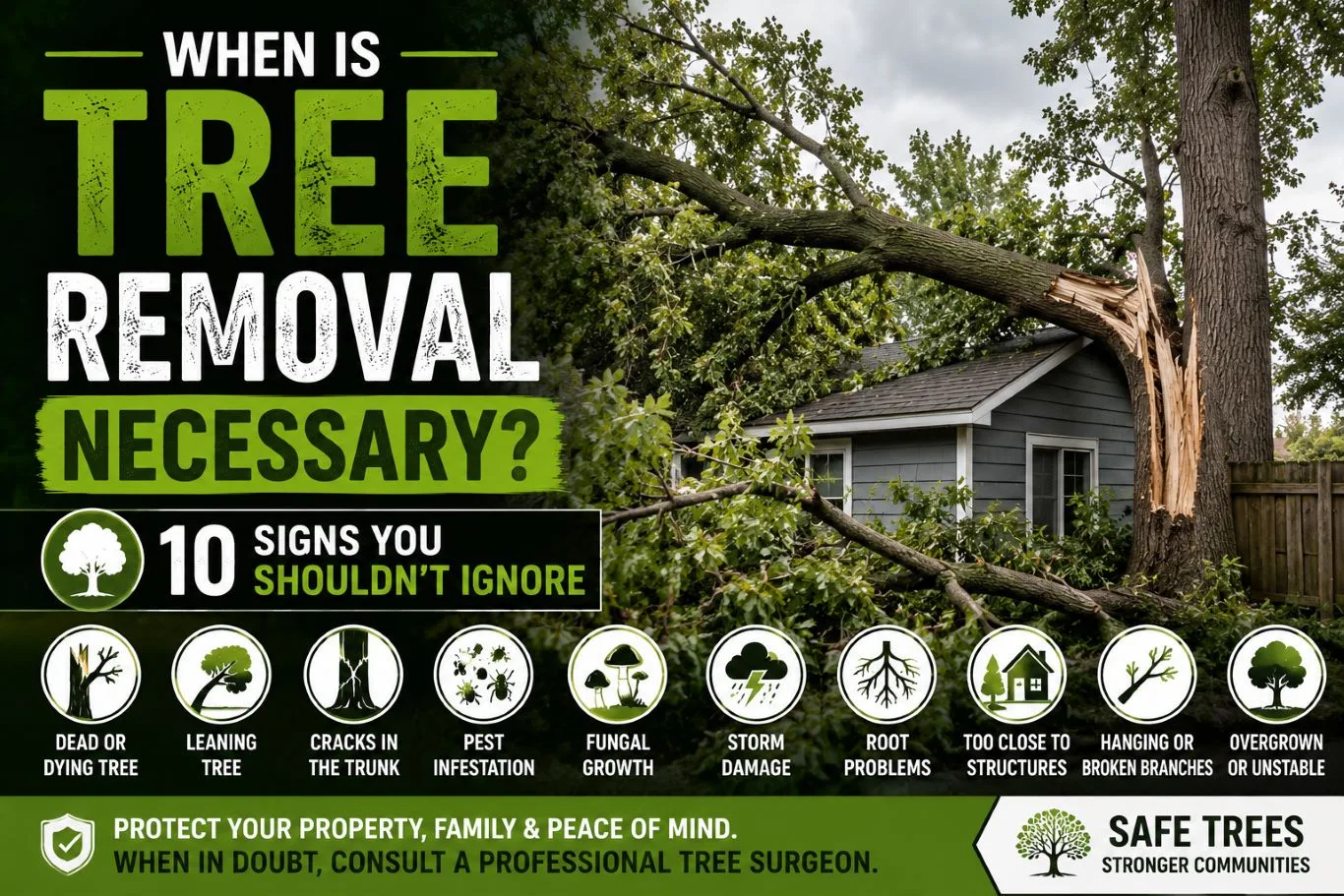
10 Signs Tree Removal Is Necessary
To help you monitor your grounds effectively, walk around your garden and audit your mature and establishing trees for these ten critical dangerous tree warning signs:
1. Massive Trunk Cavities and Hollow Interiors
While minor bark wounds can heal over time, large open cavities that penetrate deep into the center of the trunk indicate advanced decay. When more than 30% to 40% of the internal wood structure is hollow or soft, the trunk loses its mechanical strength and can no longer support the immense weight of the upper canopy.
2. Large Fungal Brackets at the Root Flare
The presence of shelf-like fungal brackets, mushrooms, or conks growing directly around the base of the trunk or along major surface roots is one of the clearest signs a tree needs to be removed. Fungal growths like Ganoderma or Honey Fungus feed on the structural lignin and cellulose inside the wood, causing subterranean root rot that destabilizes the tree's anchors.
3. Sudden Leaning and Root Plate Lifting
While many trees naturally grow at a slight angle toward sunlight, a sudden or progressing lean is a critical red flag. Look closely at the ground on the side opposite the lean; if you notice soil cracking, mounded earth, or exposed roots lifting out of the lawn, the root plate has failed, making immediate action necessary.
4. Severe Canopy Dieback and Deadwood
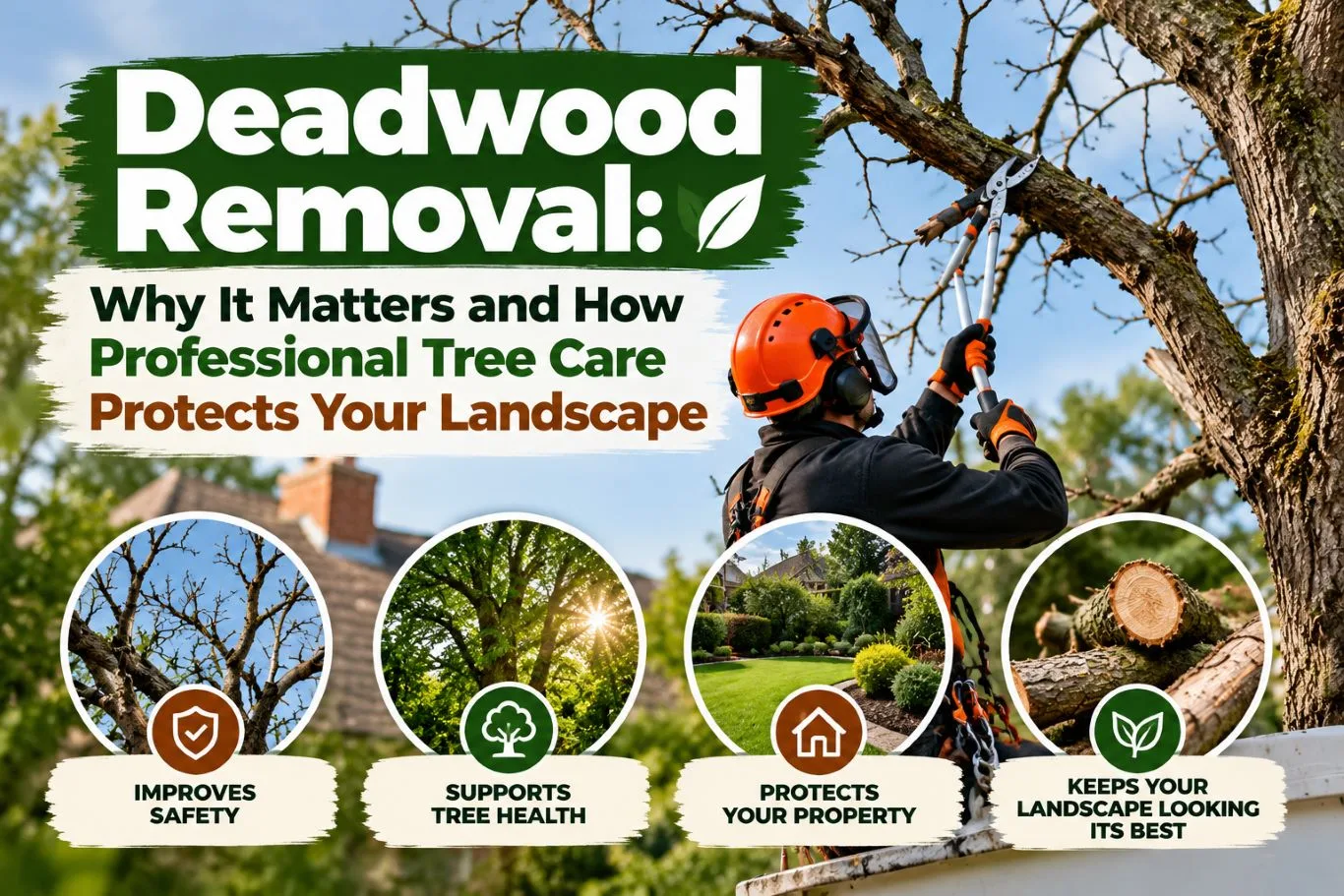
If more than half of the upper canopy is bare, brittle, or dropping large branches, the tree is in systemic decline. Executing dead tree removal is essential in these cases, as dead timber becomes extremely brittle over time, making it prone to snapping unexpectedly during summer storms or winter gales.
5. Deep Vertical Trunk Cracks
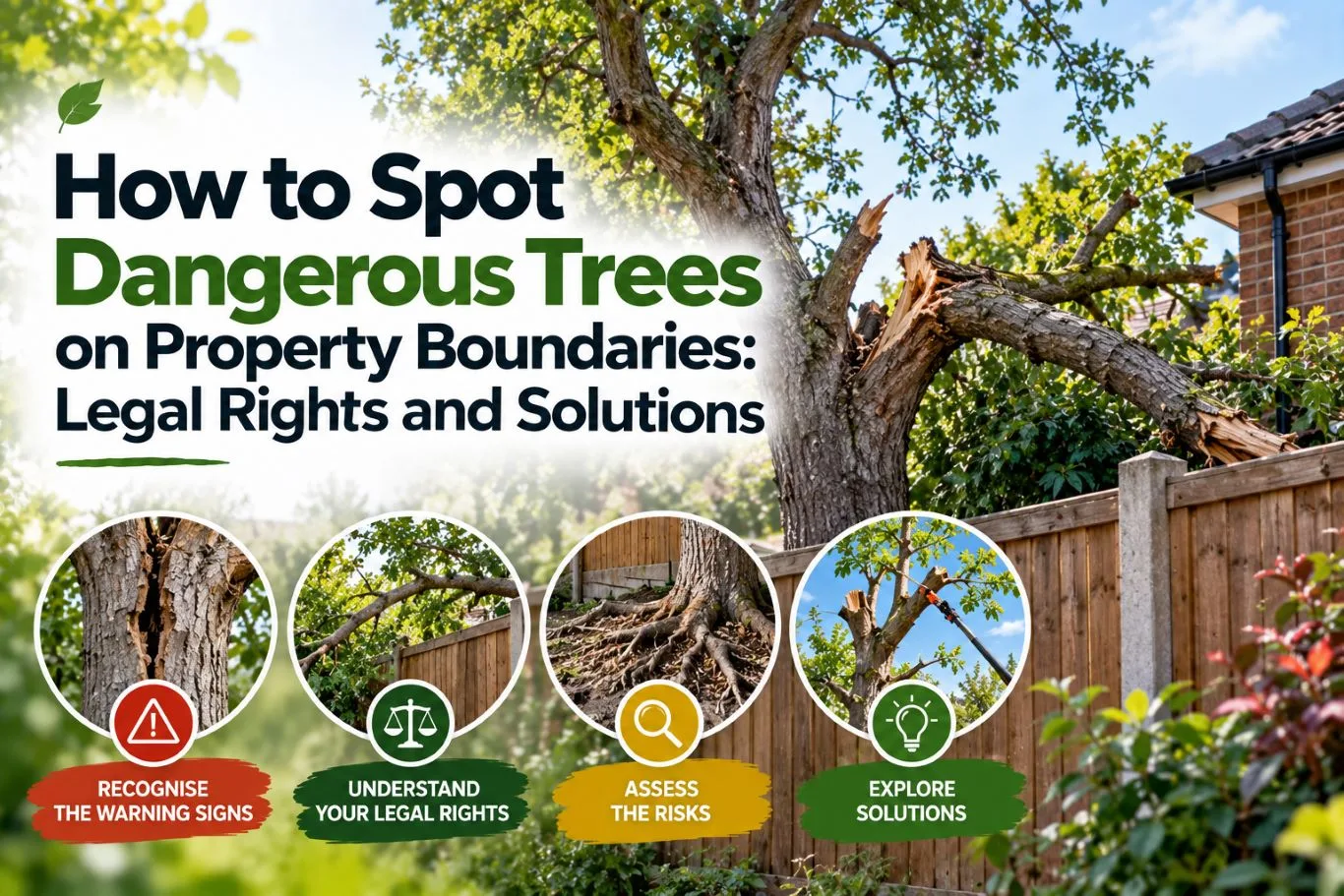
Examine the main stem for deep, opposing vertical cracks that split through the bark and enter the core wood. Cracks that extend down toward the root flare indicate severe internal stress, often caused by past lightning strikes or shifting load forces, making the tree prone to splitting in half under wind load.
6. Irreversible Vascular Disease
When a tree succumbs to aggressive pathogens such as Ash Dieback (Hymenoscyphus fraxineus) or Dutch Elm Disease, its internal transport system shuts down completely. Performing diseased tree removal stops the infection from spreading to adjacent healthy specimens across your garden or neighboring properties.
7. Proximity to Structures and Foundation Damage
Sometimes a tree is biologically healthy but structurally out of place. Trees planted too close to houses, garages, or utility lines can cause severe structural issues over time. Expansive root systems can lift paving, push over boundary walls, and compromise drainage systems, making removal the only practical long-term fix.
8. Co-Dominant Stems with Included Bark
Trees that split into two main trunks near the base often form tight “V-shaped” unions. As both stems expand, bark gets trapped between them (“included bark”), preventing the wood from fusing together. As the trunks grow heavier, this weak joint acts like a wedge, creating a major risk of the tree splitting apart down the center.
9. Extensive Pest Infestations
Heavy infestations by wood-boring insects, such as the Emerald Ash Borer or bark beetles, undermine structural integrity from the inside out. Their larvae chew through the cambium layer, cutting off nutrient flow and leaving behind sawdust-like frass around the base, signaling that the tree is beyond recovery.
10. Unstable Weight Balance After Storm Damage
Severe weather can tear away major structural limbs, leaving the remaining canopy severely off-balance. A tree that has lost a significant portion of its crown on one side experiences uneven wind load, making it top-heavy and far more likely to uproot during subsequent high winds.
When to Seek Emergency Interventions
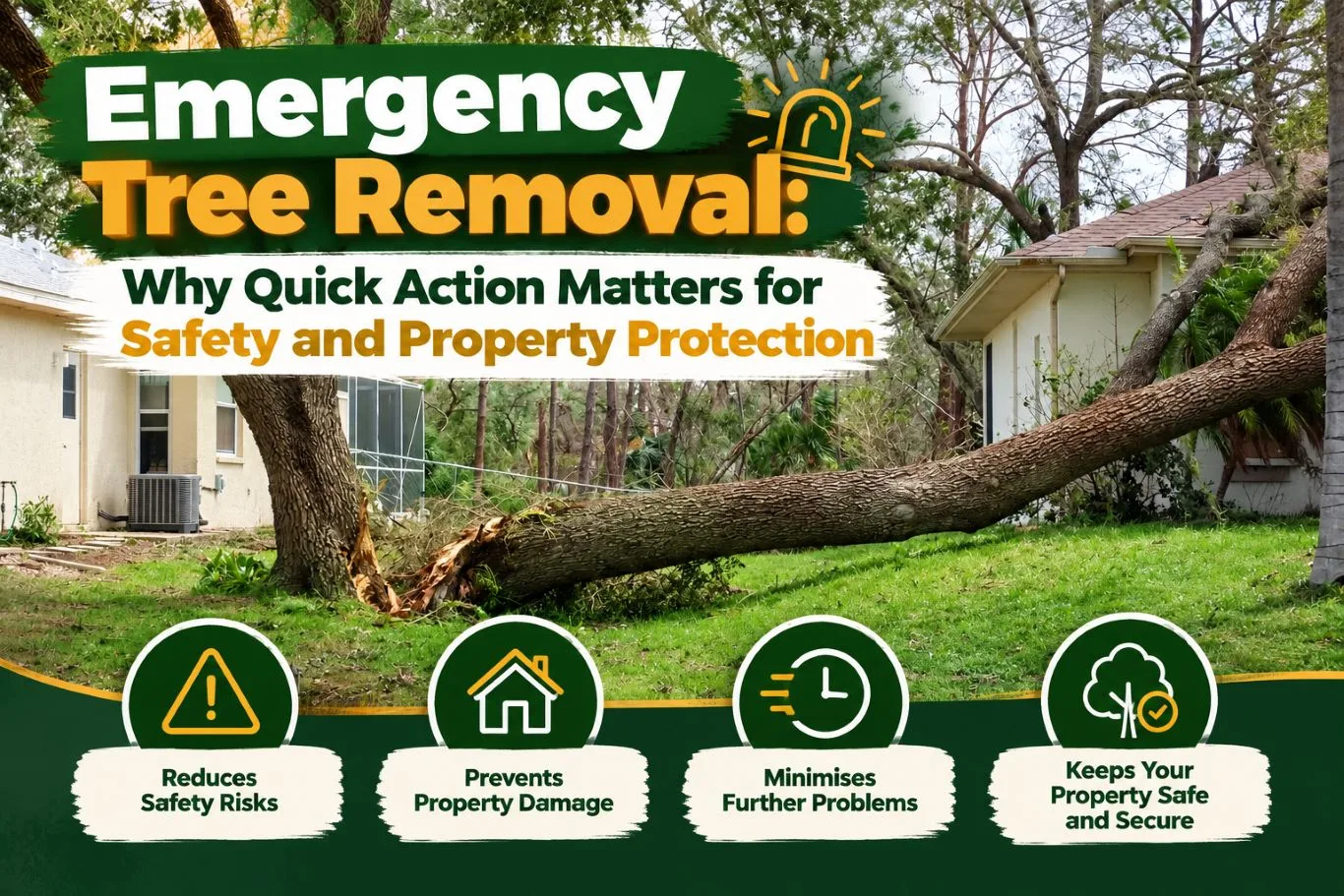
Certain situations demand immediate professional action rather than routine planning. If a tree has snapped, hangs precariously over a roof, or has partially uprooted after a storm, contacting emergency tree removal services is vital to prevent severe structural damage or personal injury.
Emergency teams utilize specialized rigging equipment, crane support, and high-capacity wood chippers to dismantle dangerous trees piece by piece, safely lowering heavy timber away from risk zones even in challenging weather conditions.
Risk Evaluation Standard:
– Green Zone: Minor deadwood, light cosmetic issues — Monitor during routine seasonal maintenance.
– Amber Zone: Localized decay, 20% canopy decline — Schedule a professional arborist assessment.
– Red Zone: Root plate lifting, deep trunk splits, >50% decay — Requires immediate removal.
The Value of Professional Assessment and Local Governance
Deciding to remove a large tree should always involve a thorough hazardous tree assessment carried out by qualified arborists. Attempting to fell large trees without professional training, commercial rigging gear, and heavy-duty machinery presents severe safety risks to life and property.
Furthermore, many properties across the region feature trees protected by official Tree Preservation Orders (TPOs) or fall within designated Conservation Areas. Removing a protected tree without prior council approval can result in substantial financial penalties. Working with certified tree surgeons in Essex ensures that all necessary local planning checks, risk assessments, and council notifications are handled correctly before any work begins.
Engaging a professional tree removal specialist guarantees that the tree is dismantled safely using controlled sectional dismantling techniques, leaving your garden clean, secure, and ready for new landscape improvements.
FAQs
1. How do I know if a tree on my boundary line is legally my responsibility?
Responsibility for a boundary tree depends on where the base of the main trunk sits in the ground. If the trunk originates entirely within your property line, you are responsible for its maintenance and safety. If the trunk sits directly across the boundary, ownership is shared with your neighbor, requiring joint agreement before removal.
2. Can a tree be saved if it has a large hollow trunk?
Not always. A hollow trunk does not automatically mean a tree will fall immediately, as the outer cylinder of sound wood may still offer temporary support. However, if the hollow area covers more than one-third of the trunk diameter or is accompanied by fungal growth, structural integrity is severely compromised, making removal necessary.
3. How quickly can your local teams respond for emergency tree removal?
We operate a fast-response local dispatch system. For urgent structural failures or storm damage, our emergency crews can typically arrive on-site within 2 to 4 hours across our primary service zones.
4. What specific geographical areas do your local teams cover?
Our daily service network spans the entire county of Essex, including Chigwell, Loughton, Epping, Woodford, Brentwood, Buckhurst Hill, and adjacent North London districts. This local presence allows us to manage both emergency and scheduled projects efficiently.
5. Are your tree removal operations fully insured and qualified?
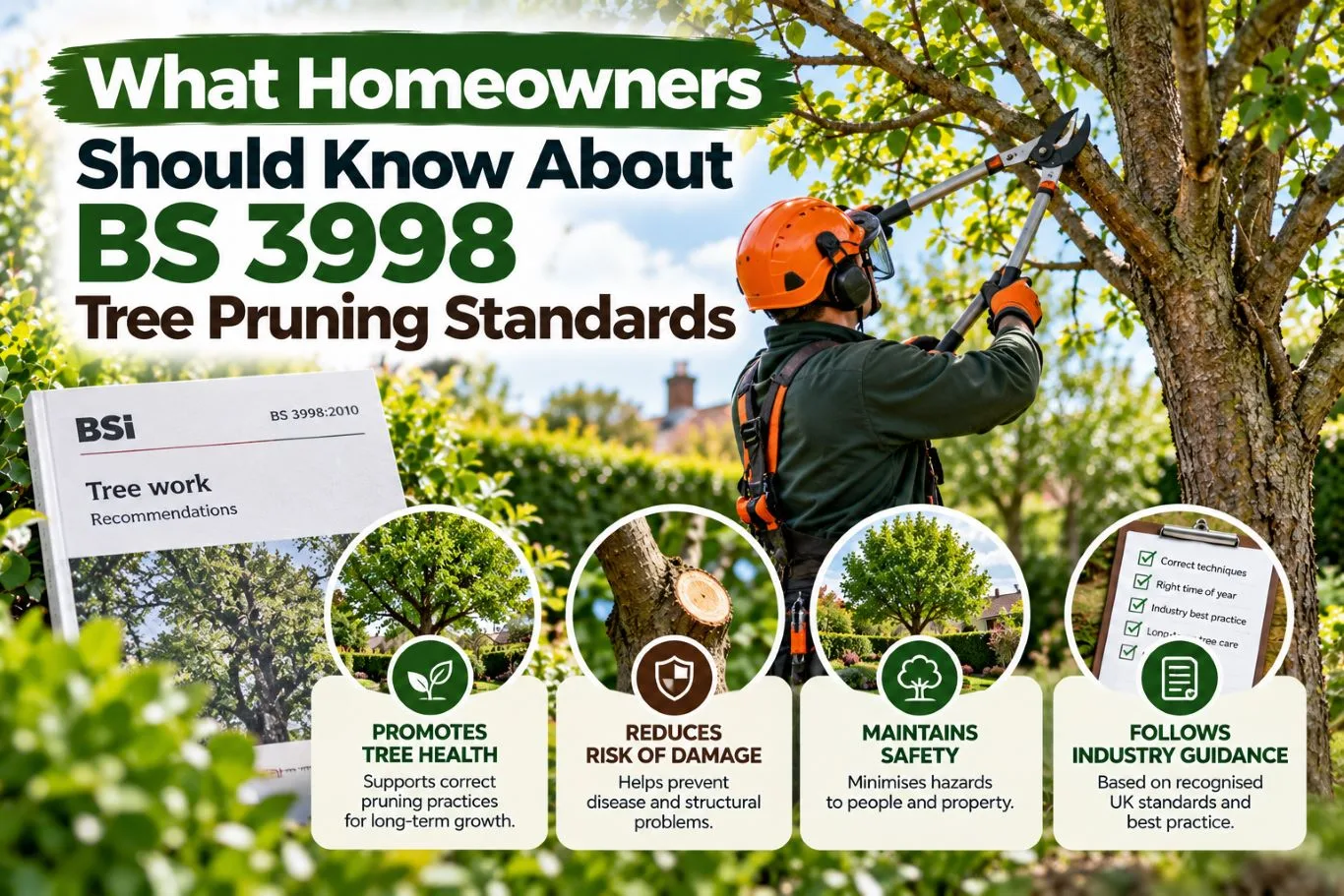
Yes, completely. Our entire field crew holds industry-verified NPTC and LANTRA qualifications. We operate under extensive public liability insurance, and all our removals and sectional dismantling work conform strictly to British Standard BS 3998:2010 safety guidelines.
Conclusion / Final Thoughts
Knowing when tree removal is necessary is a fundamental part of protecting your property, family, and wider garden environment. By identifying critical warning signs—such as severe trunk cavities, fungal root rot, lifting root plates, and aggressive vascular diseases—you can take action before a compromised tree turns into a hazardous emergency. Investing in a timely, professional evaluation keeps your outdoor spaces safe, beautiful, and structurally sound for years to come.
At Chigwell Tree Services, we provide honest, professional, and customer-focused care for domestic gardens and commercial landscapes alike. We combine modern machinery with certified arboricultural techniques to deliver clean, safe, and efficient results. If you need trusted tree removal in Essex or require an authoritative health evaluation for a suspect canopy, our local specialists are always ready to provide expert guidance. Keep your property secure through every season by choosing a professional standard of care for your grounds.
Looking to get expert tree removal services in Essex?