
Quick Summary
- Hedge trimming in summer is a necessary practice to manage rapid seasonal growth, structural density, and overall boundary aesthetics.
- Discover why late June to early August provides the ideal environmental window for a neat, long-lasting reshape.
- Learn about the crucial legal obligations under UK wildlife law regarding active bird nesting sites before scheduling any cutting.
- Understand the core physiological risks of executing a heavy trim during an intense mid-summer heatwave or prolonged dry spell.
- Find out how professional intervention ensures clean, straight alignments without damaging the inner framework of your shrubbery.
Introduction
A beautifully maintained garden hedge serves as the ideal frame for any domestic property, offering natural privacy, structural definition, and a welcome sanctuary for local wildlife. However, the surge of spring moisture followed by long, warm summer days inevitably triggers rapid, unruly growth that can quickly turn a neat garden border into an unmanageable thicket. Managing this seasonal flush requires a balanced approach to ensure your boundaries stay tidy without sacrificing the health of the plants. Striking the right balance involves understanding the biological timing, physical techniques, and environmental laws that dictate proper garden care. At Chigwell Tree Services, we are committed to helping property owners maintain structurally sound and visually immaculate outdoor spaces. Our experienced team delivers dependable, expert hedge trimming services in Essex, ensuring your garden structures receive the precise care, timing, and professional attention they need to thrive all year round.
Ready to restore clean lines to your overgrown boundaries? Chat with our Essex hedge specialists on WhatsApp for a fast, wildlife-safe summer quote :
Pinpointing the Ideal Summer Window for Cutting
When it comes to maintaining a crisp, geometric finish on your garden borders, timing is everything. Haphazardly cutting back branches at the wrong point in the season can lead to long-term structural issues or permanent leaf damage.
The Late June to Early August Sweet Spot
The best time to trim hedges during the warmer months falls between late June and early August. By this stage of the year, the intense, aggressive flush of early spring growth has naturally started to decelerate, and the new wood has begun to harden off. Trimming your borders within this specific window means the crisp, formal shape you create will hold its appearance for much longer, saving you from having to repeatedly pull out the garden shears before autumn arrives.
Why You Should Avoid Heatwave Trimming
While it may be tempting to use a sunny weekend during a heatwave to catch up on garden chores, heavy cutting during extreme heat is a significant risk to plant health. When you shear off the outer layer of a hedge, you expose the tender, shaded inner leaves to direct UV radiation. In peak temperatures, this sudden exposure causes widespread sunscald, leaving the interior of your hedge looking brown, scorched, and brittle. Furthermore, cutting during dry spells places immense moisture stress on the root system, as the plant tries to heal its fresh wounds without sufficient groundwater.
Crucial Legalities: Navigating Wildlife and Nesting Laws
Before considering any form of summer hedge care, your absolute priority must be the preservation of local wildlife. In the UK, garden hedges are vital nesting habitats for a wide range of native bird species, including blackbirds, robins, and dandelions.
The Wildlife and Countryside Act
Under the strict terms of the Wildlife and Countryside Act, it is an official criminal offense to intentionally or recklessly damage, destroy, or disturb a wild bird's nest while it is actively in use or being built. The main avian breeding season spans from March to August, which directly overlaps with the summer cutting window.
Executing a Proper Site Check
Professional teams will always execute a thorough, multi-angled inspection of the entire framework before starting any machinery. If an active nest is discovered—even if it is right in the middle of a section that needs urgent shaping—all cutting operations within that localized zone must be completely paused until the young birds have officially fledged. Abiding by these environmental guidelines is a core duty for any reputable firm providing hedge trimming services in the UK, protecting our shared natural heritage while shielding homeowners from severe council fines.
Master Shrub Profiles: Evergreens vs. Deciduous Varieties
Different plant varieties demand completely different hedge pruning techniques to achieve the best results. Treating a classic formal evergreen the same way as a wild deciduous mix can ruin the dense appearance of your boundary.
1. Formal Evergreens (e.g., Box, Yew, Privet, Leylandii)
Evergreens require precise, steady hand-eye coordination. These species thrive on a light summer trim, which stimulates the growth of fine secondary twigs, resulting in an incredibly tight, dense external leaf wall.
- The Golden Rule for Leylandii: Never cut back past the green foliage into the old, brown inner wood. Unlike Yew trees, old Leylandii wood lacks dormant epicormic buds; if you cut too deep, that specific section will remain a bare, dead brown patch forever.
2. Deciduous Varieties (e.g., Beech, Hornbeam, Hawthorn)
Deciduous borders grow at a different pace, and their summer management focuses primarily on containment. A light trim in late summer is ideal for species like Beech and Hornbeam, as it encourages the hedge to hold onto its dried, copper-colored autumn leaves throughout the winter months, maintaining an effective privacy screen and windbreak until spring returns.
Core Botanical Benefits of Selective Summer Maintenance
Opting for professional residential hedge maintenance during the mid-summer period offers significant biological benefits that extend far beyond simple curb appeal.
- Regulating Overall Dimensions: Regular trimming slows down the vertical and horizontal expansion of aggressive species, preventing them from narrowing your garden paths or leaning over property lines.
- Maximising Inner Sun Exposure: Shaping the hedge with a slight taper—making the top slightly narrower than the base—ensures that natural sunlight can filter down to the lowest branches, preventing the bottom of the structure from turning patchy, bare, and thin.
- Increasing Internal Structural Airflow: Removing deadwood and thinning out overlapping inner stems allows fresh air to pass easily through the plant framework, drastically lowering the risk of humid foliar fungal diseases like box blight.
The Professional Advantage: Precision Tools for Perfect Lines
Many enthusiastic homeowners attempt a full DIY clearance using basic domestic trimmers, often leading to uneven lines, hand fatigue, and split stem ends that encourage bacterial infections.
The Value of Industrial Equipment
Commercial operators utilize high-reach, petrol-powered telescopic trimmers equipped with laser-sharpened blades. These tools allow us to create perfectly flat tops and flawless vertical planes across hundreds of meters of hedging without requiring unstable ladders. Clean, sharp cuts are vital for plant health; dull domestic blades tend to tear and crush stems rather than slicing through them cleanly, leaving ragged edges that easily turn brown and attract pests.
Complete Waste Reclamation
A large boundary clearance generates an incredible volume of green waste. Our services include the systematic collection, shredding, and eco-friendly removal of all trimmings. We process this organic waste through heavy-duty woodchippers, transforming the debris into rich compost and mulch, leaving your lawns, driveways, and flower beds completely immaculate.
Choosing Your Trusted Local Specialists
When searching for reliable hedge trimming services near me, it is crucial to look for an established company that balances mechanical efficiency with an arborist’s understanding of plant health.
At Chigwell Tree Services, we handle your boundary structures with the utmost care. We look beyond basic aesthetics to ensure every cut we make aligns with the long-term vitality of your garden ecosystem. Whether you require a routine aesthetic tidy-up for a small urban box hedge or need a major reduction on a commercial run of Leylandii, we deliver affordable, fully insured, and highly meticulous solutions across the region.
FAQs
1. How much do professional hedge cutting services cost?
The overall investment depends entirely on the height, length, species, and current condition of the hedge, as well as the ease of physical access to the site. We provide free, fully transparent, no-obligation quotations so you can understand the exact breakdown before any work begins.
2. How quickly can your local teams respond to a domestic booking?
We operate a highly efficient local scheduling system. For standard residential properties, we can generally schedule an expert on-site evaluation within 24 to 48 hours of your initial inquiry.
3. What specific geographical areas do your maintenance teams cover?
Our daily service network encompasses the entire county of Essex, including Chigwell, Loughton, Woodford, Epping, Brentwood, Buckhurst Hill, and the adjacent North London areas. This deep regional focus allows us to respond promptly to all seasonal garden care needs.
4. Can you safely lower the overall height of a severely overgrown hedge?
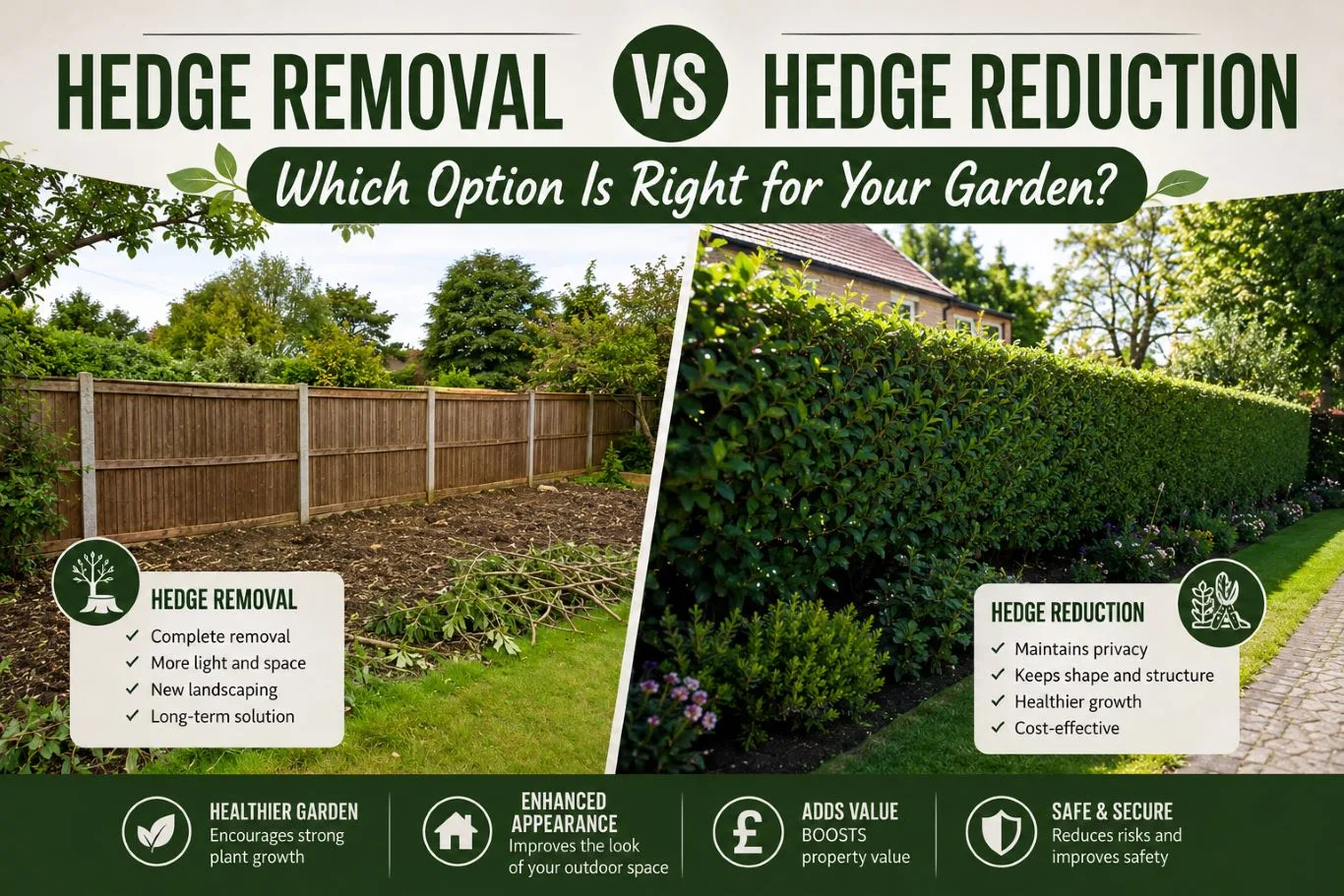
Yes. However, if the hedge requires a significant reduction (cutting back into thick, mature structural wood), it is often better to schedule that heavy work for late winter or early spring when the plant is dormant to minimize stress, leaving the lighter shaping cuts for the summer months.
5. Are your field teams fully insured and qualified?
Absolutely. Every single member of our ground crew holds industry-verified NPTC and LANTRA arboricultural qualifications. We operate under comprehensive public liability insurance, ensuring your home, greenhouses, and fences remain completely protected throughout the process.
Conclusion / Final Thoughts
Transforming an overgrown, unruly boundary into a crisp, structural feature is one of the most effective ways to elevate the visual appeal, natural light, and premium feel of your property. By timing your garden hedge trimming to match the natural growth patterns of your plants, and respecting the essential laws protecting local wildlife, you can enjoy a private, healthy, and beautiful outdoor space throughout the year. Leaving the heavy physical labor and precision lining to certified specialists removes the stress of weekend garden chores, ensuring your property lines remain healthy and mathematically square.
At Chigwell Tree Services, we take immense pride in helping our local community achieve their ideal landscape designs. We combine industrial-grade cutting gear with an uncompromising respect for plant biology to deliver safe, clean, and highly professional results. If you are currently looking for premium hedge cutting services in Essex or need to consult certified tree surgeons near me to evaluate a mature canopy, our local team is always ready to assist. Secure your home’s outdoor beauty today by choosing a professional, customer-focused standard of care for your garden borders.
Looking to get professional hedge trimming services in Essex?