
Quick Summary
- Hedge reduction in summer requires a careful understanding of plant biology to avoid exposing structural frameworks to severe environmental shock.
- Learn the distinct operational differences between a light surface trim and a major structural height or width reduction.
- Discover why timing your major garden renovations around regional weather patterns prevents permanent leaf scorch and dieback.
- Understand the critical legal frameworks governing nesting birds and local conservation rules during the active summer months.
- See how professional interventions preserve the structural health, root stability, and privacy value of your property boundaries.
Introduction
A green boundary hedge is a wonderful feature for any home, offering privacy, wind protection, and a natural habitat for local wildlife. However, when fast-growing species like Leylandii, Privet, or Hawthorn are left unchecked, they can quickly outgrow their space. What started as a neat boundary can turn into an overgrown barrier that blocks natural light, encroaches on pavements, and causes disputes over property lines. When boundaries get out of hand, homeowners often want to cut them back immediately. However, carrying out a significant height or width reduction during the warmest months of the year requires an understanding of plant health, timing, and local environmental laws. At Chigwell Tree Services, we help property owners balance their structural needs with proper plant biology, providing reliable and professional hedge reduction services in Essex to ensure your boundaries stay healthy and beautiful.
Need to cut back a massive, overgrown boundary safely? Chat with our Essex hedge experts on WhatsApp for immediate, professional advice :
Trimming vs. Reduction: Understanding the Biological Difference
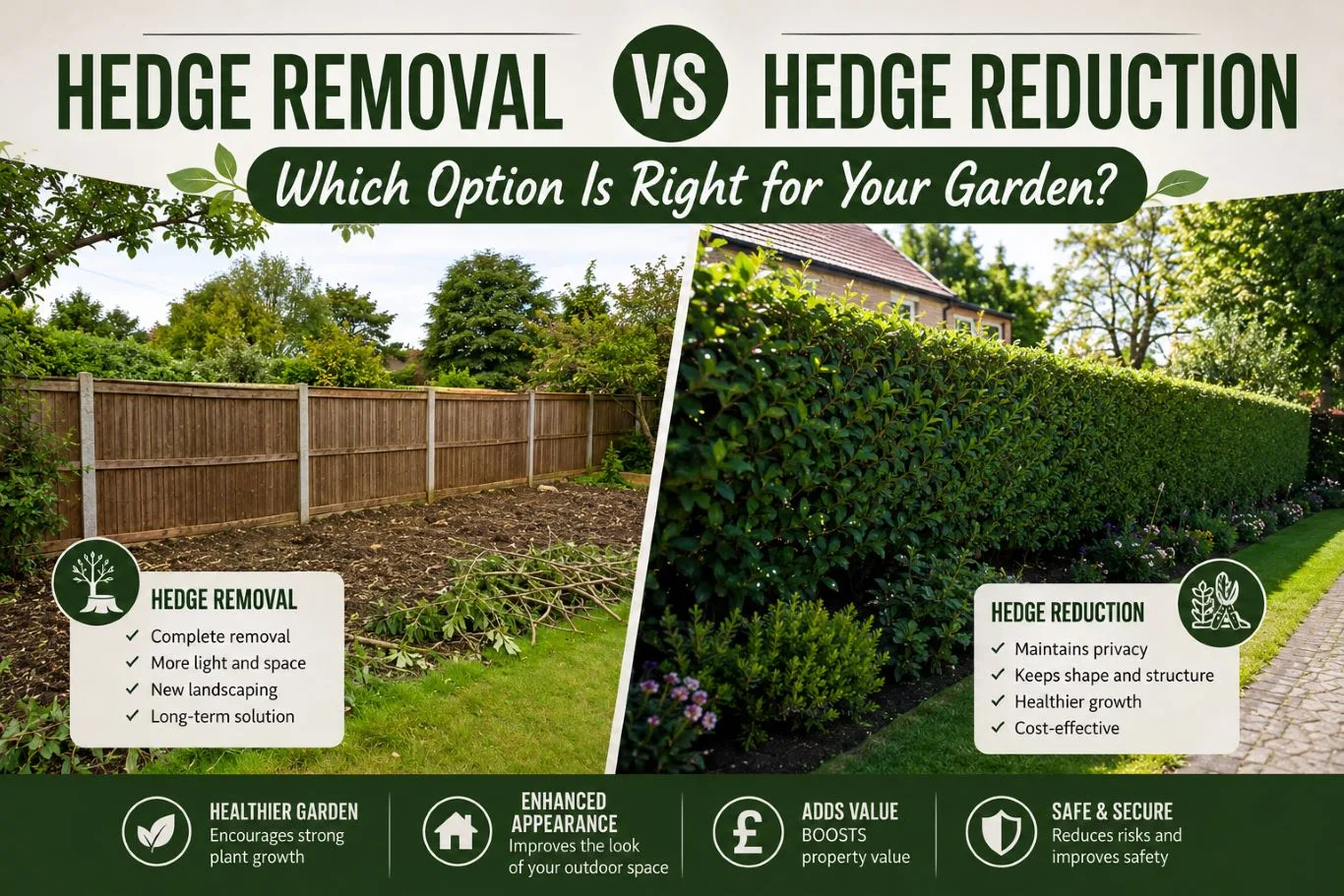
Before looking at seasonal timing, it is important to clarify what a structural reduction actually involves. Many people confuse routine trimming with a full height or width reduction, but they affect plants very differently.
Routine Summer Hedge Trimming
A standard light seasonal trim focuses entirely on the soft, green outer growth. The best time to reduce hedges superficially is from late June to early August, once the rapid spring flush begins to ease. This light maintenance helps keep hedges neat and encourages healthy growth across the outer surface without disturbing the main structural skeleton underneath.
Structural Hedge Reduction
A significant reduction is much more invasive than a light trim. It involves cutting deep into the woody inner framework of the plants to reduce the overall height or pull back sprawling side faces. This process removes a large portion of the leaf canopy, which can temporarily reduce the hedge's ability to produce food through photosynthesis. Because it impacts the plant's resources, the timing and execution must be managed carefully.
The Risks of Heavy Summer Trimming on Overgrown Boundaries
While a light tidy-up is fine during the summer, performing an aggressive, deep reduction on an overgrown hedge during hot weather carries several risks for your plants.
Sunscald and Bare Inner Frameworks
The dense outer foliage of a hedge acts as a natural sunshade, protecting the sensitive inner wood from intense UV radiation. When you perform a major reduction, you suddenly expose those previously shaded branches to the direct mid-summer sun. This sudden exposure can cause sunscald, which kills the vital cambium layer just beneath the bark, leading to cracked wood, permanent dieback, and bare, patchy sections that may never fully recover.
Drought Stress and Moisture Loss
Every cut made to a woody stem creates an open wound where moisture can escape. If an intense reduction is carried out during a hot, dry spell, the root system has to work twice as hard to draw up limited groundwater to heal those wounds and support the remaining leaves. This can leave the hedge vulnerable to opportunistic pests and secondary infections. To minimize these risks, any major overgrown hedge maintenance should be put on hold during heatwaves, waiting instead for cooler, overcast spells with rain forecast.
Essential Wildlife Protections and Legal Requirements
Beyond looking after plant health, anyone planning summer garden work must prioritize the protection of local wildlife. Hedges are prime nesting sites for many native bird species during the warmer months.
The Wildlife and Countryside Act
Under UK law, it is a criminal offense to intentionally or recklessly damage, destroy, or disturb a wild bird's nest while it is actively being built or in use. The main bird breeding season runs from March to August, directly overlapping with summer garden plans.
Professional Pre-Work Checks
Before starting any hedge cutting services, it is essential to carry out a careful, multi-angled inspection of the entire structure. If an active nest is found, all structural work in that area must be put on hold until the young birds have naturally fledged. Following these guidelines is a core responsibility for reputable providers of hedge reduction services in the UK, helping to safeguard local ecosystems while ensuring homeowners avoid potential council fines.
Shrub Profiles: Managing Evergreen and Deciduous Varieties
Different hedge species react differently to being cut back hard. Understanding how your specific variety grows will prevent permanent damage to your boundaries.
Managing Evergreen Boundaries
Evergreen hedges require a careful approach. Species like Leylandii do not easily produce new leaves from old, bare wood. If you cut past the green outer layer into the brown interior during a structural reduction, those sections will likely stay bare permanently. For these types of hedges, it is much better to carry out a gradual, phased reduction over a couple of seasons rather than trying to cut them back all at once.
Managing Deciduous Varieties
Deciduous species like Beech, Hornbeam, and Hawthorn are generally more resilient. They have dormant buds hidden deep within their mature wood that can break through to create fresh green growth after a heavy trim. While they can handle a more significant reduction, it is still best to wait for late summer or early autumn for major work, using the mid-summer months primarily for light, cosmetic seasonal hedge pruning.
The Practical Advantages of Professional Garden Management
Attempting to tackle a large, overgrown boundary with basic domestic tools often results in ragged, torn stems, uneven lines, and significant physical strain.
- Regulating Boundary Dimensions: Structured maintenance prevents aggressive species from taking over garden paths, blocking natural sunlight from reaching flower beds, or encroaching on public footpaths.
- Balanced Light Penetration: Cutting the hedge with a subtle taper—keeping the top slightly narrower than the base—ensures that natural sunlight can reach the lower limbs, preventing the bottom from turning thin and patchy.
- Efficient Green Waste Removal: A significant reduction produces a large volume of woody waste. Professional teams handle all the clean-up, processing branches through heavy-duty woodchippers to leave your paths, lawns, and driveways completely tidy.
Precision Equipment and Specialist Care
Achieving straight, level lines on a mature hedge requires the right experience and commercial-grade tools. Professional crews use long-reach, petrol-powered telescopic trimmers with sharp, precision blades. This equipment allows us to manage tall boundaries safely from the ground without relying on unstable ladders. Clean cuts are vital for plant health; sharp blades slice through wood cleanly, allowing the plant to heal quickly and reducing the risk of pest infestations and fungal issues.
When searching for reliable hedge reduction services near me, it is important to choose an established company that understands plant health alongside mechanical work. At Chigwell Tree Services, we look after your boundaries with care and precision, tailoring our approach to the specific needs of your plants and soil.
FAQs
Q1: Can a severely overgrown conifer hedge be reduced safely in summer?
Conifers like Leylandii must be handled very carefully. A radical reduction that exposes the bare inner wood can cause permanent bare patches. If your conifer hedge needs a significant reduction, we usually recommend a phased approach or waiting until early spring when the plant's growth cycle can support recovery.
Q2: How quickly can your local teams respond to a residential booking?
We operate a prompt scheduling network across our core service areas. For standard residential inquiries, we can usually arrange an expert on-site assessment within 24 to 48 hours of your first contact.
Q3: What specific geographical areas do your maintenance teams cover?
Our daily operational area covers the entire county of Essex, including Chigwell, Loughton, Woodford, Epping, Brentwood, and neighboring North London border towns. This local focus ensures we are always familiar with regional planning guidelines and common soil conditions.
Q4: What is the legal maximum height for a residential boundary hedge?
Under Part 8 of the Anti-Social Behaviour Act 2003, local councils have the authority to intervene if a line of two or more evergreens rises above 2 meters and blocks reasonable light to a neighbor's property. We can help you manage your garden hedge management plan to keep your boundaries compliant with local regulations.
Q5: Are your tree surgeons fully qualified to handle complex garden work?
Yes, absolutely. Our entire field crew holds fully verified NPTC and LANTRA qualifications. We operate under comprehensive public liability insurance and complete all work in strict compliance with British Standard BS 3998:2010 guidelines.
Conclusion / Final Thoughts
Bringing a large, overgrown boundary back into proportion is an excellent way to reclaim lost garden space, improve natural light, and enhance the overall appearance of your property. However, structural work must be timed carefully to match the natural resilience of your plants, avoiding periods of extreme heat and respecting the local wildlife sharing the habitat. Leaving the heavy lifting and precise alignments to experienced professionals removes the risk of unexpected plant damage, ensuring your boundaries remain a healthy, private, and attractive feature for your home.
At Chigwell Tree Services, we are proud to provide reliable, efficient, and customer-focused care for domestic and commercial properties alike. We pair commercial-grade machinery with a clear understanding of plant biology to deliver neat, long-lasting results. If you are currently searching for dependable tree surgeons near me to look after your garden features, our local experts are always here to help. Keep your outdoor spaces looking their best throughout the year by choosing an expert, professional standard of care for your hedge reduction in summer.
Looking to get expert hedge reduction services in Essex?