Quick Summary
- Discover how tree root removal near foundations protects your home from structural subsidence, cracked masonry, and foundation heave.
- Understand the real interaction between roots and soil, particularly how moisture extraction causes shrinkable clay subsoils to subside.
- Learn safe arboricultural solutions, including precision root pruning, physical root barriers, and complete tree and stump removal.
- Review critical early warning signs, such as diagonal wall cracks, sticking doors, uneven paving, and blocked drainage runs.
- Understand the legal and structural risks of cutting anchoring roots, ensuring work complies strictly with British Standard BS 3998 and BS 5837.
Introduction
A mature tree provides exceptional character, cooling shade, and environmental value to any property. However, when large trees grow within close proximity to residential homes, commercial units, or boundary walls, their underground root systems can cause genuine concern. Property owners frequently worry about underground root encroachment cracking footings or destabilising building structures. Addressing tree root removal near foundations requires a measured, science-based approach that balances structural engineering risks with tree physiology. Chopping through underground root plates indiscriminately can kill a healthy specimen or render it structurally unstable, creating a severe falling hazard. Conversely, ignoring aggressive root networks in shrinkable subsoils can lead to costly structural movement and extensive underpinning bills. At Chigwell Tree Services, our certified specialists deliver dependable, affordable, and expert tree services for residential & commercial properties across Essex, East London & North London / UK and surrounding areas, ensuring your property remains protected without compromising arboricultural standards.
Concerned about invasive tree roots lifting your paving or threatening your foundations? Chat with Chigwell Tree Services on WhatsApp for expert arboricultural advice across Essex, East London, and North London :
How Tree Roots Interact with House Foundations
A common misconception among homeowners is that tree roots physically burrow through solid poured concrete foundations like drills. In reality, modern, sound concrete footings easily withstand root contact.
Mechanics of Root-Induced Damage:
- Indirect Subsidence: Roots draw moisture from shrinkable clay soils during dry spells, causing soil volume shrinkage and foundation settlement.
- Ground Heave: Removing a mature tree from clay soil can cause the ground to slowly rehydrate, expand, and push foundations upward.
- Direct Mechanical Displacement: Expanding woody roots exert radial pressure on shallow structures like patios, paths, and low garden walls.
- Drainage Exploitation: Hairline rootlets penetrate preexisting joint leaks in clay pipes, rapidly expanding into dense, blocking root masses.
The true risk of tree roots near house foundations is almost always indirect, driven by moisture extraction. Across Southeast England and Essex, the ground consists heavily of shrinkable London Clay. During warm, dry summers, mature broadleaf trees—such as Oak, Willow, Poplar, and Ash—extract thousands of litres of water from the subsoil. This dehydration causes clay soils to shrink dramatically, leading to downward structural movement known as subsidence.
Warning Signs of Tree Root Damage to Foundations
Identifying tree root damage to foundations early prevents cosmetic cracking from turning into severe structural failure. Homeowners should monitor their property for these primary warning signs:
- Stepped or Diagonal Masonry Cracks: Look for diagonal, stair-stepped cracks in exterior brickwork or interior plaster, typically wider at the top than the bottom and exceeding 3mm in width. These frequently appear around window frames and door headers.
- Sticking Doors and Windows: As the foundation settles unevenly, door and window apertures fall out of square, causing frames to bind or jam shut.
- Buckled Paving and Driveways: Radial roots spreading beneath concrete slabs, tarmac driveways, or block-paving patios push the surface upward, creating tripping hazards and cracked flags.
- Recurring Drainage Blockages: Roots exploit microscopic hairline fissures or failing seals in underground clay sewer and stormwater pipes, creating impenetrable root balls that back up domestic plumbing.
Safe Solutions: Managing and Removing Problem Roots
When dealing with tree roots causing foundation damage, simply hiring a general builder to dig a trench and hack through structural roots with an axe is dangerous. It compromises tree stability and can cause fatal rot. Professional arborists evaluate site-specific variables to deliver safe, effective solutions:
| Method | How It Works | Ideal Scenario |
| Precision Root Pruning | Hand-excavation (often using supersonic air spades) to expose roots, followed by clean, sterile surgical cuts outside the root flare. | Minor surface paving lift where structural stability can be preserved safely. |
| Root Barriers for Foundations | Digging a narrow, deep trench (typically 1.5m–3m deep) and inserting an impenetrable, high-density polyethylene (HDPE) membrane. | Deflecting roots downward and away from footings while preserving an otherwise healthy, mature tree. |
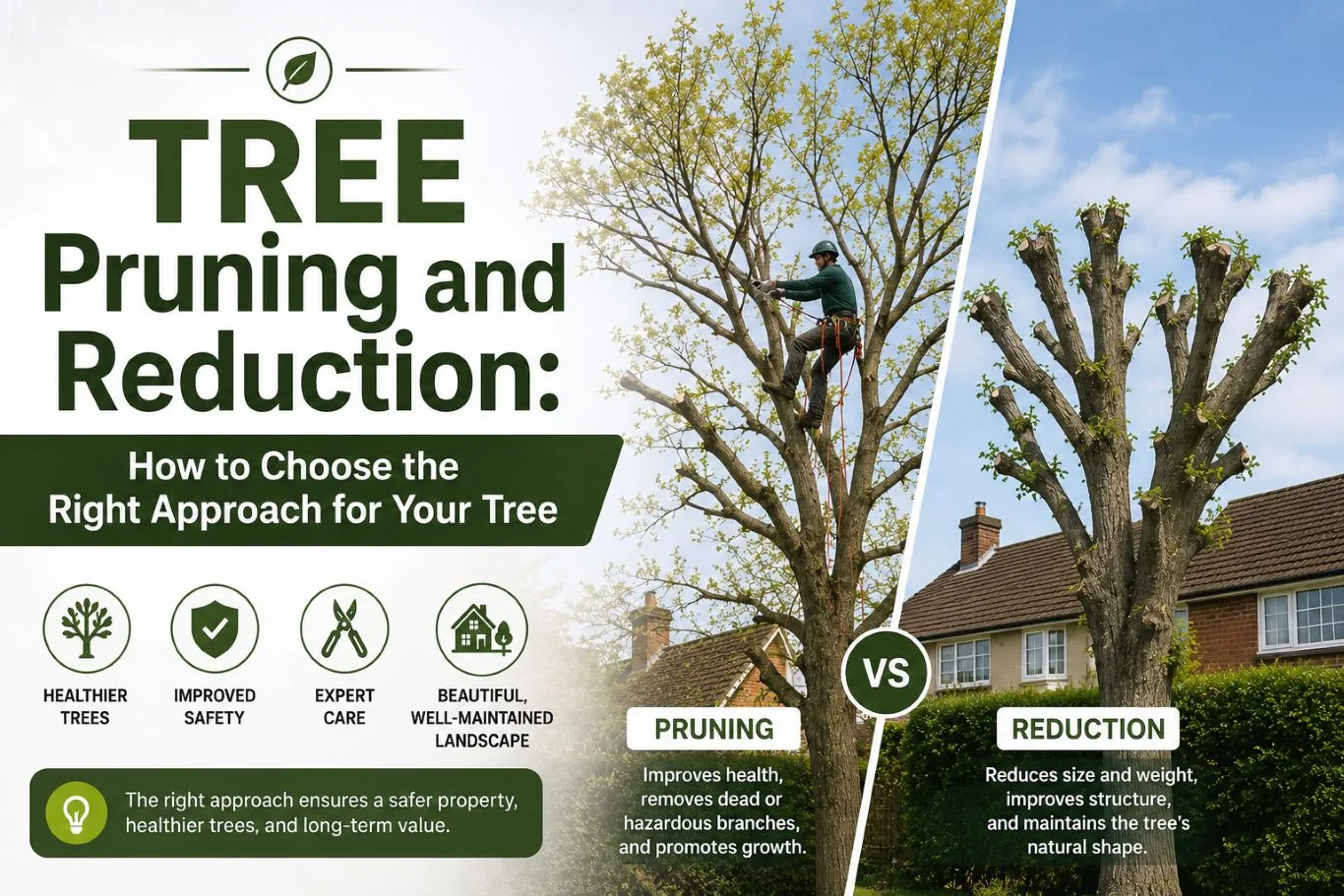
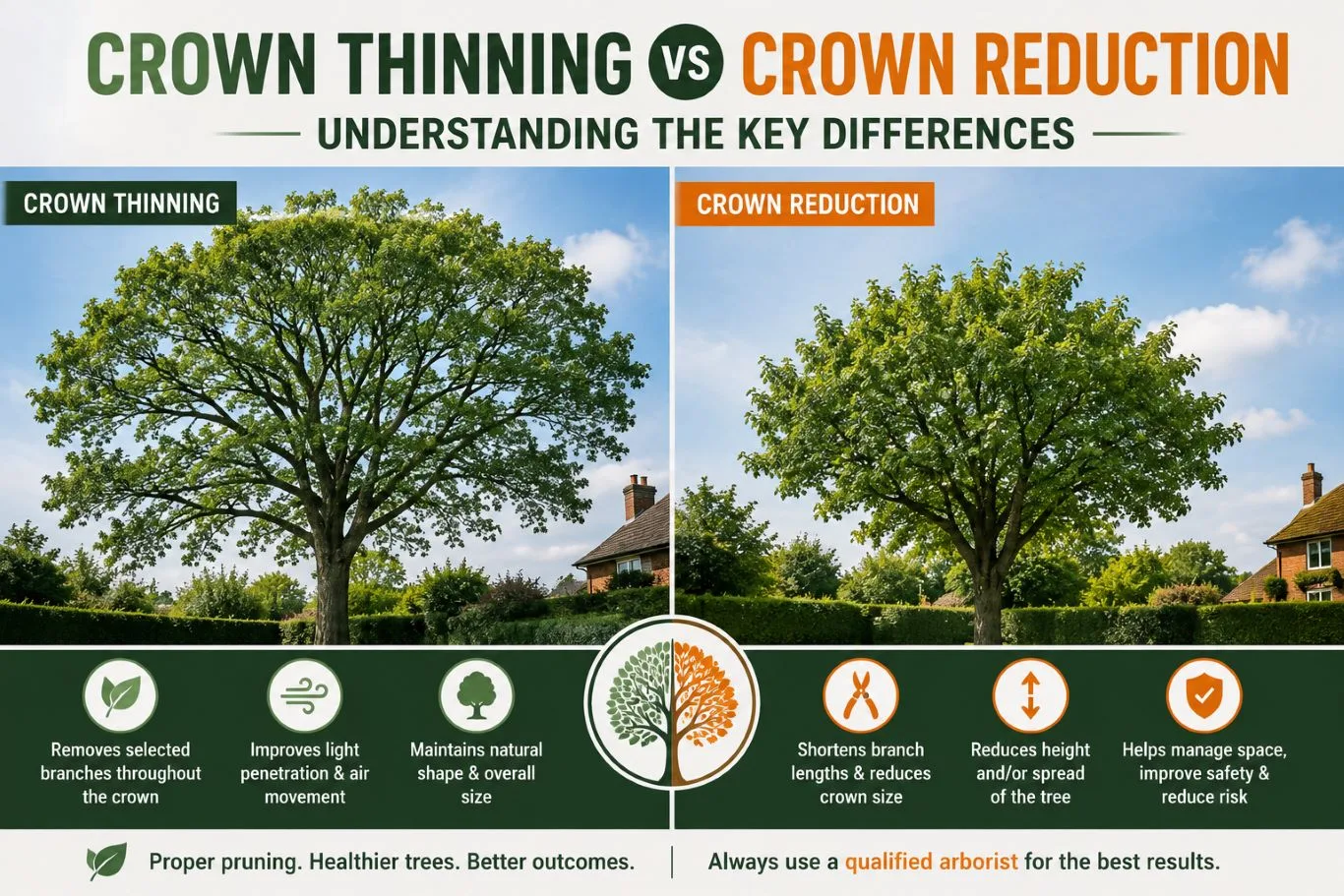
| Canopy Reduction | Thinning or reducing leaf volume by 20–30% in line with BS 3998 to lower overall water transpiration rates. | Alleviating soil moisture deficit in clay subsoils without removing the tree entirely. |
| Felling & Stump Grinding | Complete sectional tree felling paired with industrial stump grinding down to sub-surface levels. | High-risk trees planted too close to shallow foundations or dead/diseased specimens causing chronic subsidence. |
The Role of Root Barriers
Installing specialized root barriers for foundations is one of the most effective ways to protect property without cutting down an important tree. These specialized geotextile membranes redirect root growth downward into deeper, non-shrinkable subsoils, preventing roots from reaching shallow building foundations and utility trenches.
Removing Tree Roots Safely and Managing Heave
When a tree must be extracted, removing tree roots safely requires evaluating the risk of “heave.” If a mature tree that has grown alongside an older building for decades is suddenly removed, the dried clay subsoil can slowly absorb ground moisture and swell. This swelling exerts upward and lateral pressure against building footings.
Qualified arborists collaborate with structural engineers and loss adjusters to assess the tree's age relative to the building, determining whether cyclical pruning or sectional removal is the safest course of action. Following tree removal, complete tree stump and root removal using heavy-duty stump grinders eliminates the root plate, destroying underground wood that could harbor Honey Fungus (Armillaria) or cause sinkholes as it rots away.
Professional Arboricultural Oversight
Tree root management is governed by strict UK arboricultural guidelines, including BS 3998:2010 (Tree Work Recommendations) and BS 5837:2012 (Trees in Relation to Design, Demolition and Construction).
A tree relies on its primary root flare—the critical zone spanning 3 to 5 times the trunk diameter—not only for water absorption but for mechanical anchorage. Severing even a single large structural root (greater than 50mm in diameter) within this Root Protection Area (RPA) can destroy the tree's counterweight balance, increasing the likelihood of whole-tree failure in high winds.
Furthermore, trees located within Conservation Areas or protected by Tree Preservation Orders (TPOs) require formal council applications before any root cutting can take place. Pruning or cutting roots of a protected tree without Local Planning Authority (LPA) consent constitutes an illegal act subject to substantial fines.
Securing certified tree root removal services in Essex ensures that every root intervention is properly surveyed, legally compliant, and executed with specialized low-impact excavation machinery.
FAQs
1. Can tree roots crack my concrete foundations directly?
In sound, modern concrete footings, no. Roots follow the path of least resistance through loose soil, air pockets, and moisture zones; they lack the mechanical force to penetrate solid concrete. However, roots will exploit existing cracks, compromised mortar lines, or old shallow footings, widening them over time. The primary risk in Southeast England is indirect: roots drying out shrinkable clay soils, leading to subsidence.
2. How close to a house can a tree safely be planted?
Safe planting distances depend entirely on the tree species and subsoil composition. Highly thirsty species like Willow, Poplar, and Oak should ideally be planted at least 15 to 30 metres away from property foundations in clay areas. Smaller, less aggressive species such as Rowan, Birch, or ornamental Cherry can often be planted within 4 to 6 metres of modern, deep foundations.
3. How quickly can your team assess suspected root damage on my property?
We maintain an efficient, local dispatch network. For domestic and commercial property surveys, our team can typically arrange an on-site consultation within 24 to 48 hours of your enquiry. For urgent situations involving severed roots or leaning storm-damaged trees, we provide rapid emergency response assistance.
4. What geographical areas do your root removal specialists cover?
Our daily operational area extends across Essex—including Chigwell, Loughton, Woodford, Epping, Brentwood, Romford, and Chelmsford—as well as adjacent East London and North London boroughs.
5. What happens to remaining roots after a stump is ground down?
Once the main stump and primary root flare are ground out mechanically (typically 300mm to 450mm below grade), the severed peripheral roots naturally die off in the soil. Because they are disconnected from the energy-producing canopy, they can no longer absorb water or push into structures, decomposing harmlessly over time.
Conclusion / Final Thoughts
Navigating tree root removal near foundations requires a careful balance between safeguarding your home's structural integrity and preserving healthy trees. By understanding how roots interact with shrinkable clay soils and identifying early signs of settlement—such as sticking doors and stepped masonry cracks—you can implement proactive solutions before minor movement turns into severe structural damage. Whether installing high-density root barriers, undertaking surgical root pruning, or carrying out complete tree and stump removal, professional intervention ensures your property remains safe, secure, and compliant with all planning regulations.
At Chigwell Tree Services, we bring years of qualified arboricultural experience, specialized diagnostic tooling, and British Standard compliance to every residential and commercial project. We work closely with homeowners, structural surveyors, and insurers to deliver clear, practical, and long-lasting solutions. Whether you require a thorough root assessment or complete tree root removal services, our dedicated team is here to help. Safeguard your property and restore peace of mind today by choosing a trusted, professional standard of care for your grounds.
Take the risk out of foundation care and protect your property with qualified, fully insured arboricultural expertise—reach out to our regional root specialists today :