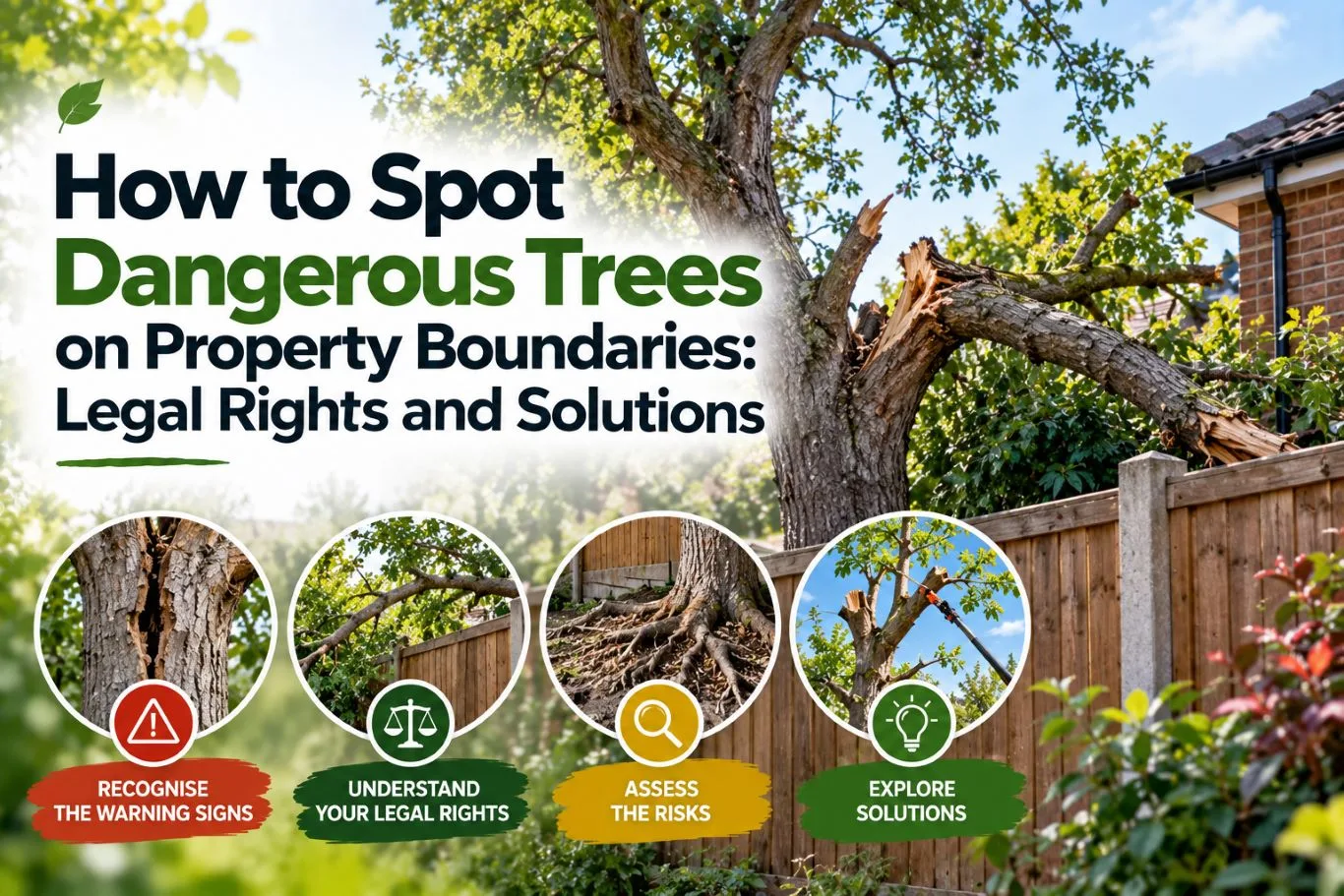
Quick Summary
- Learn how to identify dangerous trees on property boundaries before falling timber causes severe structural damage or personal injury.
- Discover the critical physical warning signs of failure, including trunk fissures, fungal bracket growth, deadwood, and ground heave around the root plate.
- Understand UK common law rights regarding overhanging branches and boundary lines without committing trespass or criminal damage.
- Clarify landowner duty of care under the Occupiers' Liability Acts and how to resolve potential boundary disputes diplomatically.
- Find out how to navigate local council planning regulations, including Tree Preservation Orders (TPOs) and Conservation Area restrictions, before booking professional tree work.
Introduction
Mature boundary trees add character, privacy screening, and natural shade to our gardens. However, when a mature tree straddles or borders a boundary line, it can quickly turn into a source of anxiety. High winds, internal rot, and root destabilisation transform once-stately trees into severe hazards capable of crushing outbuildings, taking down fences, or puncturing roofs. Identifying dangerous trees on property boundaries requires a balance of visual arboricultural knowledge and a clear understanding of UK property law. Rushing into cutting down a neighbour's branches can trigger expensive legal disputes or breaches of council planning regulations, while ignoring an unstable tree leaves your home exposed to catastrophic storm damage. At Chigwell Tree Services, our team delivers reliable, affordable, and expert tree services for residential & commercial properties across Essex, East London & North London / UK and surrounding areas, helping property owners resolve boundary tree concerns safely, legally, and professionally.
Worried about a leaning, decayed, or storm-damaged tree on your boundary line? Chat with Chigwell Tree Services on WhatsApp for urgent, professional advice across Essex, East London, and North London :
Critical Warning Signs of a Structurally Compromised Boundary Tree
Spotting tree defects early is the best way to prevent structural damage. Look out for these primary dangerous tree signs when evaluating boundary timber:
Visual Hazard Checklist:
- Deep Trunk Cracks: Longitudinal splits or vertical fissures running deep into the main stem wood.
- Fungal Fruiting Bodies: Bracket fungus (e.g., Ganoderma or Inonotus) emerging at the base or root flare.
- Sudden Leaning: A tree developing a fresh, noticeable lean, especially with uplifted soil behind it.
- Heavy Deadwood: Brittle, leafless boughs hanging suspended within the upper canopy.
- Co-dominant Stems: Twin trunks forming a tight “V-crotch” with pinched, oozing, or included bark.
- Cavities and Decay Pockets: Deep hollows caused by old pruning wounds, woodpecker holes, or rot.
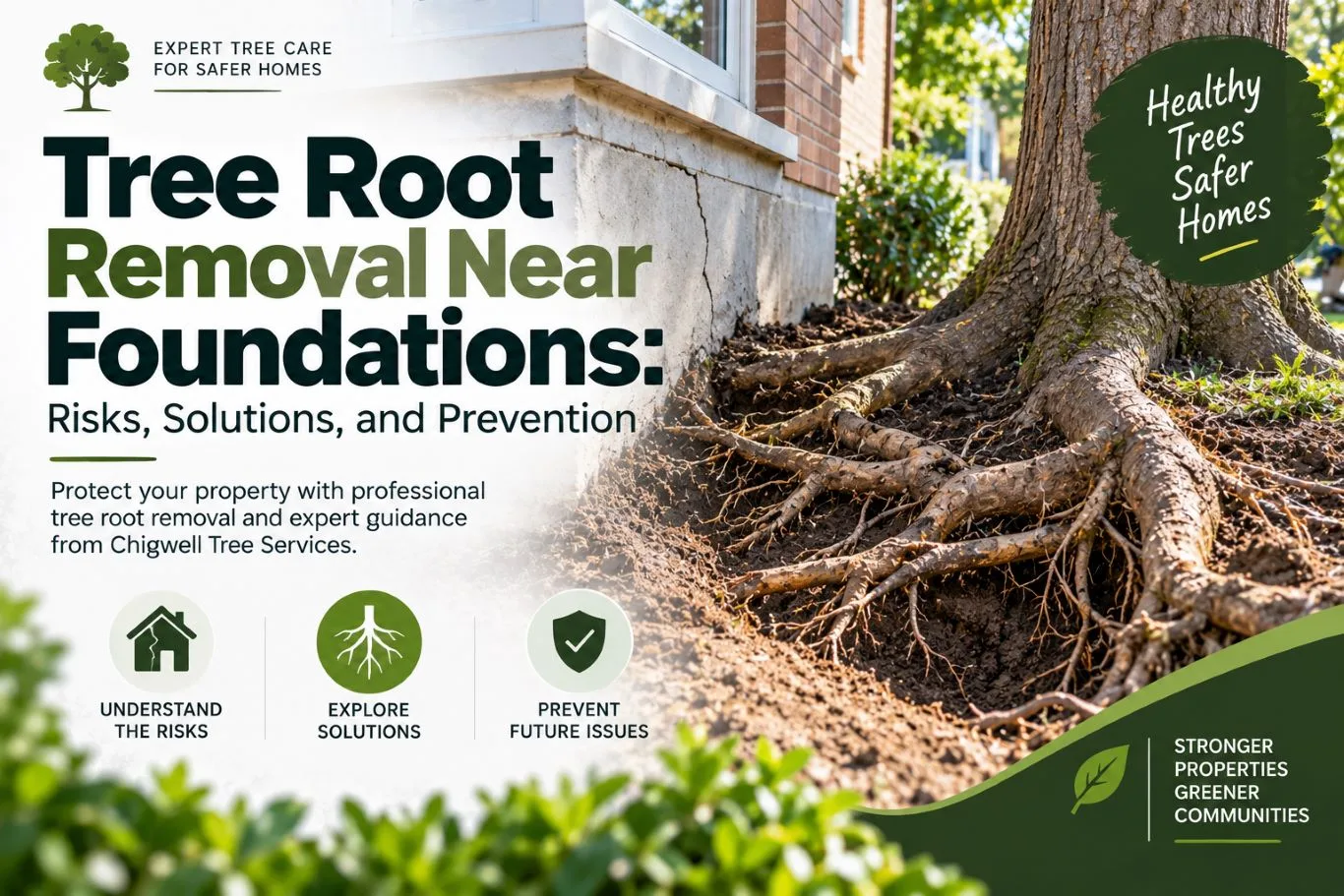
If you notice soil mounding, sheared roots, or daylight showing beneath the windward side of a root plate, the root anchorage has failed. This constitutes an immediate danger that requires urgent arboricultural intervention.
Legal Rights and Tree Ownership on Property Boundaries
Boundary disputes often arise because homeowners are unsure where legal ownership lies.
Determining Tree Ownership
Under English common law, tree ownership is dictated by where the base of the trunk emerges from the ground:
- Wholly Owned: If the stem emerges entirely within your neighbour’s title boundary, it belongs exclusively to your neighbour.
- Boundary / Shared Tree: If the trunk straddles the boundary line, it is legally considered a boundary tree owned jointly as tenants in common by both adjoining landowners. Neither party can alter or fell the tree without mutual consent.
Overhanging Branches Legal Rights
If a neighbour’s tree encroaches across your boundary, you have the common law right to abate the nuisance. This means you may prune back roots or branches up to the boundary line, provided:
- You do not trespass onto your neighbour's land or cross the boundary airspace without permission.
- You do not cause the remaining tree to become structurally unstable or die.
- You offer the arisings (severed branches, timber, and fruit) back to the neighbour, as they remain their legal property. (Do not simply throw clippings over the fence, as this can be treated as fly-tipping or common-law waste disposal disputes).
Landowner Duty of Care and Neighbour Tree Disputes
Under the Occupiers' Liability Act 1957 and 1984, landowners owe a legal duty of care to ensure that visitors, passers-by, and neighboring properties are reasonably safe from hazards originating on their land.
Escalation Pathway for Boundary Tree Concerns:
- Friendly Informal Dialogue: Discuss observations calmly; invite your neighbour to look from your garden.
- Commission an Independent Survey: Book an objective tree safety inspection from a qualified arborist.
- Formal Written Notice: Send a polite, recorded letter detailing identified defects and enclosing the report.
- Council Intervention: If the owner refuses to act on an imminently dangerous tree, contact the Local Planning Authority (LPA).
When handling potential neighbour tree disputes, formal documentation is critical. An owner cannot easily be held legally negligent for damage caused by an “Act of God” (such as freak gale-force storm winds) if the tree appeared completely sound. However, once an owner receives a professional arboricultural report detailing visible structural defects, the tree owner responsibility is clearly established. If they fail to act and the tree subsequently fails, their insurer is unlikely to defend a negligence claim.
Navigating Tree Preservation Orders (TPOs) and Planning Laws
Before reaching for pruning saws or contracting tree removal near property boundaries, check the tree's legal protection status with your Local Planning Authority (LPA).
- Tree Preservation Order (TPO): Felling, topping, lopping, uprooting, or intentionally damaging a tree protected by a TPO without prior council consent is a criminal offense subject to unlimited fines in the Magistrates' or Crown Court.
- Conservation Areas: Trees with a trunk diameter greater than 75mm (measured at 1.5m above ground level) in designated Conservation Areas require a formal Section 211 notice, providing the LPA with six weeks' written notice before work begins.
Emergency Exemption: Work to remove an immediate, severe risk of serious harm (such as a split bough hanging by fibers over a public path) can sometimes proceed under emergency exemption clauses. However, the burden of proof rests entirely on the property owner. You must gather photographic evidence and notify the tree officer at least five working days prior, or immediately after an out-of-hours emergency intervention.
Engaging accredited tree removal services across Essex, North London & East London ensures that all council portal checks, TPO applications, and planning liaisons are thoroughly handled before any cutting begins.
Professional Solutions for High-Risk Boundary Trees
Handling unstable trees along property fences requires specialist machinery, qualified climbers, and advanced rigging to protect adjoining properties:
| Arboricultural Solution | Operational Method | Primary Safety Outcome |
| Crown Thinning & Reduction | Selectively reducing outer canopy sail area and weight in accordance with BS 3998. | Relieves dynamic wind stress on weakened trunks, root flares, or codominant stems. |
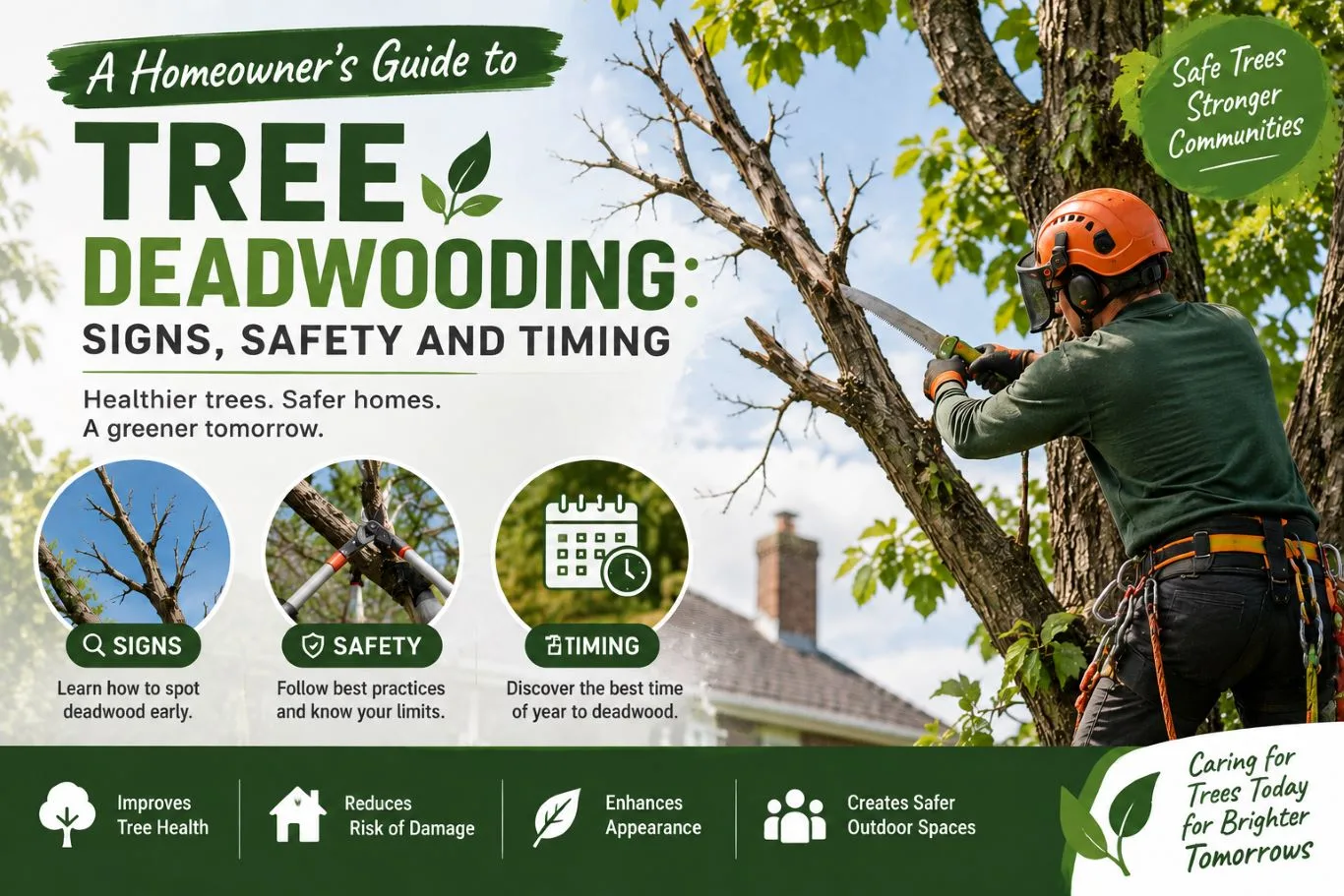
| Deadwood Removal | Systematically removing brittle, decayed boughs suspended overhead. | Eliminates branch drop hazards over patios, boundary paths, and conservatories. |
| Non-Invasive Dynamic Bracing | Installing flexible, high-strength polypropylene support ropes (Cobra systems) high in the crown. | Restricts excessive branch movement at weak V-crotches without drilling into live wood. |
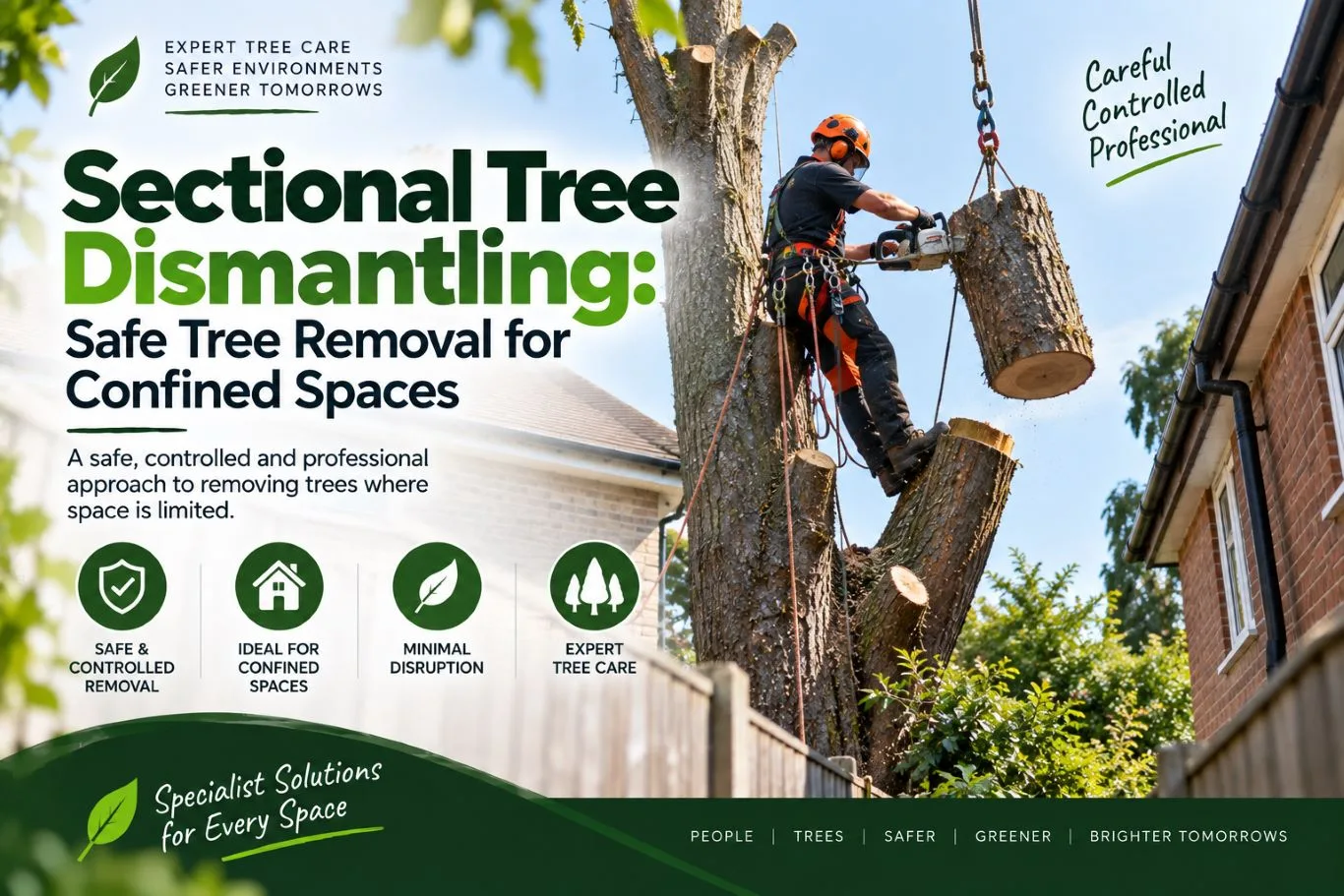
| Sectional Dismantling | Rigging the tree down piece by piece using lowering ropes, friction brakes, and aerial slings. | Safely extracts dangerous boundary timber without damaging fences or neighbouring buildings. |
The Value of an Independent Tree Safety Inspection
Attempting to resolve boundary disagreements based on subjective opinions rarely yields positive results. Your neighbour may see an imposing bough as a beloved garden feature, while you view it as a looming structural hazard.
Commissioning an objective tree safety inspection by a qualified arboricultural consultant provides clear, scientific answers. Arborists carry out ground-level visual assessments (Visual Tree Assessment – VTA), measure root flare stability, and evaluate decay extent using specialized sounding mallets or micro-drills. The resulting written report gives both parties factual clarity, outlining proportionate remedial measures—whether that involves selective pruning, weight reduction, or full tree removal services.
FAQs
1. Can I legally force my neighbour to cut down a tree that I think is dangerous?
You cannot directly force a neighbour to fell a tree on their private property. However, you can present them with evidence, such as a formal safety report from an arborist. If they refuse to act and the tree presents an imminent danger to life or property, you can notify your local council's Environmental Health or Building Control department, which has statutory powers under the Local Government (Miscellaneous Provisions) Act 1976 to step in and make dangerous trees safe.
2. Who pays for pruning overhanging branches along a boundary line?
Under UK common law, whoever chooses to exercise their right to prune overhanging branches back to the boundary line is responsible for paying for the work, unless your neighbour agrees to contribute or cover the cost voluntarily.
3. How quickly can your team assess an urgent or storm-damaged boundary tree?
We operate an efficient emergency response network. For hazardous trees presenting an immediate danger to domestic dwellings or commercial sites, we provide rapid out-of-hours callouts. For routine boundary inspections and non-urgent quotes, we typically visit sites within 24 to 48 hours.
4. What geographical regions do your arborists cover?
Our daily operational footprint spans the whole of Essex—including Chigwell, Loughton, Woodford, Epping, Brentwood, Romford, and Chelmsford—alongside neighboring communities across North London and East London.
5. If my neighbour's tree falls onto my property in a storm, whose insurance pays?
Typically, your own buildings insurance policy covers the damage to your property under standard storm damage terms. However, if it can be proven that the tree was visibly rotten, dead, or known to be dangerous beforehand, and the owner negligently ignored warnings, your insurer may seek to recover all costs from your neighbour's liability insurers.
Conclusion / Final Thoughts
Living alongside dangerous trees on property boundaries can be stressful, but understanding your legal rights and the physical signs of tree failure allows you to resolve issues calmly and effectively. By approaching boundary concerns constructively, respecting statutory TPO protections, and relying on objective arboricultural assessments, you can safeguard your home, boundary fences, and outbuildings while maintaining positive neighbourly relations.
At Chigwell Tree Services, our team brings certified arboricultural experience, advanced rigging capabilities, and comprehensive insurance cover to every residential and commercial challenge. Whether you need a formal tree safety assessment, sympathetic canopy reduction to reduce wind load, or safe sectional dismantling along a shared boundary, our friendly team is ready to assist.
Protect your home and resolve boundary tree concerns with confidence—contact our local specialists today to arrange your on-site consultation :