Quick Summary
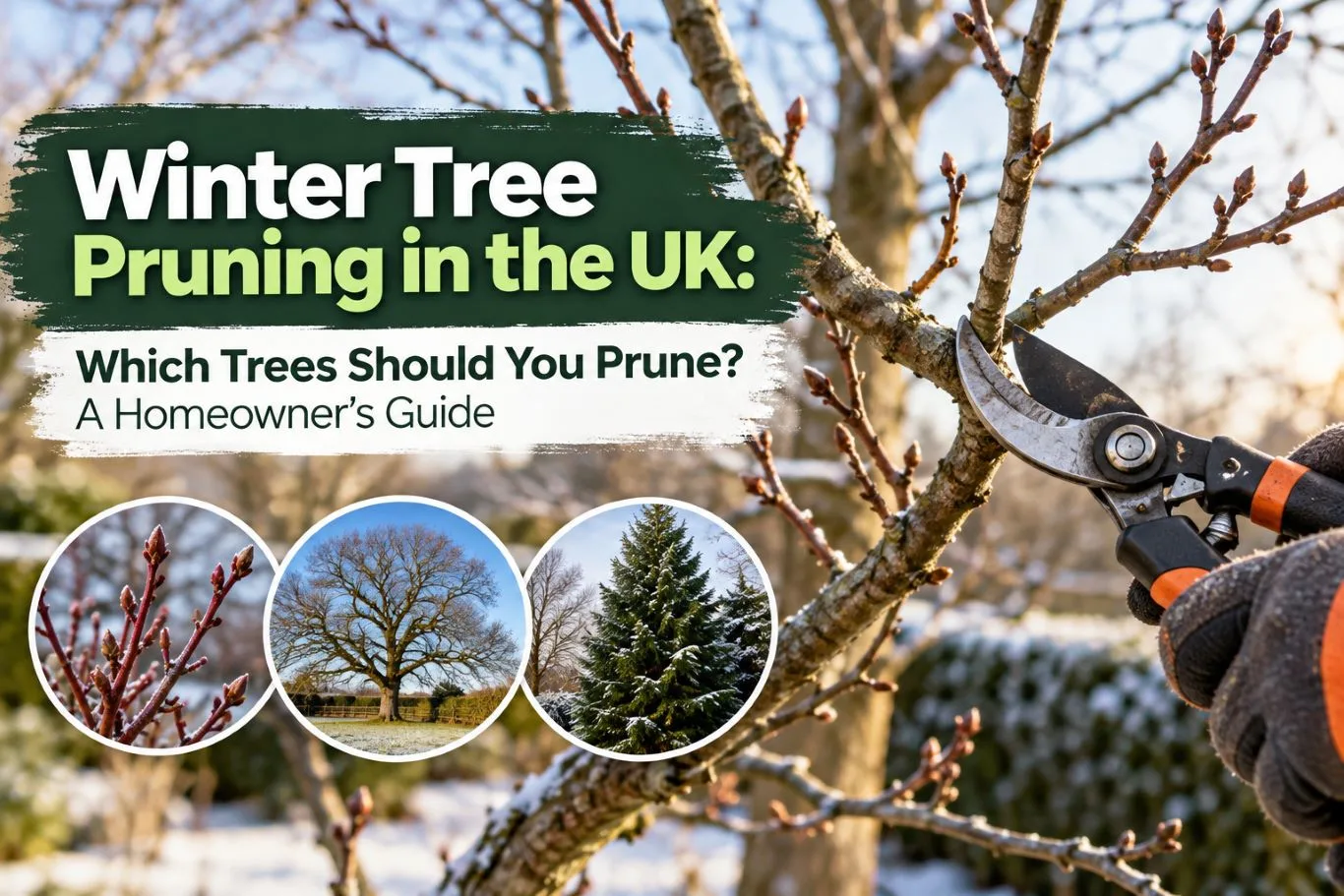
- Master the art of winter tree pruning to capitalise on plant dormancy, refine structural balance, and encourage vigorous spring development.
- Identify the premier candidates for cold-weather work, including native deciduous broadleaves and free-standing pip fruit varieties.
- Learn which common garden species—such as stone fruits and heavy sap-bleeders—must strictly avoid winter cuts to prevent fatal fungal infections.
- Gain actionable, practical insights into cut anatomy, branch collar protection, and UK wildlife conservation requirements.
- Understand when ground-level maintenance is feasible and when complex canopy reductions necessitate certified arboricultural contractors.
Introduction
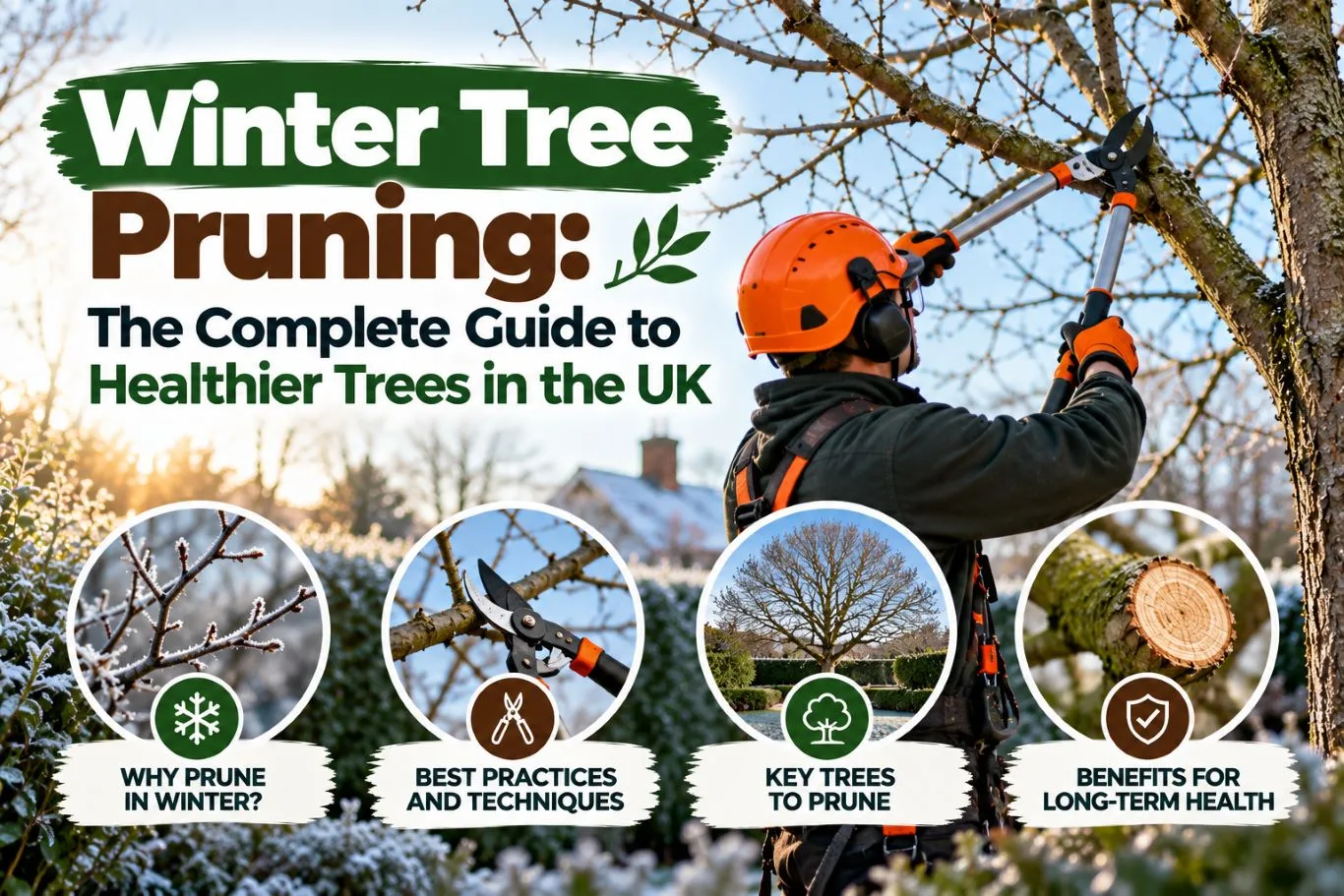
When winter arrives across the British countryside and urban gardens alike, outdoor spaces often take a back seat. Lawnmowers are packed away, borders are tucked in with mulch, and garden furniture is safely stored under cover. Yet, for property owners who value long-term landscape beauty and garden safety, the colder months offer the single most productive maintenance window of the year. Undertaking strategic winter tree pruning between late November and early March enables you to manage canopy spread, eliminate storm hazards, and direct spring growth without inflicting physiological shock on your trees. Because deciduous canopies shed their leaves and retreat into dormancy, their underlying branch architecture is fully exposed, allowing for calculated, therapeutic cuts. At Chigwell Tree Services, our certified arborists deliver dependable, affordable, and expert professional tree services for residential & commercial properties across Essex, East London & North London / UK and surrounding areas, ensuring your outdoor assets remain safe, healthy, and structurally resilient through every season.
Not sure if your garden trees should be pruned this winter? Chat with Chigwell Tree Services on WhatsApp for tailored, species-specific advice across Essex, East London, and North London :
The Biological Power of Dormant Season Pruning
To understand why winter works so well for arboricultural management, one must look at seasonal tree physiology. Throughout spring and summer, trees expend massive volumes of energy driving photosynthesis, expanding their foliage, and transporting moisture through the cambium. By late autumn, deciduous trees withdraw essential starches, carbohydrates, and minerals from their foliage, channeling these nutrients down into the root system before entering true winter dormancy.
Key Biological Advantages of Winter Dormancy:
- Carbohydrate Preservation: Pruning while sap flow has retreated ensures stored energy reserves in the roots stay intact.
- Complete Framework Visibility: The bare silhouette reveals crossing limbs, weak V-shaped unions, and hidden rot pockets.
- Pathogen Inactivity: Sub-zero and near-freezing temperatures suppress active fungal spores and wood-boring pests.
- Clean Natural Sealing: Cut wound margins remain clean and dry, primed to form wound wood (callus tissue) at spring bud break.
- Ground Protection: Hardened, cold ground tolerates access equipment, rigging lines, and footfall with minimal compaction.
By working with nature during this natural resting phase, dormant season pruning minimizes stress and avoids the sapping wounds that occur during active spring flushes.
Which Trees Should You Prune in Winter?
Knowing which trees to prune in winter is the cornerstone of responsible garden management. Different species possess unique vascular systems, fungal vulnerabilities, and blossoming schedules.
1. Freestanding Pip Fruit Trees
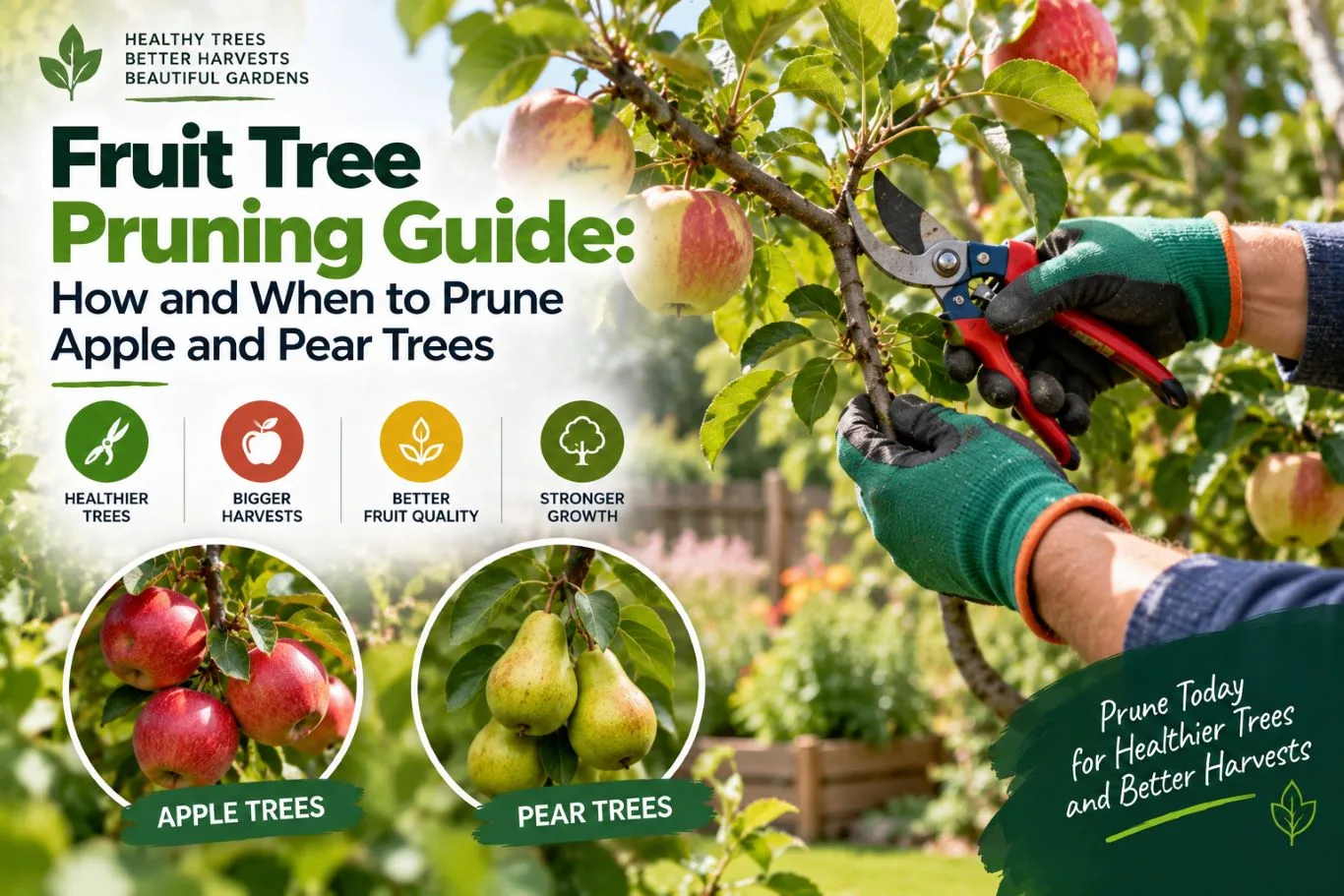
Apples and pears are the undisputed champions of cold-weather tree work. If you are deciding on fruit trees to prune in winter, traditional free-standing apple and pear trees top the list:
- Apples (Malus domestica): Winter cutting stimulates strong, productive lateral fruiting spurs and eliminates upright water shoots that congest the canopy.
- Pears (Pyrus communis): Pears produce vertical growth rapidly; winter trimming establishes an open, goblet-shaped crown that allows ripening summer sunshine to penetrate deep into the canopy.
(Note: Trained fruit forms like espaliers, fans, and cordons require summer pruning in July or August to check vegetative vigor. Reserve winter work strictly for free-standing bush or standard forms).
2. Hardy Native Deciduous Broadleaves
The vast majority of native and naturalised UK deciduous broadleaves are among the best trees to prune in winter UK:
- Oak (Quercus robur): Leafless winter canopies allow arborists to assess massive structural boughs and remove high-risk deadwood safely.
- Beech (Fagus sylvatica): Tolerates crown lifting, thinning, and selective end-weight reduction exceptionally well while dormant.
- Lime (Tilia cordata): An ideal time to strip vigorous epicormic basal shoots and reshape mature crowns.
- Hawthorn and Rowan: Benefit from thinning out crossing interior branches to maintain a light, balanced crown.
3. Deciduous Boundary Hedges and Screening
Winter is the traditional season to coppice, lay, or heavily renovate overgrown deciduous boundary hedges, such as Hornbeam, Hazel, and Field Maple, bringing unruly boundaries back to manageable dimensions before birds begin seeking nesting sites.
Species to Strictly Avoid Pruning in Winter
Just as certain trees thrive with cold-weather care, pruning the wrong species in mid-winter can lead to severe disease outbreaks or heavy vascular bleeding. Keep these off your winter cutting list:
| Species / Family | Common UK Garden Trees | Primary Biological Hazard of Winter Pruning | Recommended Pruning Window |
| Stone Fruits (Prunus) | Plums, Cherries, Damsons, Gages, Peaches | Exposes fresh cuts to airborne fungal spores that cause lethal Silver Leaf disease (Chondrostereum purpureum) and bacterial canker. | Mid-Summer (June – August) when sap flow pushes spores away. |
| Heavy Bleeders | Silver Birch, Walnut, Sycamore, Horse Chestnut | Experience intense root pressure in late winter; cutting in January/February results in excessive, unstoppable sap bleeding. | Late Summer to Early Autumn after leaf maturation. |
| Early Spring Bloomers | Magnolia, Forsythia, Camellia, Flowering Quince | Setting flower buds during the previous autumn; winter cuts sever embryonic flowers, stripping away your spring display. | Immediately after blooming in late spring. |
Practical Winter Tree Care Tips and Pruning Techniques
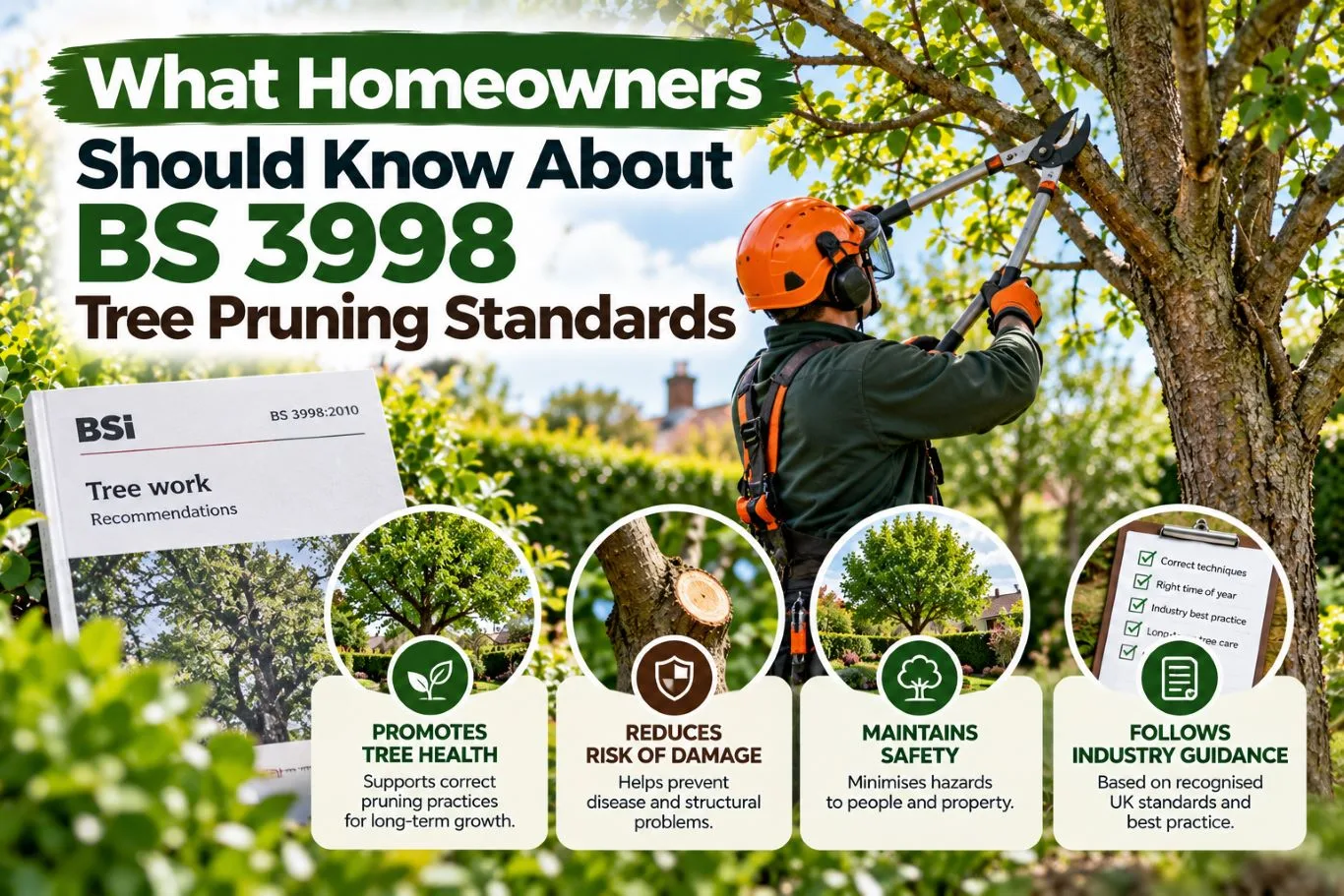
Carrying out safe, effective winter pruning for garden trees requires strict adherence to British Standard BS 3998 (Tree Work Recommendations). Sloppy, jagged cuts or flush cuts against the main trunk invite wood-rotting pathogens that can hollow out a mature tree over time.
Step-by-Step Winter Tree Pruning Guide:
- Conduct a Multi-Angle Survey: Step back to review the complete crown silhouette from several viewpoints to evaluate symmetry and lean.
- The Three Ds First: Cut out all Dead, Diseased, and Damaged timber right back to sound, living wood.
- Remove Congestion: Cut away rubbing branches, crossing limbs, and inward-growing shoots to open up the canopy for airflow.
- Crown Thinning (10% to 20%): Lightly thin secondary branches evenly throughout the canopy to reduce storm-wind resistance.
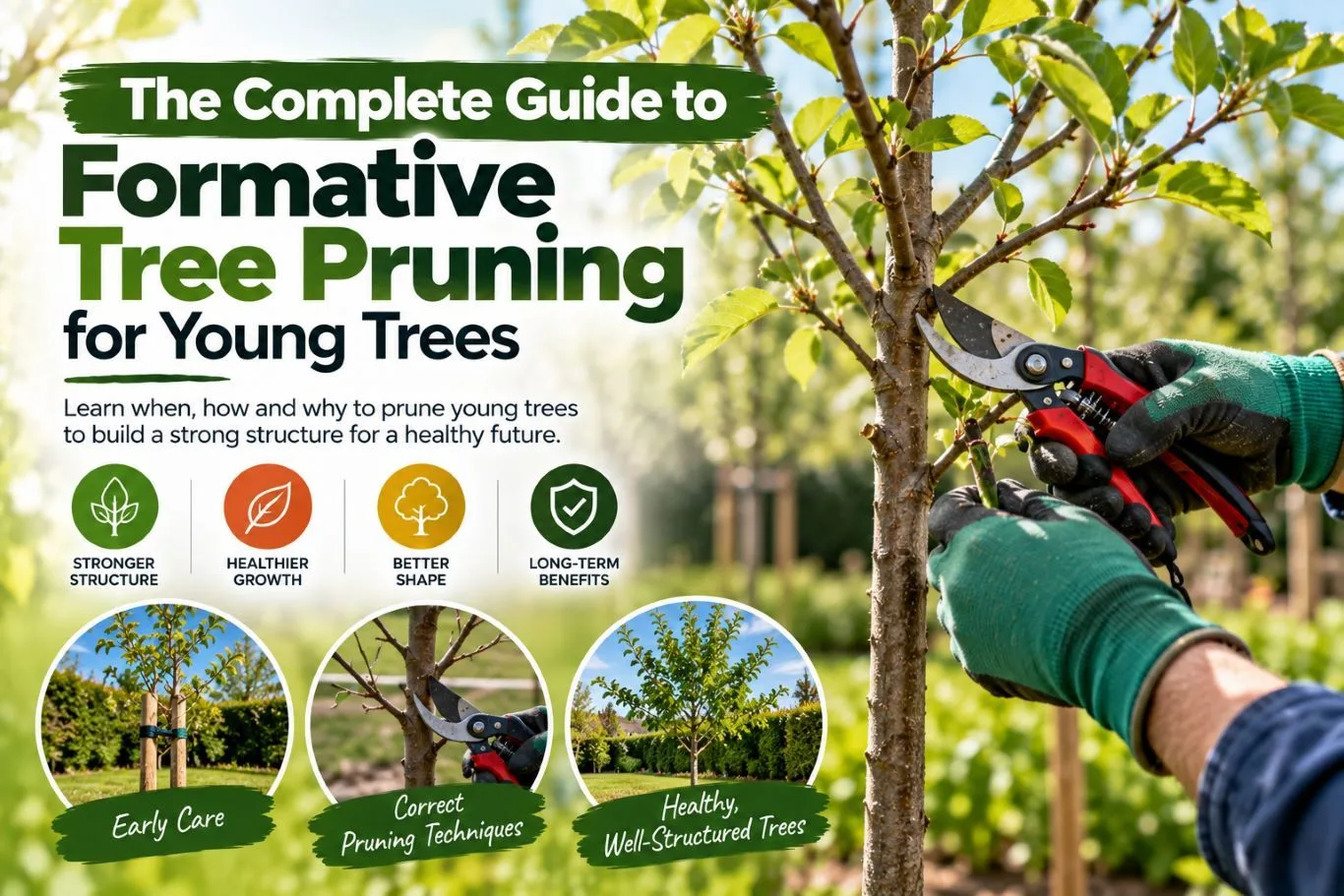
- Retain the Branch Collar: Make cuts just outside the swollen branch collar, avoiding flush cuts and protruding branch stubs.
Understanding Cut Anatomy
Every natural branch union features two critical anatomical markers: the branch bark ridge (a raised strip of bark where the branch meets the stem) and the branch collar (the swollen base containing parental trunk wood cells).
When pruning, place your bypass loppers or pruning saw just outside the branch collar, angling slightly away from the trunk. This ensures the branch collar's internal chemical defences remain intact, allowing natural wound wood to form a neat, doughnut-shaped protective seal over the cut surface.
For domestic grounds, residential developments, and commercial facilities requiring high-altitude canopy care, contracting professional tree pruning services for residential & commercial properties across Essex, North London & East London ensures all works are carried out by fully certified aerial climbers using load-rated rigging equipment.
Timing: When to Prune Trees in the UK
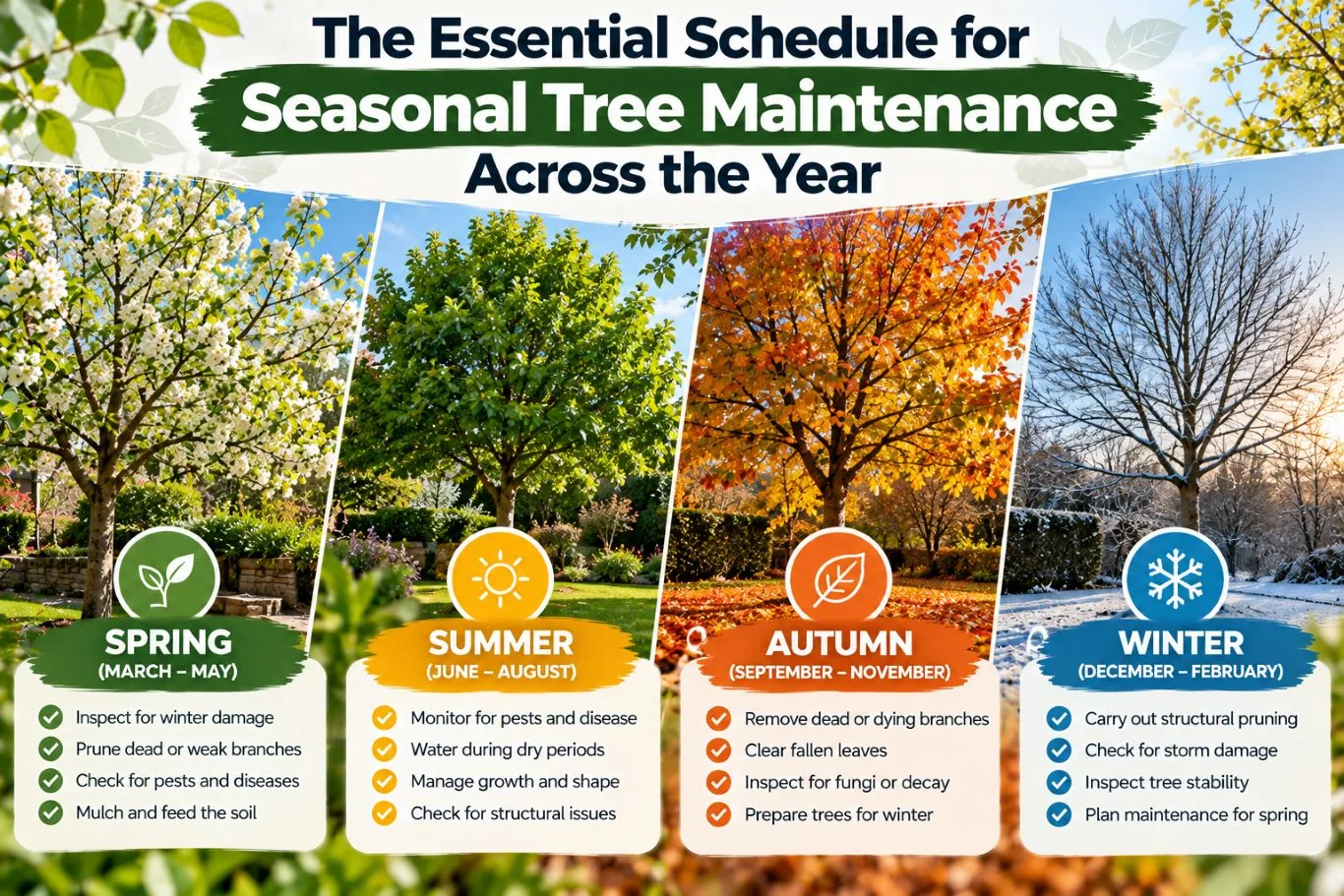
Pinpointing the ideal window for when to prune trees in the UK depends on regional winter temperatures:
- November to December: Best suited for free-standing orchard fruit trees (apples and pears) and large deciduous trees after the first hard frosts have induced complete dormancy.
- January to Mid-February: Deep dormancy makes this the prime window for substantial crown reductions, crown lifting over domestic driveways, and extracting large deadwood.
- Late February to Early March: The final opportunity for light structural tidying. Work must wrap up before early spring sap surges and well ahead of the bird nesting season.
Weather Warning: Never carry out pruning on days when temperatures plunge substantially below freezing. Sub-zero frosts cause timber to become brittle, increasing the likelihood of bark tearing and frost cracks around delicate cambium margins.
UK Wildlife and Statutory Regulations
Before carrying out winter tree work, property owners must ensure compliance with UK environmental and planning legislation:
1. Wildlife and Countryside Act 1981
While winter falls outside the primary bird breeding season (typically March to August), mild winters can prompt early nesting behavior in resident species such as blackbirds and wood pigeons. Furthermore, hollow cavities in mature or veteran trees frequently serve as winter roosts for hibernating bats, which are strictly protected under the Conservation of Habitats and Species Regulations 2017. Always inspect cavities and forks before cutting.
2. Tree Preservation Orders (TPOs) and Conservation Areas
Never assume that winter permits unregulated tree work. If a tree is subject to a council TPO, or if your property sits within a designated Conservation Area, you must submit a formal planning notification to your Local Planning Authority (LPA) prior to pruning. Unauthorised cutting of protected trees is a strict liability offense subject to unlimited fines in the Magistrates' Court.
Why Engage Professional Tree Pruning Services?
While low-level secateur pruning on young garden specimens is manageable for keen gardeners, navigating tall mature broadleaves is hazardous.
Engaging accredited professional tree pruning services delivers clear benefits:
- Aerial Rigging Competence: Qualified tree surgeons employ controlled rope-and-pulley lowering techniques to dismantle heavy boughs without damaging conservatories, fences, or underlying lawns.
- Species-Specific Botanical Expertise: Certified arborists readily identify subtle fungal fruiting bodies, mechanical weaknesses, and distinct species requirements, avoiding costly pruning mistakes.
- Statutory Planning Liaison: Professional operators handle council TPO searches, prepare BS 3998-compliant specifications, and submit applications directly to municipal tree officers on your behalf.
FAQs
1. What is the single biggest mistake homeowners make with winter tree pruning?
The most frequent mistake is pruning stone fruit trees (like plums and cherries) during winter. This exposes fresh cuts to airborne spores that cause fatal Silver Leaf disease. The second most common error is “topping”—amputating thick upright limbs indiscriminately, which triggers an explosion of weak, storm-prone water shoots and initiates internal trunk decay.
2. How do I tell if a winter branch is dead or just dormant?
Use the simple scratch test: gently scrape a tiny sliver of the outer bark using your fingernail or a small penknife. If the underlying cambium layer is bright green and moist, the branch is healthy and dormant. If it appears dry, brown, and brittle, the branch is dead and can be safely removed.
3. How quickly can your local arborists carry out a winter tree inspection?
We maintain a responsive, locally deployed team. For domestic properties and commercial grounds across our service territory, we typically arrange an on-site arboricultural survey and issue a comprehensive, fixed-price quotation within 24 to 48 hours.
4. Which areas do your winter pruning teams cover?
Our daily service routes cover the whole of Essex—including Chigwell, Loughton, Woodford, Buckhurst Hill, Epping, Brentwood, Romford, and Chelmsford—alongside adjacent North London and East London boroughs.
5. Can trees be pruned when snow is on the ground?
Yes, provided conditions are safe for tree surgeons to work. Snow on the ground does not harm cut surfaces; however, heavy snow resting on canopy limbs can obscure branch architecture and pose slipping hazards for climbers. Work should be paused during heavy snowstorms or severe sub-zero cold snaps.
Conclusion / Final Thoughts
Carrying out planned, species-appropriate winter tree pruning is one of the most beneficial investments you can make for your garden's future. By taking advantage of natural winter dormancy, you provide your trees with the structural clarity, disease resistance, and balanced architecture needed to flourish when spring returns. Whether thinning dense apple canopies, reducing wind resistance on mature broadleaves, or clearing away hazardous deadwood before winter storms hit, timely intervention keeps your landscape safe and beautiful.
At Chigwell Tree Services, our arborists combine deep botanical knowledge with specialized climbing equipment, comprehensive public liability insurance, and strict adherence to British Standard BS 3998. From seasonal maintenance in private gardens to complex tree management across commercial estates, our friendly local team is here to assist.
Give your trees the care they deserve this winter—contact our specialists today to book your free, no-obligation site consultation :