Quick Summary
- Identifying heat-damaged trees early is crucial for stopping permanent vascular decline and preserving valued landscape assets.
- Learn the key visual indicators of heat exhaustion, including marginal leaf scorch, premature drop, and bark splitting.
- Discover why shallow surface sprinkling fails to protect deep root systems from baking summer ground temperatures.
- Understand the link between prolonged environmental stress and sudden, hazardous summer branch drops.
- Find out how professional soil management and correct mulching techniques build long-term biological resilience.
Introduction
Summer is the time of year when our outdoor spaces should be at their most inviting, with dense, vibrant canopies framing our lawns and borders. However, consecutive weeks of high temperatures, dry soil, and intense afternoon sun can quickly turn a thriving landscape into a struggling one. Just like smaller garden plants, mature and developing trees experience severe physiological strain when the weather gets too hot. When groundwater levels drop and evaporation rates soar, a tree can easily burn through its internal energy reserves simply trying to stay cool. Spotting these signs of stress early can mean the difference between a simple recovery and losing a historic garden feature entirely. At Chigwell Tree Services, we pair a deep understanding of plant biology with high-quality landscape management, offering reliable and comprehensive tree services in Essex to ensure your canopy stays structurally safe and healthy all summer long.
Don't let summer stress turn into permanent canopy dieback or sudden branch drops—connect with Chigwell Tree Services on WhatsApp for trusted local care :
How Hot Weather Disrupts a Tree's Internal Systems
To effectively manage and prevent the appearance of heat-damaged trees on your property, it helps to examine how extreme summer conditions disrupt basic plant biology.
The Breakdown of Transpiration
Trees keep themselves cool through a process called transpiration. Leaves open up microscopic surface pores called stomata to release water vapor into the air, drawing up cold moisture from the roots to replace it. This acts as a natural air conditioning system. However, when the soil becomes hard and dry during a heatwave, the roots cannot find enough water to keep up with this rapid evaporation. To save itself from drying out completely, the tree closes its stomata, which stops the cooling cycle and causes internal temperatures to rise to damaging levels.
The Threat of Sunscald on Sensitive Bark
A dense leaf canopy acts as a natural umbrella, keeping the inner limbs and main trunk shaded from direct ultraviolet radiation. When a tree is forced to drop leaves due to drought, or if it is heavily pruned during a warm spell, this protective shade disappears. Direct, intense sunlight can cause sunscald along the exposed bark, killing the vital cambium layer just beneath the surface and leaving behind deep wounds that invite boring insects and fungal rot.
Common Signs of Heat and Dehydration Stress
Trees cannot speak when they are struggling, but they leave clear visual clues across their leaves, branches, and bark. Homeowners should look for these key changes during regular garden walks:
Leaf Scorch and Discoloration
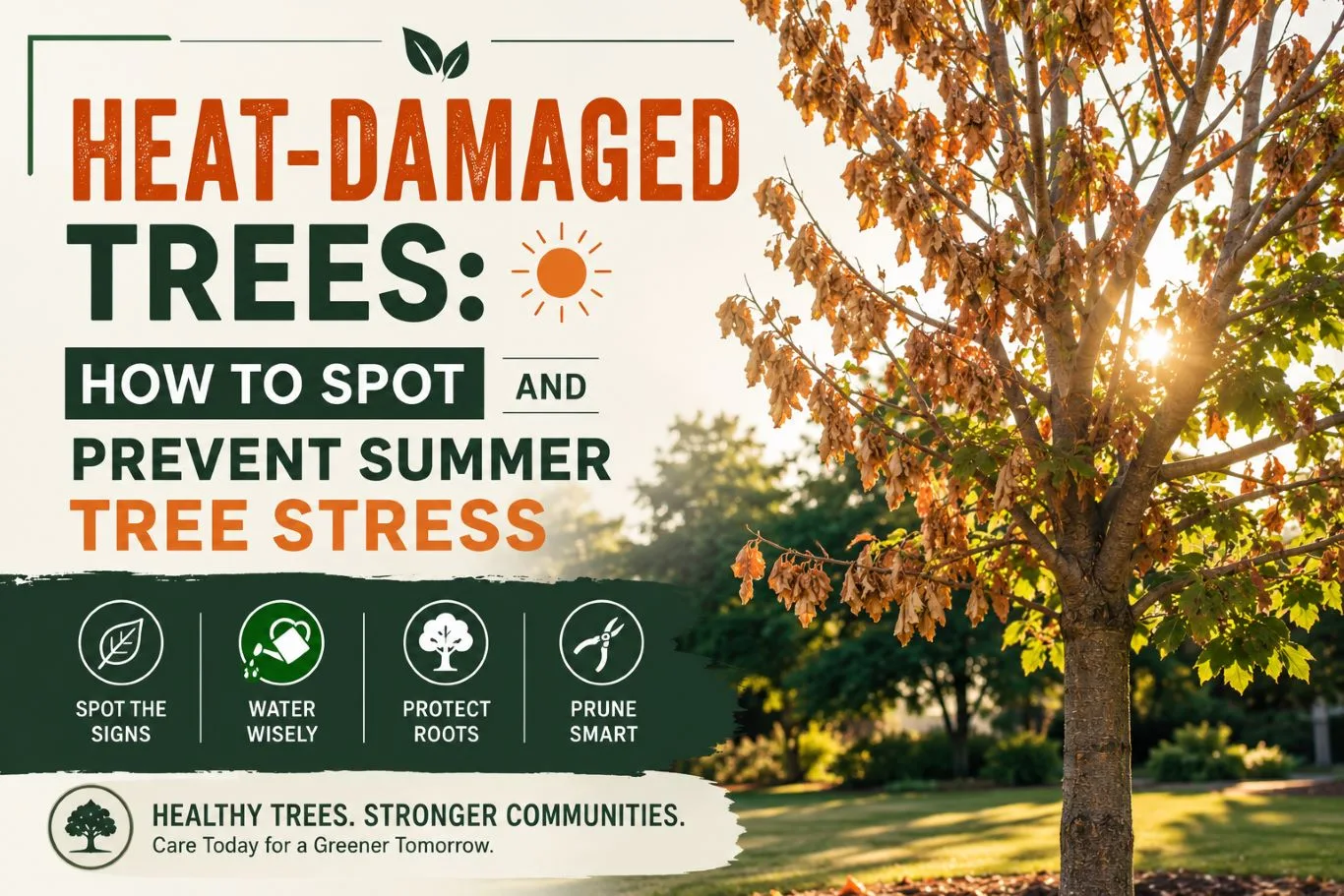
The most obvious indicator of a moisture deficit shows up on the foliage. Leaf scorch causes the outer edges and tips of the leaves to turn a crisp, brittle brown or yellow, while the central veins stay a pale green. On evergreen varieties, like conifers or pines, heat stress causes the outer needles to turn a uniform rusty brown from the tips inward.
Early Leaf Drop
If a tree cannot pull up enough water to support its full canopy, it will take defensive action by shedding its interior leaves. Dropping healthy-looking green or yellowing leaves in July or August is a clear sign that the tree is trying to reduce its overall surface area to conserve its remaining moisture.
Bark Splitting and Cracking
Under prolonged heat waves, the wood inside a trunk can contract due to moisture loss while the outer layers expand in the sun. This physical movement can cause long, vertical cracks to split open along the trunk. These open fissures weaken the physical stability of the tree and create an easy entry point for vascular pathogens.
Managing the Hidden Hazard of Summer Branch Drop
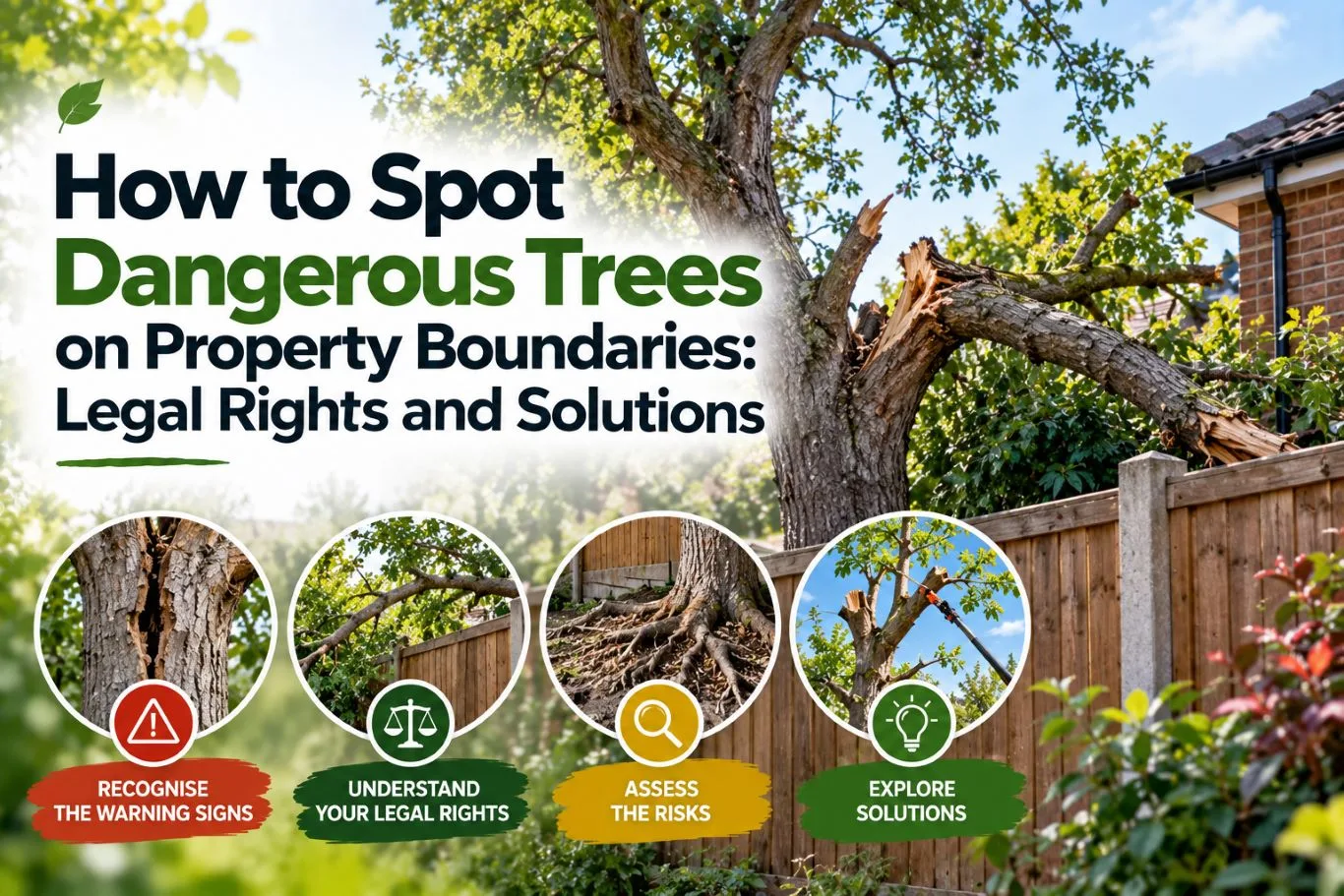
One of the most dangerous results of prolonged heatwaves is a phenomenon known as summer branch drop. On hot, calm afternoons, seemingly healthy, heavy limbs on mature trees can snap and fall without warning.
This issue frequently targets mature English Oaks, Beeches, and Willows. While the exact biological cause is still being studied, evidence suggests it is linked to a sudden buildup of moisture pressure within the inner wood cells when the tree stops transpiring, combined with the heavy weight of summer foliage. Because these heavy limbs fall without any wind or warning, keeping an eye on your mature canopies is an essential safety duty for property owners. Utilizing professional tree services in the UK can help you identify over-extended limbs and implement preventative pruning to protect your outbuildings, lawns, and walkways.
Preventative Action: How to Rehydrate Your Ground Properly
Helping a tree recover from high temperatures requires a move away from quick garden habits toward slow, deep-soil saturation.
Avoid Quick Surface Sprinkling
Standing under a tree for a few minutes with a standard garden hose merely wets the surface grass and evaporates within hours. This shallow watering coaxes fine root hairs to grow upward toward the surface, making them incredibly vulnerable to baking ground temperatures.
The Canopy Dripline Strategy
To help your trees effectively, focus your watering efforts across the entire canopy dripline—the circle of ground directly beneath the outermost tips of the branches, rather than right against the trunk. Use a porous soaker hose coiled in a spiral pattern across this zone, turning the tap down to a slow trickle for two to three hours once a week. This slow delivery allows water to soak deep into heavy clay or sandy loam, ensuring it reaches the active root network.
Mulching: Creating a Reliable Thermal Buffer
Applying a proper layer of organic mulch is one of the easiest ways to protect your trees from intense summer heatwaves.
- Regulating Ground Temperatures: A 5 to 10-centimeter layer of organic woodchips or shredded bark spread across the root zone blocks direct sunlight, reducing water evaporation from the soil by up to 70% and keeping roots cool.
- Stopping Nutrient Competitors: Mulch keeps aggressive lawn grass and weeds from growing over the root plate, preventing them from stealing water and nutrients before they can reach the tree.
- Preventing Root Flare Rot: Always keep your mulch spread in a flat donut shape, leaving a clear 10 to 15-centimeter gap around the base of the trunk. Piling mulch directly against the bark creates a damp environment that encourages fungal rot and pest infestations.
Securing Professional Diagnostic Support
When a mature tree shows advanced signs of dieback, large vertical splits, or structural leaning after a dry spell, attempting DIY fixes can put your safety and the health of your garden at risk.
At Chigwell Tree Services, we bring extensive practical experience and commercial-grade diagnostic tools to every estate we care for. Our certified, fully insured teams understand the unique challenges regional trees face through shifting seasonal patterns. Whether you require a comprehensive boundary safety check, targeted deadwood removal, or precision crown thinning to reduce a tree's water demand, we deliver clear, efficient, and reliable solutions.
Looking to hire professional tree surgeons in Essex?
FAQs
1. Can a tree fully recover from severe summer leaf scorch?
Yes. Leaf scorch looks alarming, but it is rarely fatal on its own if addressed promptly. Providing deep, slow irrigation across the dripline and applying a woodchip mulch buffer will help the tree stabilize its internal hydration and recover its strength ahead of winter.
2. Should I apply garden fertilizer to a tree that is shedding leaves in the heat?
No, you should avoid using high-nitrogen fertilizers during a heatwave. Fertilizer salts can draw moisture away from vulnerable roots, and forcing a stressed tree to produce rapid new leaf growth increases its demand for water when water is scarce. Focus on proper watering instead.
3. How quickly can your field teams visit my property for a safety assessment?
We maintain a highly responsive local scheduling system. For standard residential and commercial inquiries, we can typically schedule an expert on-site evaluation within 24 to 48 hours of your first contact.
4. What specific geographical areas do your maintenance crews cover?
Our daily operational area covers the entire county of Essex, including Chigwell, Loughton, Epping, Woodford, Brentwood, Buckhurst Hill, and nearby North London borders. This local focus ensures we are always familiar with regional soil types and council conservation guidelines.
5. Are your tree surgeons fully insured to work on historic or protected trees?
Absolutely. Our entire field crew holds fully verified NPTC and LANTRA qualifications, operating under extensive public liability insurance. All our work conforms strictly to British Standard BS 3998:2010 safety and quality guidelines.
Conclusion / Final Thoughts
Taking a proactive approach to your seasonal care is the most effective way to identify and assist heat-damaged trees before minor environmental stress turns into permanent structural failure. By shifting toward deep, slow-release irrigation routines, maintaining clear root flares, and keeping a close watch for unexpected canopy changes or brittle deadwood, you can keep your landscape stable and beautiful through the warmest weeks of the year. Investing a little time in preventative care protects your home from falling limbs while securing the environmental beauty of your property for the future.
At Chigwell Tree Services, we are proud to provide honest, professional, and customer-focused care for domestic gardens and commercial estates alike. We pair high-quality tools with a clear understanding of tree biology to deliver clean, long-lasting results. If you are currently searching for dependable tree services in Essex or need to consult certified tree surgeons in Essex to evaluate a hazardous or declining tree, our local team is always ready to assist. Protect your home's green features through every season by choosing an expert, trusted standard of care for your landscape.