
Quick Summary
- Utilizing a comprehensive summer tree inspection checklist helps property owners identify structural flaws and biological stressors before they escalate into costly hazards.
- Learn how to evaluate canopy density and spot the critical visual markers of heat exhaustion or localized dieback.
- Discover how to inspect the trunk and root flare for dangerous fungal brackets, deep structural cracks, and insect boring holes.
- Understand the importance of auditing structural stability ahead of unpredictable summer storms and heavy downpours.
- Find out when to call in professional diagnostic support to isolate active vascular diseases and secure your property borders.
Introduction
Summer is the season when our gardens truly take center stage, providing a lush, green setting for outdoor gatherings and relaxing afternoons. While we easily notice when the lawn looks dry or the flower beds need deadheading, our mature and young trees often blend into the background. Because they look full and green from a distance, it is easy to assume they are perfectly healthy. In reality, the high temperatures, heavy foliage load, and sudden thunderstorms of the warmer months can put an immense amount of physical and biological stress on a tree. Carrying out a proactive review of your landscape’s health during this active growing season allows you to catch minor structural defects, pest infestations, and hidden decay before they cause irreversible damage or pose a safety risk to your home. At Chigwell Tree Services, we combine scientific tree biology with years of practical experience, delivering reliable, expert tree services in Essex to ensure your canopy remains safe, vibrant, and beautiful all summer long.
Ready to clear hazardous deadwood or check a suspicious root flare? Message our friendly Essex team today for a fast, reliable evaluation :
The First 10%: Evaluating the Canopy and Foliage Vitality
The initial stage of any reliable summer tree inspection checklist begins with a simple step: step back and look up. A tree's canopy acts as a direct reflection of its internal vascular health, and seasonal changes in the foliage can tell you a great deal about what is happening beneath the bark.
Assessing Canopy Density and Color
A healthy summer canopy should look full, balanced, and evenly colored according to its species. Look carefully for any unusual gaps, asymmetric thinning, or branches that have completely failed to produce leaves. If one side of the tree is thick and vibrant while the other side appears bare or patchy, the tree may be suffering from a localized root issue, soil compaction, or an active vascular disease.
Identifying Leaf Scorch and Discoloration
Take a closer look at the leaves themselves. During a dry spell, trees can develop leaf scorch, where the edges of the foliage turn brown, crisp, and brittle while the veins stay green. This is a clear indicator of moisture deficit. However, if you notice irregular yellow patterns, dark spots, or a powdery white coating, your tree may be dealing with a seasonal fungal or bacterial issue rather than simple dehydration.
Inspecting the Trunk: Structural Stability and Bark Integrity
Once you have reviewed the upper canopy, move closer to examine the main trunk. The trunk is the main structural support of the tree, responsible for transporting water and nutrients between the roots and the leaves.
Spotting Deep Structural Cracks and Splitting
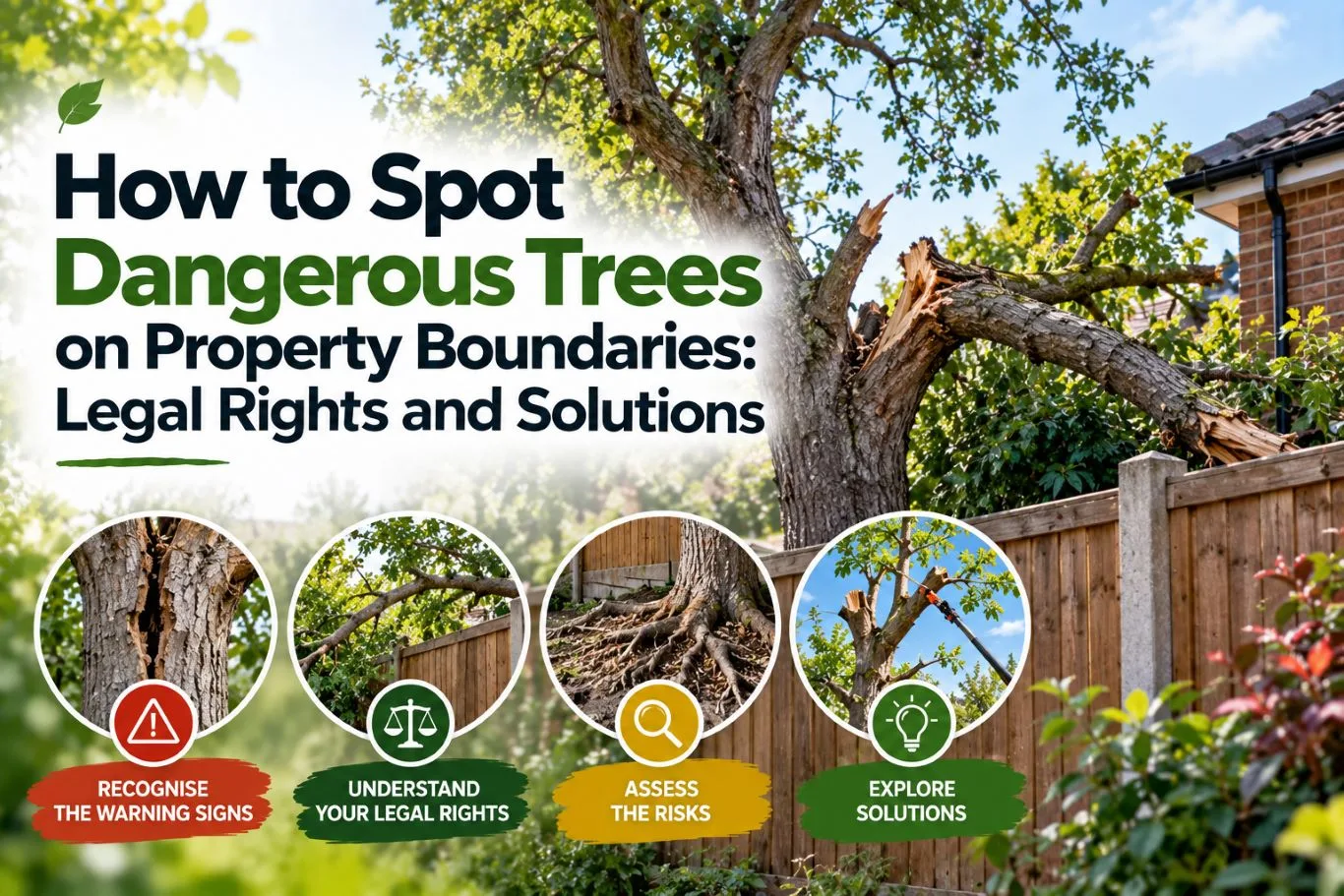
Examine the length of the trunk for any deep vertical cracks that penetrate through the outer bark into the inner wood. While shallow surface peeling is normal for species like London Plane or Silver Birch, deep cracks often point to severe internal stress, historical lightning strikes, or shifting weight loads. These splits can worsen during high summer winds, increasing the risk of a major structural failure.
Checking for Insect Boring Holes and Oozing Cankers
Look out for small, neatly drilled holes across the bark, which often indicate the presence of destructive wood-boring beetles. These pests are drawn to stressed trees to lay their eggs, and their emerging larvae can chew through the vital cambium layer, disrupting the tree's natural hydration channels. Additionally, watch for any dark, weeping cankers or oozing sap, which are common signs of bacterial infections like Fire Blight or bleeding canker.
Ground-Level Checks: The Root Flare and Soil Zone
The root flare—the area where the base of the trunk widens out as it enters the soil—is arguably the most critical part of a tree's anatomy, yet it is frequently mismanaged or obscured by improper gardening habits.
Exposing the Root Flare
The root flare should always be visible above the ground line and exposed to the air. If soil, decorative stones, or garden mulch are piled high against the base of the trunk, moisture gets trapped directly against the bark. This softens the timber and creates an easy entry point for root-rotting fungi and wood-boring pests. Always clear away excess material to ensure the flare can breathe.
Watching for Fungal Brackets and Surface Decay
Keep a close watch for any shelf-like fungal brackets, mushrooms, or toadstools sprouting directly from the root flare or along major surface roots. Fungal bodies at the base of a tree are an indicator of severe internal decay and subterranean root rot. Because the roots anchor the entire weight of the canopy, a tree with a compromised root system poses a serious safety hazard, making it a priority to consult certified tree services in the UK to determine the structural stability of the tree.
Auditing Structural Risks: Deadwood and Co-Dominant Trunks
Summer storms in the UK can bring sudden, heavy downpours and strong winds. When a mature tree is in full leaf, its canopy acts like a massive sail, catching the wind and placing immense pressure on every branch attachment.
Locating Hazardous Deadwood
Dead branches can be difficult to spot in the winter, but they stand out clearly in the summer because they lack leaves. Deadwood is brittle, lacks flexibility, and can fall unexpectedly during a sudden summer gale, risking damage to greenhouses, boundary fences, or public footpaths below. Identifying and removing these dead sections early is an essential part of basic property maintenance.
Assessing Tight V-Shaped Unions
Take note of any major limbs that join together in a tight, narrow “V” shape rather than a wide, stable “U” angle. These co-dominant stems often develop included bark, where the bark grows inward and presses against itself rather than fusing into solid wood. As the branches grow heavier with summer foliage and fruit, this weak attachment point can split apart under the strain of high winds.
Your Step-by-Step Summer Tree Inspection Checklist
To help you monitor your property efficiently, use this practical guide during your next garden walk:
- Canopy Check: Are the leaves evenly distributed, full, and the correct color for the species?
- Foliage Inspection: Are there any signs of leaf curling, scorched brown edges, or unusual powdery textures?
- Branch Review: Can you see any dead, snapped, or hanging limbs within the upper structure?
- Trunk Audit: Are there deep vertical cracks, open cavities, or small insect boring holes in the bark?
- Base Evaluation: Is the root flare clearly visible, and free from piled-up soil or suffocating mulch?
- Fungal Check: Are there any mushrooms or fungal brackets growing around the base or major root lines?
- Surrounding Ground: Has the soil cracked open, or has a surface root lifted unexpectedly, suggesting shifting anchors?
FAQs
1. What should I do if I find mushrooms growing at the base of my mature tree?
Mushrooms or shelf-like fungal brackets growing from the root flare usually indicate internal decay within the structural root system. You should avoid disturbing the fungi and arrange for a qualified arborist to carry out an advanced structural safety inspection to ensure the tree remains safe and stable.
2. Can a tree with a deep vertical split in the trunk be saved?
It depends entirely on the location, depth, and age of the crack. If the split is minor and the tree is otherwise healthy, it may form calloused wood to reinforce the area naturally. However, deep cracks that go through the trunk often require professional bracing, crown reduction, or systematic removal to protect your property.
3. How quickly can your local teams respond to a domestic check in my area?
We operate a prompt local scheduling network. For standard domestic and commercial safety inspections, we can typically schedule an expert on-site evaluation within 24 to 48 hours of your initial inquiry.
4. What specific geographical locations do your inspection teams cover?
Our daily operational area covers the entire county of Essex, including Chigwell, Loughton, Epping, Woodford, Brentwood, Buckhurst Hill, and nearby North London borders. This local focus ensures we understand regional soil profiles, common local species, and council conservation guidelines.
5. Are your tree surgeons qualified to handle protected trees in conservation areas?
Yes, completely. Our entire field staff holds industry-verified NPTC and LANTRA certifications, and all our work complies strictly with British Standard BS 3998:2010. If a tree protected by a Tree Preservation Order (TPO) needs urgent attention, we can manage the entire application and council notification process on your behalf.
Conclusion / Final Thoughts
Taking twenty minutes to walk through your garden with a structured summer tree inspection checklist is a simple but highly effective way to protect your landscape investment. By learning to look past the surface green and check the canopy, trunk stability, and root health, you can catch biological stressors and structural flaws long before they turn into costly property damage or emergency hazards. Protecting your outdoor spaces today ensures your mature and young trees remain a safe, vibrant, and valuable asset for your home for years to come.
At Chigwell Tree Services, we are dedicated to providing clear, reliable, and customer-focused care for domestic gardens and commercial landscapes alike. We combine a clear understanding of tree biology with commercial-grade machinery to deliver safe, clean, and long-lasting results. If you are currently searching for dependable tree services near me to evaluate your garden features, or need to consult certified tree surgeons near me to safely remove hazardous deadwood, our local specialists are always ready to assist. Keep your outdoor environment healthy and secure through the seasonal changes by choosing a professional standard of care for your home.