Quick Summary
- Tree removal near buildings is a highly technical discipline requiring structural calculations, advanced physics, and specialized rigging techniques.
- Discover why traditional straight-felling is impossible in confined urban spaces and close-proximity zones.
- Learn how professional sectional dismantling protects foundations, rooflines, brickwork, and underground utility pipes from impact damage.
- Understand the hidden structural engineering risks, such as soil heave and clay shrinkage, when extracting large timber near foundations.
- See how specialist equipment like cranes and lowering winches isolate energy and safely control the descent of massive limbs.
Introduction
Mature trees bring character, shade, and undeniable value to residential properties and commercial estates alike. However, when a massive oak, ash, or pine grows too close to a structure, its presence can quickly transform from a beautiful landscape asset into a severe structural threat. Over time, root systems can disrupt foundational footings, branches can batter rooflines during seasonal storms, and internal decay can make a large tree a significant fall risk. Extracting a tree in tight, confined spaces next to bricks, mortar, and glass is a highly complex engineering challenge. It leaves absolutely zero margin for error. At Chigwell Tree Services, we specialize in managing high-risk environments, deploying certified experts and premium machinery for complex tree removal services in Essex to ensure your buildings, outbuildings, and boundaries remain completely protected throughout the process.
Worried about a tree growing too close to your home? Chat with our experts on WhatsApp for a fast, zero-risk structural assessment :
The Physical Hazards of High-Proximity Timber
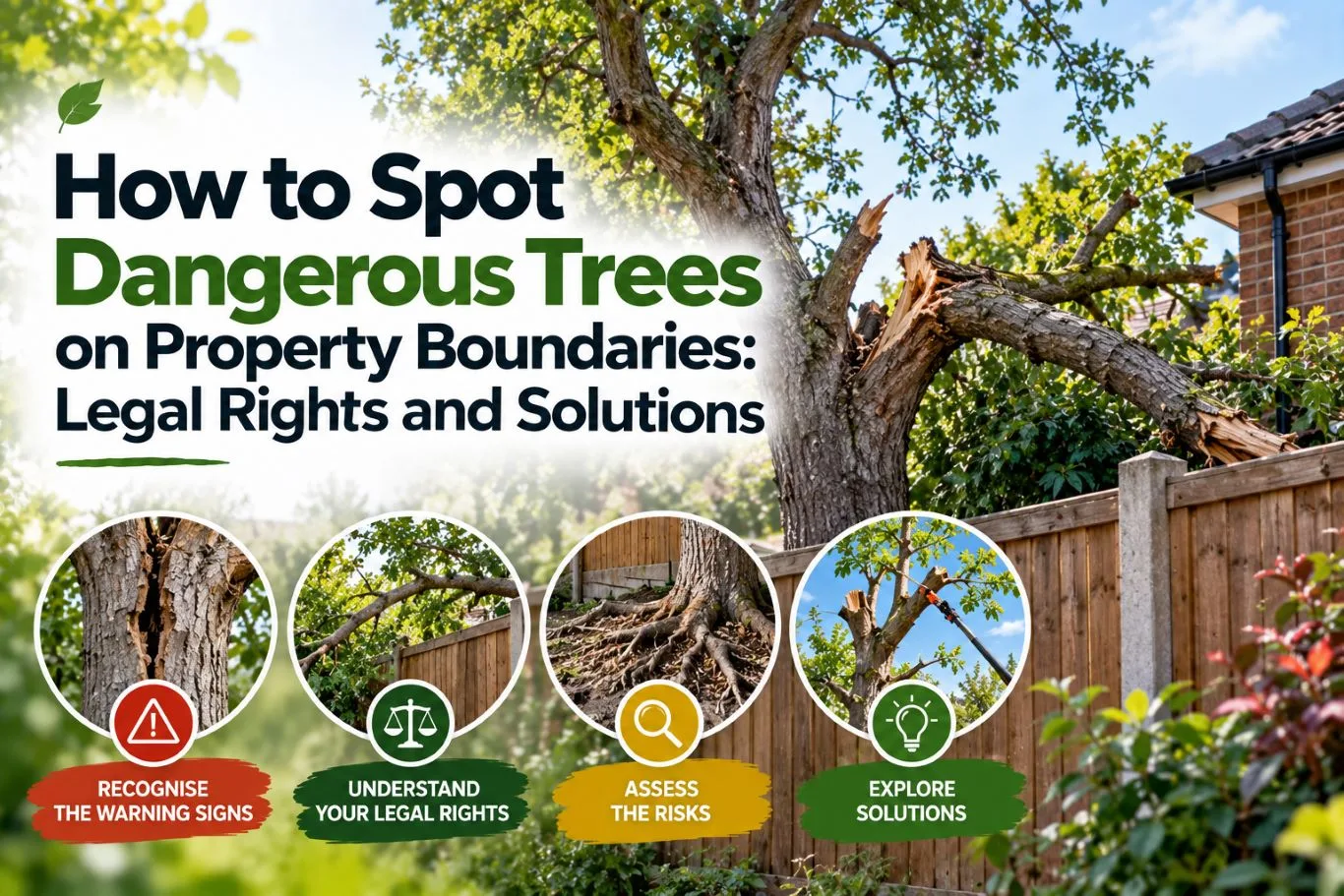
Leaving an overgrown or unstable tree unchecked near a building can cause an array of expensive structural issues. Understanding the underlying physical mechanisms explains why a proactive, systematic approach is necessary.
Canopy Battering and Roofline Failure
During severe British weather, the physical sway of a large canopy can cause massive structural wear. Continuous branch friction against a roofline strips away protective tile granules, breaks delicate slate shingle layers, and cracks guttering networks. Over time, these unnoticed entrance points let moisture leak in, leading to localized damp and timber rot in the main structural roof joists.
Subterranean Root Pressure and Foundations
While the canopy catches the wind, the underground root network expands constantly in search of moisture and nutrients. Thick structural roots can exert tremendous lateral pressure on subterranean masonry. If a building is constructed on old, shallow foundations, this continuous radial root expansion can easily crack structural brickwork, push garden walls out of alignment, and pierce clay drainage pipes, leading to water saturation and subsidence.
Sectional Dismantling: The Mechanics of Controlled Lowering
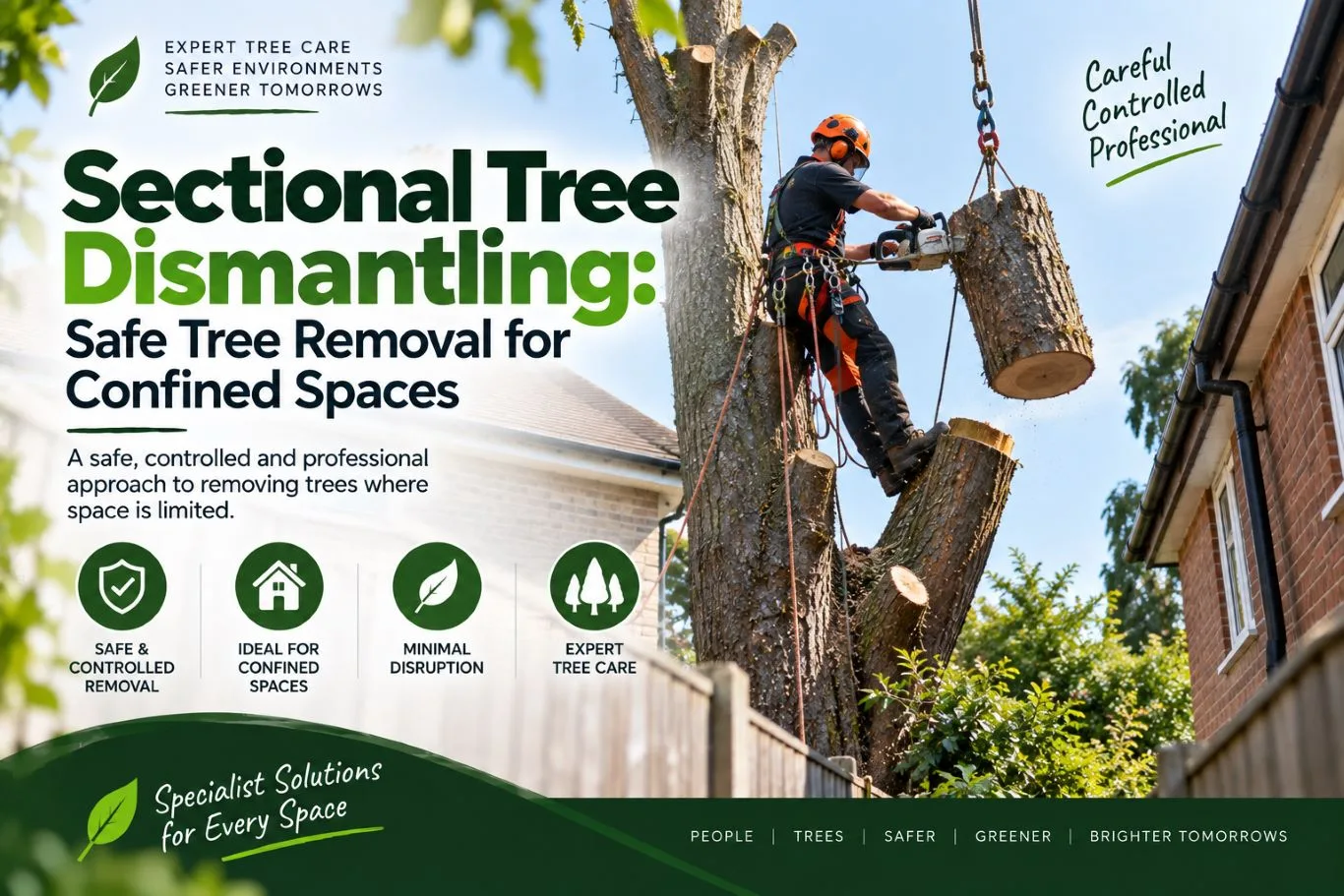
When executing tree removal near buildings, traditional straight-felling—cutting the base of the trunk and letting the tree fall flat across the ground—is out of the question. Instead, specialists utilize an advanced technique known as sectional dismantling.
Working from the Top Down
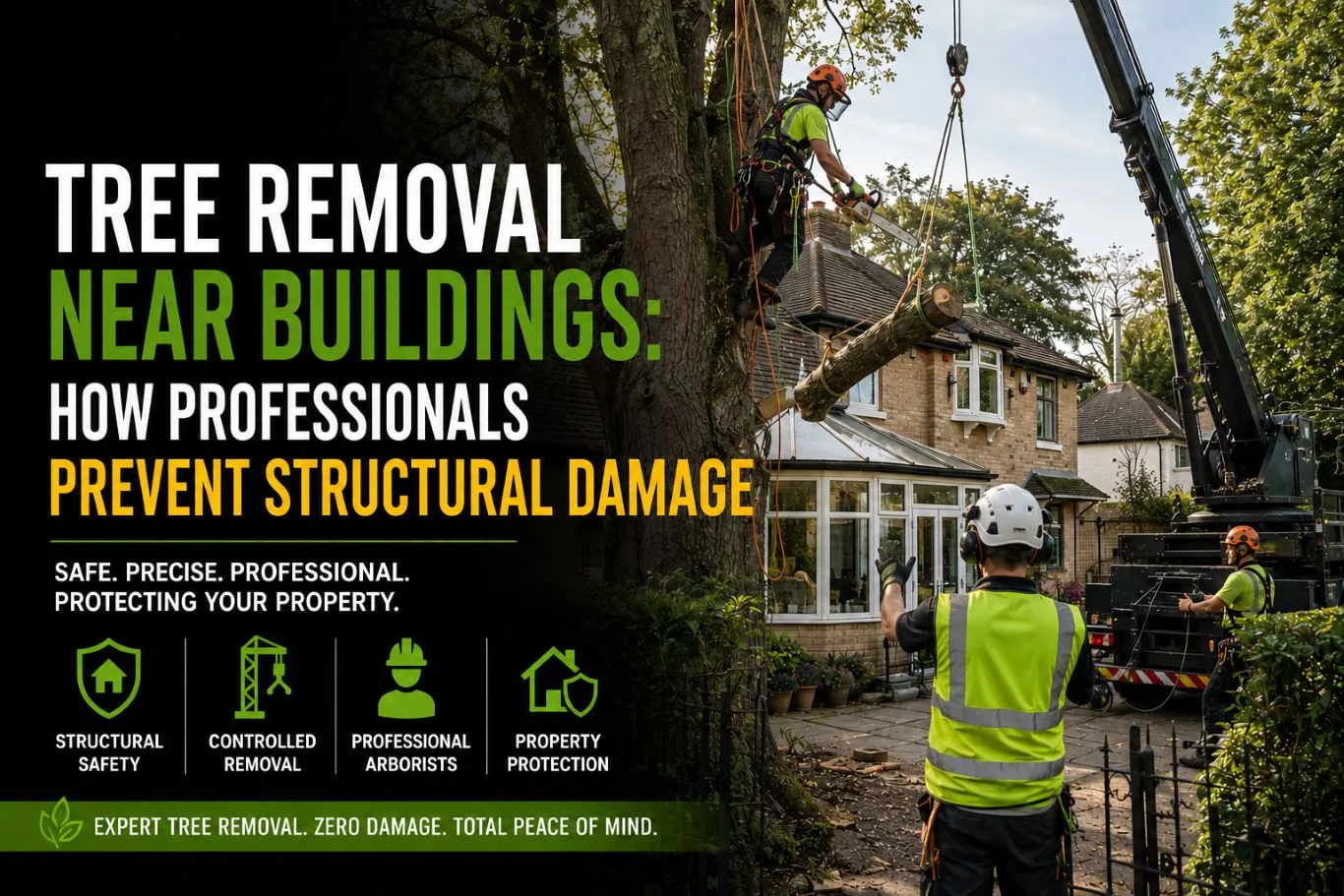
Our arborists climb into the upper canopy using heavy-duty ropes and specialized friction harnesses. Working systematically from the lowest outer limbs up to the high crown, we dismantle the tree piece by piece. Each branch is carefully planned, cut, and managed before it is separated from the main trunk, ensuring that nothing falls freely or unpredictably near the adjacent structure.
Advanced Rigging and Friction Controls
To safely lower heavy timber, we rely on advanced rigging physics. This involves using high-tensile arborist ropes, block pulleys, and friction devices (such as port-a-wraps) anchored safely at the base of the tree. When a massive branch is sawn through, the ground crew controls its weight using friction brakes. This isolates the dynamic energy of the falling wood, slowing down the timber’s descent so it can be guided gently to the ground, well clear of nearby conservatories, windows, or fences.
Structural Engineering Risks: Clay Shrinkage and Soil Heave
Removing a mature tree from tight spaces involves complex underground factors that must be analyzed carefully before any cutting begins. The relationship between tree roots and soil moisture is vital for foundational stability.
The Problem with London Clay
Much of the ground across the South East comprises highly reactive clay soils. Mature trees act as powerful water pumps, extracting hundreds of liters of water from the clay daily. When a tree is cut down, this massive moisture extraction stops instantly.
Soil Heave Explained
Over the following months, the surrounding clay reabsorbs natural rainwater and swells significantly. If the tree was growing right against a foundation, this expanding clay can push upward against the concrete footings with immense force. This structural phenomenon, known as soil heave, can crack structural floors, misalign window frames, and buckle brickwork. Evaluating these complex underground profiles across tree removal services in the UK is a core duty of certified experts, allowing us to safely advise clients on whether a tree should be removed completely or managed via phased crown reductions to preserve foundational stability.
Specialized Machinery for High-Risk Urban Clearance
Managing tight urban sites requires an investment in compact, highly specialized machinery designed to operate efficiently within narrow domestic boundaries.
- Mobile Elevated Work Platforms (MEWPs): Tracked spider lifts allow our teams to access high crowns safely when a tree is too decayed or structurally weak to climb securely using traditional ropes.
- Compact Stump Grinders: These narrow-access machines fit easily through standard garden gates, delivering heavy-duty grinding power to eliminate subterranean root plates without disturbing surrounding patios or underground utilities.
- Heavy-Duty Cranes: For large commercial projects or completely landlocked residential courtyards, we coordinate crane assists to lift massive, sectioned tree trunks cleanly up and over rooflines, removing ground-level property risks entirely.
Legal Due Diligence and Comprehensive Insurance
Working close to buildings involves managing substantial physical and financial assets. Property owners must ensure their chosen team operates under strict compliance frameworks.
Checking for Planning Constraints
Before any machinery arrives on-site, a rigorous check of local planning constraints must be conducted. If a tree near your building is subject to a Tree Preservation Order (TPO) or stands inside a designated local Conservation Area, unauthorized removal is a serious criminal offense that can carry unlimited court fines. We manage this entire process, drafting technical applications to local councils to secure official permissions before moving forward.
The Role of Full Insurance Coverage
In high-stakes arboriculture, comprehensive public liability insurance is an absolute requirement. Should an unexpected mechanical failure occur, a proper insurance policy protects the homeowner, the neighbors, and the workers from financial liability. Our teams operate under extensive liability coverage, ensuring every cut, rope lower, and mechanical lift is backed by robust professional protection.
FAQs
Q1: Can you safely remove a tree that is leaning directly over my conservatory?
Yes. Using advanced sectional rigging, winches, and crane control assists, we can secure the leaning tree's weight from above, dismantling it piece by piece without placing any mechanical pressure or danger on the glass structure below.
Q2: How do you ensure underground utility lines aren't damaged during root removal?
Prior to performing deep mechanical stump grinding or root extraction, we map out the site's layout. We identify the paths of water mains, gas lines, and electricity cables to ensure our heavy machinery operates at a safe distance.
Q3: What specific areas do your specialist teams cover for tight-access removals?
Our daily service network covers the entire county of Essex, including Chigwell, Loughton, Woodford, Epping, Buckhurst Hill, and adjacent North London areas. Our local presence allows us to respond promptly to all complex domestic and commercial site requirements.
Q4: How long does it take to remove a mature tree near an outbuilding?
Most standard proximity removals can be completed safely within one to two working days. The precise timeline depends on the tree's species, the overall canopy density, and the specific rigging setups required to navigate the site's footprint.
Q5: Are your tree surgeons fully qualified to handle complex rigging setups?
Absolutely. Our entire field crew holds fully verified NPTC and LANTRA arboricultural qualifications. We train continuously in advanced rigging physics, operating strictly under the comprehensive safety protocols mandated by British Standard BS 3998:2010.
Conclusion / Final Thoughts
Extracting a mature tree from a confined space right next to a home or commercial building is a technical challenge that must never be treated as a casual garden chore. It requires a deep understanding of structural weight distribution, wood mechanics, and local soil conditions. By entrusting your property to certified experts, you eliminate the severe risks of structural impact, foundational movement, and legal non-compliance, ensuring your site remains completely secure throughout the process.
At Chigwell Tree Services, we are dedicated to providing a highly methodical, safety-focused experience for every property owner we support. We combine cutting-edge rigging equipment with an uncompromising respect for technical standards to deliver clean, precise, and professional outcomes. If you are currently searching for dependable tree removal services near me or need highly experienced tree surgeons near me to clear a hazardous canopy near your home, our specialists are ready to help. Protect your home’s structural integrity today by choosing a premium standard of expertise for your next tree removal near buildings.
Take the risk out of tight-access removals—claim your free site assessment today and let our fully insured arborists secure your property :