Quick Summary
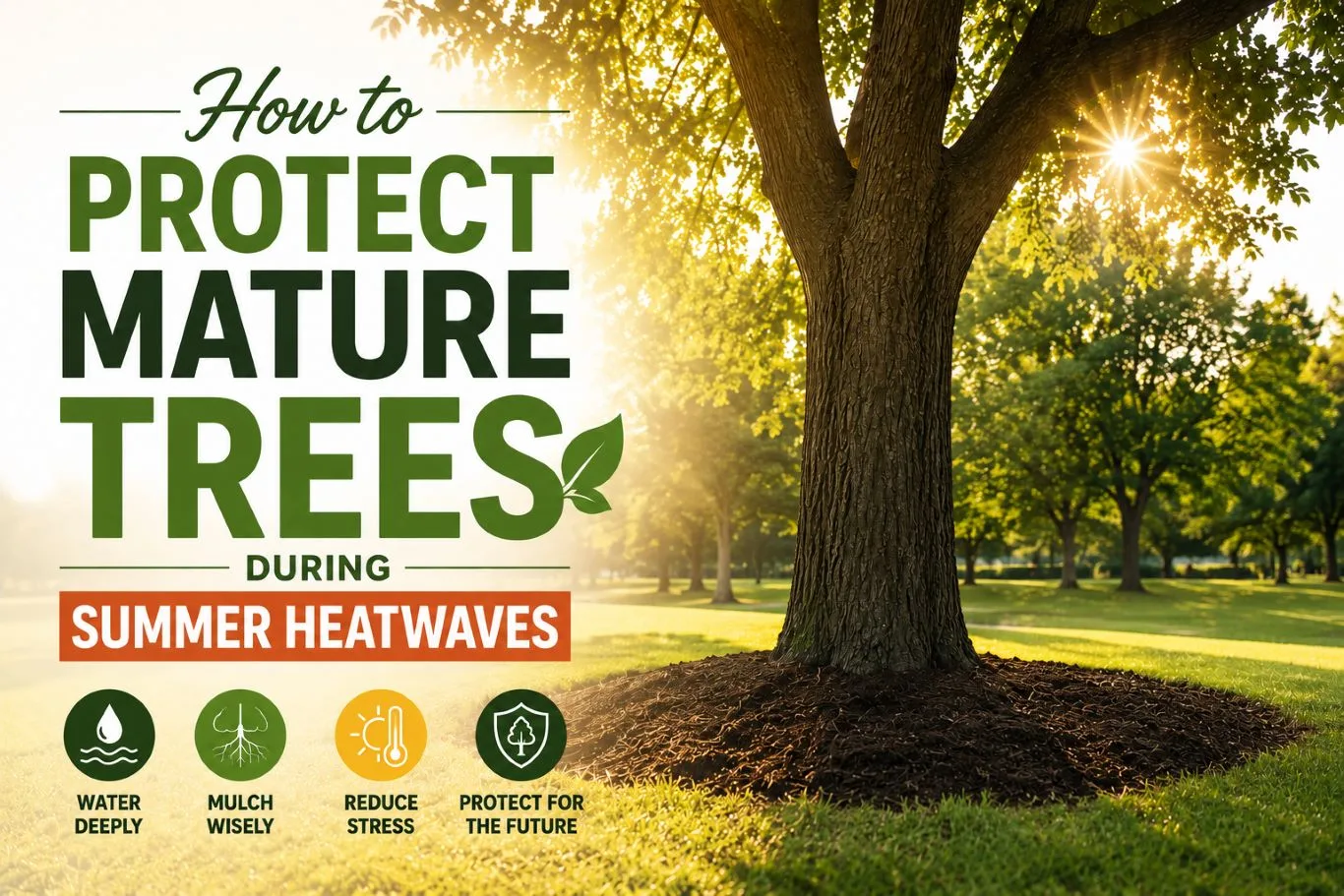
- Knowing how to protect mature trees during summer heatwaves is essential for maintaining the environmental value and structural safety of your garden.
- Discover why old, established giants are surprisingly vulnerable to prolonged periods of high temperatures and moisture loss.
- Learn the signs of heat stress, including leaf scorch, premature shedding, and dropping limbs.
- Master deep irrigation techniques that target active root zones rather than just dampening the surface lawn.
- Understand how to apply organic mulch correctly around large root flares to retain soil moisture and regulate ground temperature.
Introduction
A mature tree is a beautiful asset to any home or commercial property, providing natural shade, local wildlife habitats, and a sense of history. Because these established giants have stood for decades, it is easy to assume they can easily look after themselves through any weather. However, the warmer, drier conditions we are seeing across the country can place immense physical and biological strain on even the most deeply rooted specimens. When high temperatures arrive alongside weeks of dry weather, a mature tree can rapidly exhaust its energy reserves just trying to stay cool. Taking a proactive approach to your seasonal garden maintenance ensures your trees retain their strength and structure through the warmest months of the year. At Chigwell Tree Services, we specialize in balancing scientific plant biology with high-quality practical care, delivering reliable, expert tree services in Essex to keep your historic canopies safe, vibrant, and healthy all summer long.
Worried your mature trees are suffering from heatwave exhaustion? Chat with Chigwell Tree Services on WhatsApp for immediate, expert advice across Essex :
The Surprising Vulnerability of Established Trees
To look after older specimens effectively, we need to understand how they interact with the soil during periods of extreme heat.
The Root System Myth
Many people believe that mature trees possess a massive, central taproot that digs deep into the earth to find hidden groundwater. In reality, the vast majority of a tree's root network lives within the top 30 to 60 centimeters of the soil. These shallow roots grow horizontally, spreading well past the outer edge of the branches—an area known as the canopy dripline. When weeks of dry weather bake the top layers of earth, these critical, water-absorbing roots are often the first to suffer from dehydration.
Managing Large Leaf Canopies
A large, mature canopy has millions of leaves, all working to release water vapor through microscopic pores called stomata. This natural cooling process keeps the tree stable but demands a continuous supply of soil moisture. If the ground dries out, the roots cannot keep pace with this rapid evaporation. This leads to a water deficit that forces the tree to drop leaves prematurely, leaving it vulnerable to opportunistic pests and secondary infections.
Recognizing Tree Heat Stress Signs
Spotting the early warning indicators of heat exhaustion allows you to step in with the right support before a tree suffers permanent structural damage or canopy dieback.
Leaf Scorch and Premature Shedding
One of the most common tree heat stress signs is leaf scorch. The outer edges of the foliage turn brown, crisp, and brittle while the center stays green. If the water deficit continues, the tree will defend itself by dropping its interior foliage to reduce its overall demand for moisture. If you notice a carpet of yellow or green leaves beneath your mature oaks or beeches in July or August, your tree is likely under significant stress.
Summer Branch Drop
Some mature species—particularly mature English Oaks, Willows, and Beech trees—can suffer from a sudden structural issue known as summer branch drop. During hot, calm afternoons, seemingly healthy, heavy limbs can snap and fall without warning. While the exact biological cause is still studied, it is generally linked to internal moisture changes and shifting weight within the wood cells under intense heat. Identifying weak limbs early through regular checks is an important part of mature tree maintenance to keep your lawns, outbuildings, and boundary lines safe.
The Hydration Blueprint: Deep Subsurface Saturation
When it comes to supporting an established tree through a dry spell, a quick five-minute spray with a garden hose is ineffective. Light surface watering merely dampens the lawn and evaporates in the midday sun without ever reaching the deeper root network.
The Dripline Irrigation Method
Effective tree watering in summer requires a slow, deep application across the entire root zone. The best approach is to use a porous soaker hose coiled in a spiral pattern beneath the outer half of the canopy, extending slightly past the dripline where the active roots live. Turn your tap down to a slow trickle and let the hose run for two to three hours once every ten to fourteen days during a heatwave. This slow delivery allows the water to soak deep into the loam or clay soil, encouraging deep root health rather than wasteful surface runoff.
Tracking Drought Care for Established Trees
While a young sapling needs frequent attention, effective drought care for established trees relies on high volume delivered less frequently. A mature tree benefits from a thorough, deep saturation that mimics a heavy autumn downpour. Providing this targeted deep soak once or twice a month during extended dry spells ensures the tree retains its internal moisture balance, preventing it from shutting down its vascular system.
Mulching Around Mature Trees: Creating a Thermal Barrier
Applying a proper layer of organic mulch is one of the easiest, most cost-effective summer tree care tips to help your trees handle extreme heatwaves.
Evergreen & Deciduous Mulching Zones:
– Apply a 5 to 10-centimeter layer of organic woodchips or bark mulch.
– Spread the material across the root zone to the canopy dripline.
– Keep a clear 10 to 15-centimeter gap around the base of the trunk.
Regulating Soil Temperature
A 5 to 10-centimeter layer of woodchips or composted bark spread across the ground acts as a protective blanket. It blocks direct sunlight, reducing evaporation from the soil surface by up to 70% and keeping the underlying roots significantly cooler on hot afternoons. Additionally, mulch keeps thick lawn grass and weeds at bay, preventing these shallow-rooted plants from stealing water before it can soak down to the tree's roots.
Avoiding Root Flare Rot
While mulching around mature trees is highly beneficial, improper application can cause serious harm. Many amateur gardeners pile mulch high against the base of the trunk, creating a “mulch volcano.” This traps moisture directly against the bark, softening the timber and creating an easy entry point for fungal rots and boring beetles. Always leave a clear 10 to 15-centimeter gap around the root flare, ensuring the base of the trunk stays dry and open to the air.
Avoiding Summer Pitfalls: Soil Compaction and Trimming
When a tree is already working hard to handle a heatwave, improper garden activities can inadvertently worsen its stress levels.
The Hidden Danger of Construction and Traffic
Summer is a popular time for home renovations, patio installations, and garden landscaping. However, driving heavy machinery or parking vehicles over a tree's root zone can cause severe, long-term damage. Soil compaction squeezes out the tiny air pockets roots need to breathe, suffocating them over time. Similarly, digging trenches for utility lines or patio footings within the dripline can sever major structural roots, leaving the tree unstable and unable to absorb water. Always protect the root zone of your mature trees before building work starts.
Keep Summer Pruning Light
While winter is the traditional time for heavy structural pruning, summer requires a very careful touch. Leaves generate the food a tree needs to power its root growth and natural defenses. Removing large amounts of healthy canopy during a heatwave reduces the tree's ability to feed itself and exposes previously shaded inner bark to direct UV light, which can cause sunscald. Summer cutting should be kept to an absolute minimum, focusing only on removing dead, broken, or clearly diseased wood. For more complex structural concerns, it is best to consult certified tree services in the UK to ensure your trees are managed safely and sustainably.
Choosing Certified Local Specialists
Managing large, mature trees through changing seasonal extremes requires the right balance of experience and commercial-grade tools. Attempting to manage tall canopies or remove heavy deadwood without professional training can put your safety and the health of your property at risk.
At Chigwell Tree Services, we bring extensive practical experience and a clear understanding of arboriculture to every garden we care for. Whether you need an emergency safety inspection after a summer storm, precision crown reduction to ease wind stress, or expert advice on preserving an ancient oak, we deliver honest, efficient, and fully insured solutions across the county.
Looking to get expert tree services in Essex?
FAQs
1. How can I tell if my mature tree is dying or just stressed by a heatwave?
A heat-stressed tree will often drop leaves or show scorched edges, but the underlying twigs will remain flexible and show green tissue if you gently scratch the bark. If the branches are brittle, snap easily, and show dry brown wood inside, those specific sections have died back.
2. Is it safe to fertilize my mature trees during a summer drought?
No, you should avoid using high-nitrogen fertilizers during a dry spell. Fertilizer salts can pull moisture away from vulnerable roots, and forcing a stressed tree to produce rapid new leaf growth increases its demand for water at a time when water is scarce. Focus on deep watering and mulching instead.
3. How quickly can your local teams respond to a domestic check in my area?
We operate a prompt local scheduling network. For standard residential and commercial health evaluations, we can typically schedule an expert on-site assessment within 24 to 48 hours of your initial inquiry.
4. What specific geographical areas do your maintenance teams cover?
Our daily operational area covers the entire county of Essex, including Chigwell, Loughton, Woodford, Epping, Brentwood, Buckhurst Hill, and nearby North London districts. This local focus ensures we understand regional soil profiles and council conservation guidelines.
5. Are your tree surgeons fully qualified to handle trees in conservation areas?
Yes, absolutely. Our entire field crew holds fully verified NPTC and LANTRA arboricultural qualifications. We operate under comprehensive public liability insurance, and all our work conforms strictly to British Standard BS 3998:2010 safety and quality guidelines.
Conclusion / Final Thoughts
Taking a proactive approach to your seasonal routine is the best way to protect mature trees during summer heatwaves. By moving away from quick surface watering, applying proper organic mulch buffers, and avoiding heavy canopy pruning during dry spells, you can help your established trees handle the warmest weeks of the year with minimal stress. Investing a little time in deep irrigation and regular health checks protects your home from falling deadwood while preserving the environmental beauty and financial value of your property for decades to come.
At Chigwell Tree Services, we are proud to provide clear, reliable, and customer-focused care for domestic gardens and commercial landscapes alike. We pair commercial-grade machinery with an uncompromising respect for tree biology to deliver clean, long-lasting results. If you are currently searching for dependable tree services near me to evaluate your garden features, or need to consult certified tree surgeons near me to safely manage an overgrown canopy, our local team is always on hand to help. Keep your outdoor environment looking its best through every season by choosing an expert, professional standard of care for your home.