Quick Summary
- Comparing tree felling vs tree removal clarifies the vital operational differences between dropping a tree in a single motion and systematically dismantling it piece by piece.
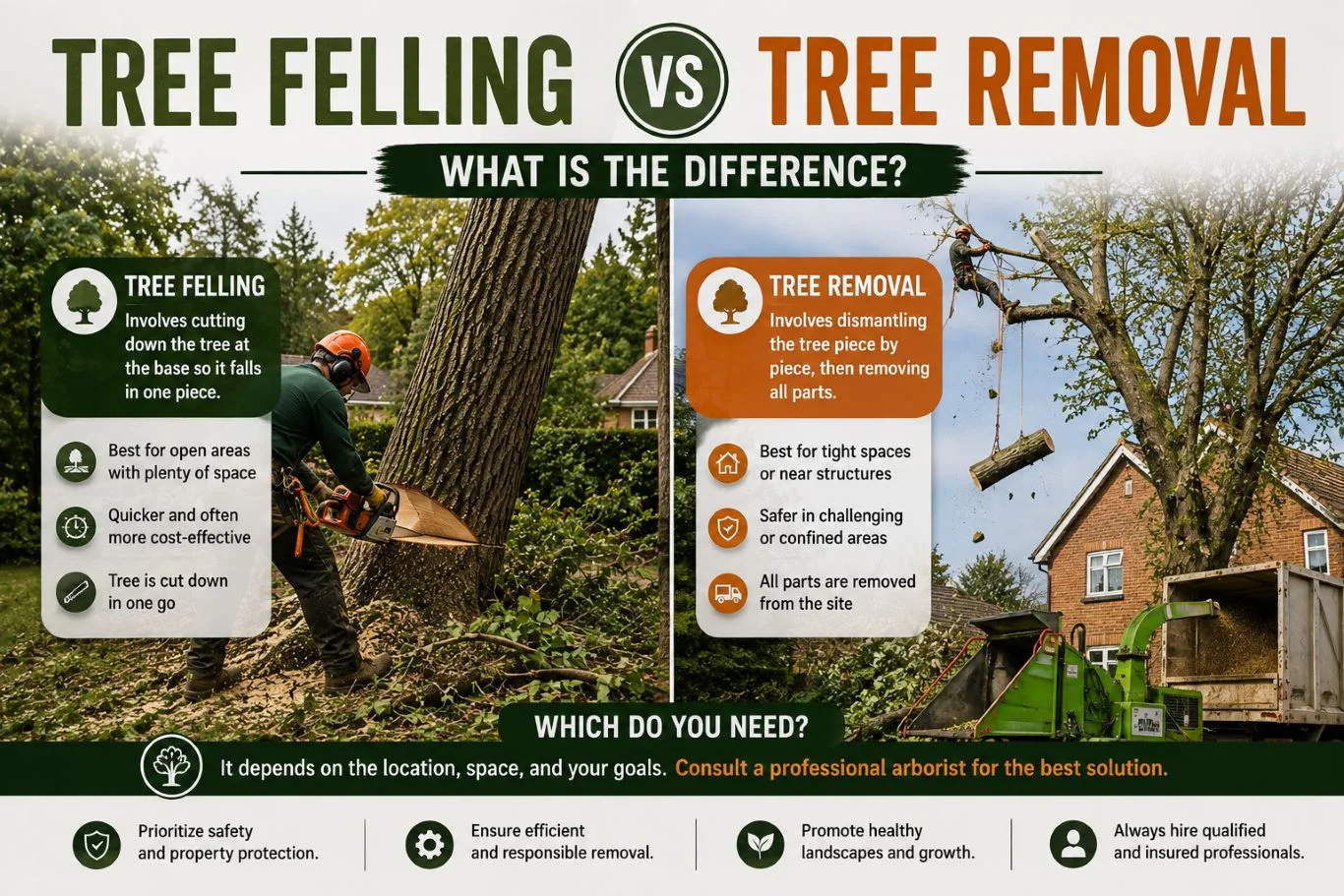
- Tree Felling involves cutting a tree at its base using directional cuts so it falls to the ground in one single, controlled piece—ideal for wide, open spaces.
- Tree Removal (sectional dismantling) involves taking a tree down branch by branch using aerial rigging, lowering ropes, and complete site clearance—essential for tight suburban gardens and structures.
- Understand the key factors influencing the approach, including drop zones, proximity to houses, overhead cables, equipment access, and stump care.
- Discover why certified arborists follow strict British Standards to ensure complete property safety and hazard-free execution.
Introduction
When a tree in your garden becomes dead, diseased, dangerously overgrown, or structurally compromised, taking it down is often the safest path forward. However, when property owners seek professional quotes, they often encounter two terms used interchangeably: felling and removal. Understanding tree felling vs tree removal is essential for budgeting correctly, planning site access, and understanding how the work will physically unfold on your property. While both methods ultimately clear unwanted timber, the actual techniques, machinery, site constraints, and labour required differ significantly. At Chigwell Tree Services, our certified arborists deliver safe, efficient, and fully insured arboricultural care, providing tailored tree felling services in Essex and surrounding districts to protect both your landscape and your home.
Unsure whether your dangerous tree needs a straight fell or delicate sectional dismantling? Chat with Chigwell Tree Services on WhatsApp for expert advice across Essex :
The Core Technical Differences
To understand which solution suits your landscape, let us break down how each process works in practice.
Operational Comparison:
– Tree Felling (Straight Fell): Base scarf cuts, guided directional drop, drops in one piece, best for open land.
– Tree Removal (Sectional Dismantling): Climbers & MEWPs, rigging pulleys & lowering ropes, removed piece by piece, best for tight spaces.
What Is Tree Felling?
In strict arboricultural terms, tree felling (also called straight felling or directional felling) refers to cutting a standing tree down at the base so that it lands on the ground in one complete piece.
An arborist makes a series of calculated cuts near the ground line:
- The Undercut (Notch/Face Cut): Determines the exact directional trajectory of the fall.
- The Back Cut: Relieves tension and creates a precise hinge of wood.
- The Hinge: Controls the speed and direction of the trunk as it descends cleanly to the ground.
Because this method relies on gravity and a single, swift drop, it is quick and highly cost-effective. However, it requires a dedicated, unobstructed “fall zone” that is at least the full height of the tree plus adequate safety margins.
What Is Tree Removal?
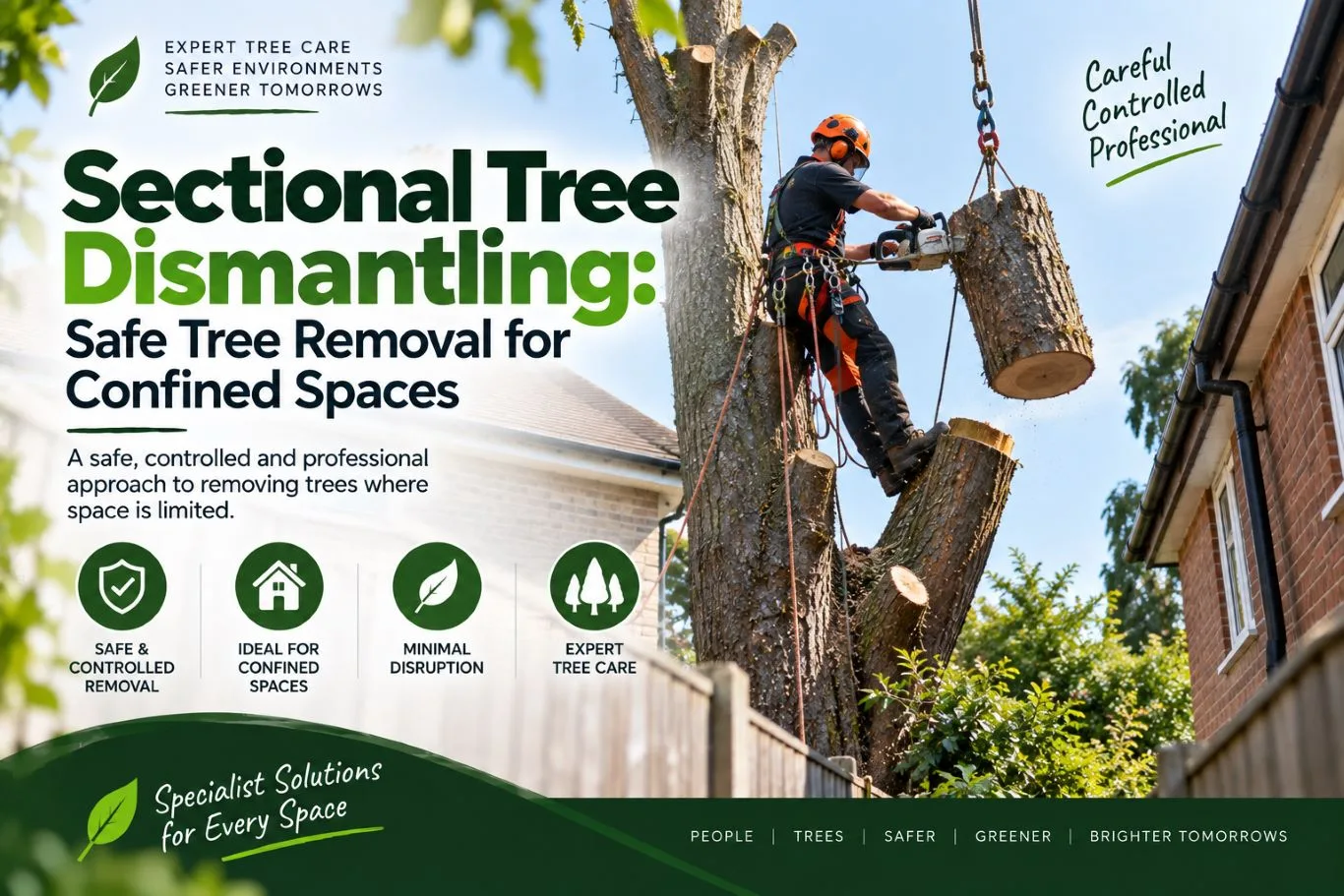
In contrast, comprehensive tree removal—frequently executed as sectional dismantling—is a meticulous, multi-stage operation. It is required when a tree is too close to houses, glass conservatories, boundary fences, outbuildings, or public roads to drop in one go.
Rather than making cuts at ground level:
- Certified climbers ascend the tree or use Mobile Elevating Work Platforms (MEWPs).
- The canopy is stripped of side branches first, with limbs lowered gradually using controlled friction ropes and rigging blocks.
- The main trunk is cut into manageable timber sections (chogged down) from the top down.
- All resulting timber, brushwood, and sawdust are processed through commercial chippers and removed from the site, leaving the area entirely clear.
For properties with restricted access or trees hanging over delicate flowerbeds, outbuildings, and neighbouring fences, dedicated tree removal services in Essex ensure that every branch is controlled without impacting the surrounding space.
Comparison: Tree Felling vs Tree Removal
| Feature / Factor | Tree Felling (Straight Fell) | Tree Removal (Sectional Dismantling) |
| Execution Method | Cut at the base; falls in one single piece | Dismantled piece by piece from the top down |
| Space Required | Wide, open space (full tree height + buffer) | Minimal space (tight garden boundaries, urban plots) |
| Risk to Structures | High if used in confined spaces | Extremely low (controlled rope rigging) |
| Time & Labour | Fast (often completed in a few hours) | Slower (requires multi-person rigging crews) |
| Typical Cost | Lower / more budget-friendly | Higher (due to intensive climbing, rigging & processing) |
| Site Cleanup | Timber processing occurs after the drop | Continuous chip-and-clear as sections drop |
Key Factors That Determine Which Method You Need
Choosing between a straight fell and sectional removal comes down to site realities and safety constraints:
1. Surrounding Space and Drop Zone
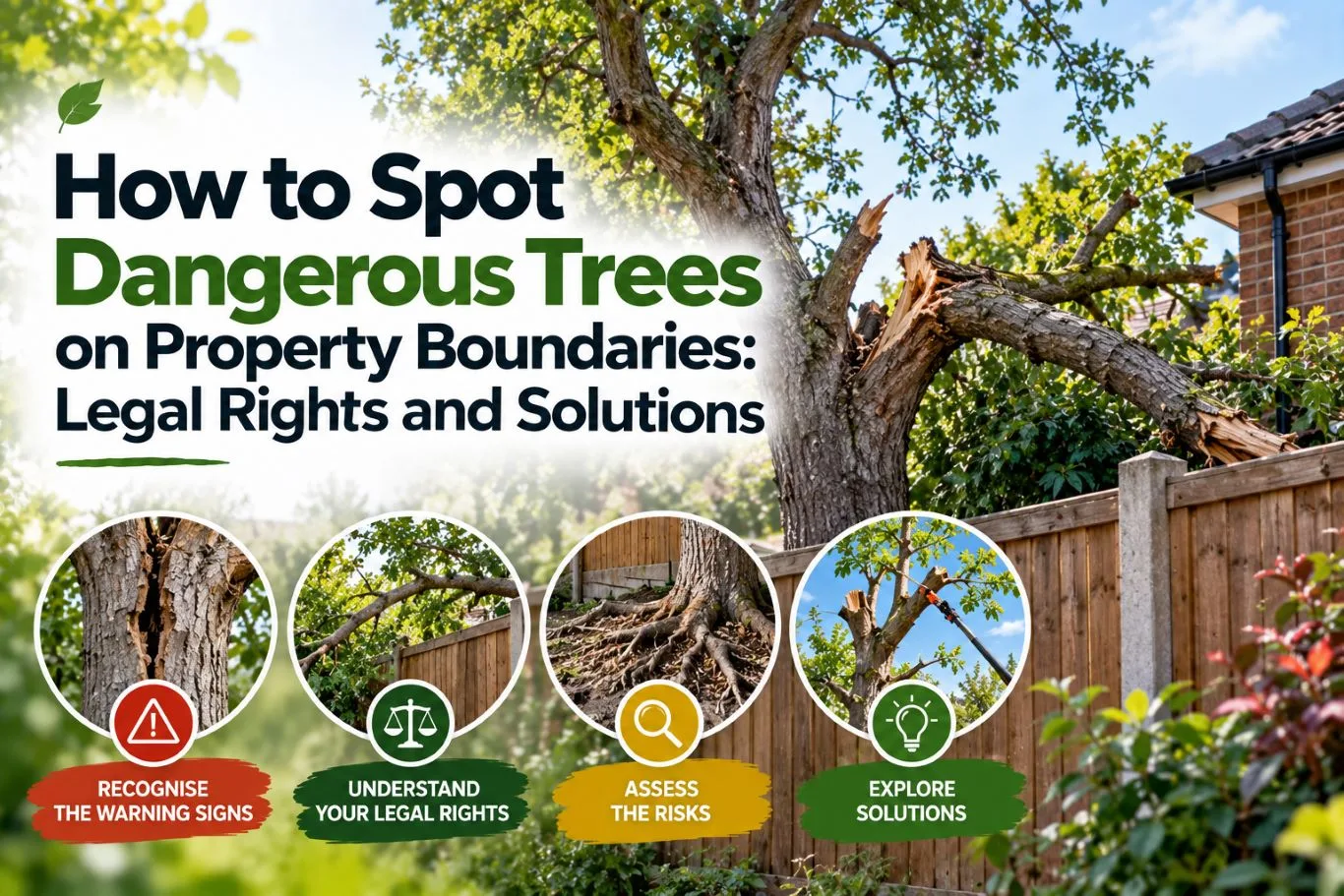
If your property features open paddocks, large lawn expanses, or fields with no structures within the tree's fall radius, straight felling is the logical, budget-friendly choice. If the tree stands within reach of roofs, greenhouses, fences, or garden sheds, sectional removal is mandatory.
2. Physical Hazards & Overhead Utility Cables
Trees growing near overhead telephone cables, power lines, or public highways cannot be felled at the base. Climbers must secure individual branches to rigging lines before cutting, ensuring limbs are hoisted clear of utility cables and lowered gently.
3. Tree Health and Structural Integrity
Paradoxically, a completely dead or rotting tree (such as one suffering from severe basal decay or honey fungus) may be unsafe for an arborist to climb. In such scenarios, tree surgeons must evaluate whether a straight directional pull using winch systems is safer, or if access via a crane or hydraulic cherry picker is required for sectional removal.
4. Waste Disposal & Stump Care
While felling simply brings the timber to the ground, a full removal project typically includes chipping brushwood, stacking firewood, hauling heavy trunks, and treating the remaining stump. Keep in mind that neither method automatically extracts the underground roots; mechanical stump grinding is typically scheduled alongside the removal to leave the ground level for future replanting or building works.
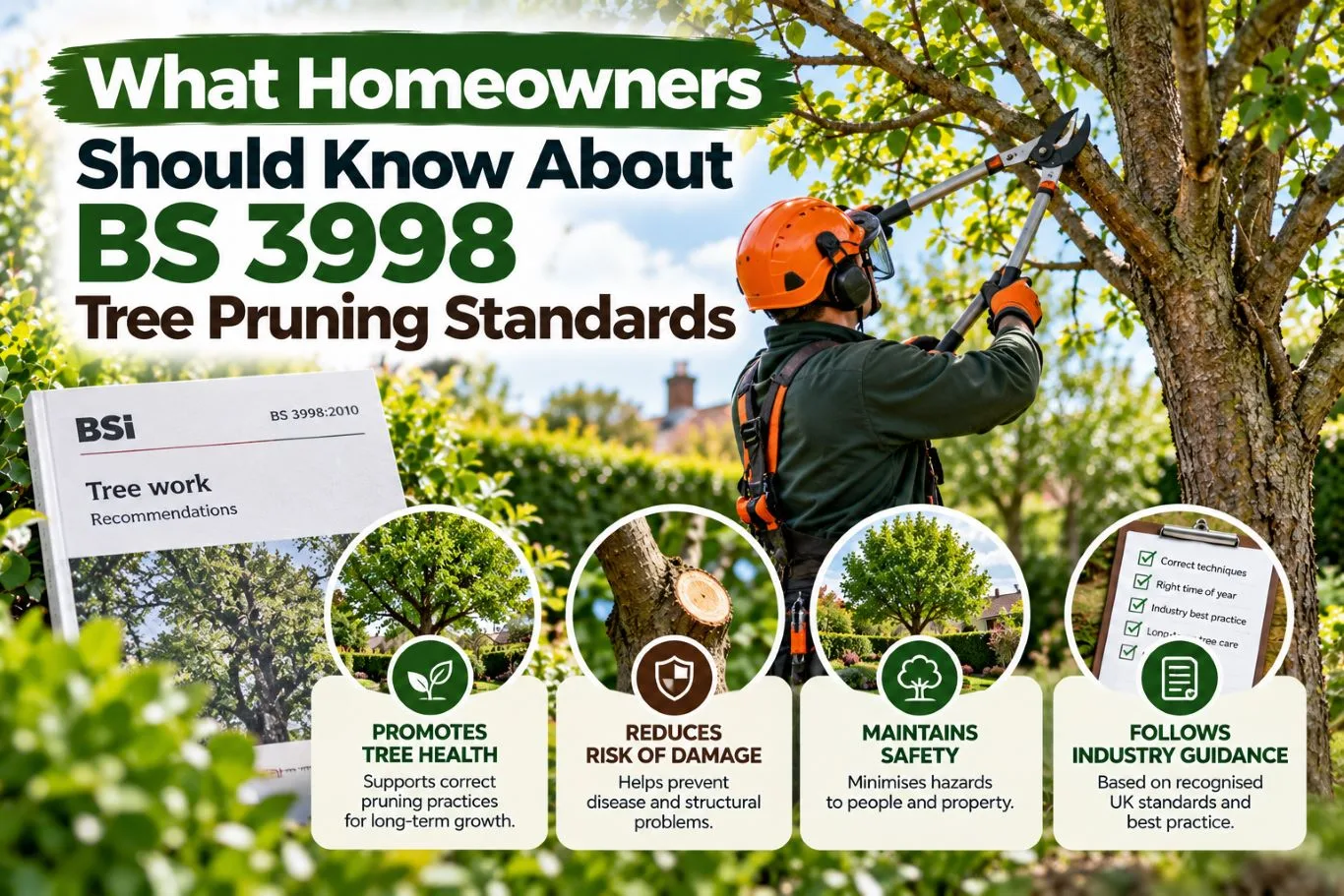
The Value of Professional Standards (BS 3998)
Whether dropping a tree in one go or dismantling it branch by branch, tree work is inherently high-risk. Felling large timber without formal arboricultural training can lead to severe personal injury, crushed outbuildings, or catastrophic boundary disputes.
Hiring certified tree surgeons ensures that all operations adhere strictly to British Standard BS 3998:2010 (Tree Work Recommendations). Professional contractors use calibrated load-rated rigging equipment, wear full protective gear (PPE), implement necessary pedestrian traffic control, and carry extensive public liability insurance.
FAQs
1. Does tree felling or tree removal include grinding the stump?
Generally, standard quotes for felling or removal cover taking the tree down to a low stump near ground level and clearing the resulting debris. Mechanical stump grinding to remove the below-ground root ball is treated as a separate, complementary service.
2. Do I need permission from the local council to take down a tree?
You only need council consent if the tree is protected by a Tree Preservation Order (TPO) or is situated within a designated Conservation Area. Qualified arborists can check planning registers and submit formal applications on your behalf before work starts.
3. How quickly can your team assess my property and provide a quotation?
We operate an active local dispatch network. For domestic and commercial property surveys, our team can typically arrange an on-site consultation and provide a detailed, fixed-price quote within 24 to 48 hours of your inquiry.
4. What areas across the region do your field crews cover?
Our daily service route covers the entire county of Essex—including Chigwell, Loughton, Epping, Woodford, Brentwood, Buckhurst Hill, and surrounding North and East London boroughs.
5. How do you protect lawns and flowerbeds during sectional removal?
Our team uses advanced rigging setups, lowering ropes, and ground-protection mats. Branches are roped down smoothly into designated drop zones, preventing heavy timber from gouging lawns or damaging delicate landscaping.
Conclusion / Final Thoughts
Understanding the difference between tree felling vs tree removal gives you the confidence to choose the right arboricultural approach for your property. While straight tree felling offers a swift, economical solution for large, open grounds, methodical tree removal via sectional dismantling is the gold standard for navigating tight suburban gardens, protecting nearby buildings, and eliminating hazardous limbs safely.
At Chigwell Tree Services, we bring years of field expertise, specialized climbing and rigging equipment, and certified standards to every project. We handle everything from straight directional fells to complex, restricted-access removals with total precision. If you need honest advice, transparent pricing, or certified tree care across Essex and nearby areas, our friendly local specialists are here to assist. Protect your home and restore your garden's safety today by choosing a professional, authoritative standard of care for your grounds.